In 1966 the Japanese novelist Shusaku Endo published his masterpiece of historical fiction, titled Silence. It’s the story of Catholic missionaries in Japan during the 17th century, of Japanese persecution and torture of Christians, of apostasy and love, and of a God who stays silent during suffering until it is time for God to break the silence. The novel raises profound questions about love and suffering, and, in doing so, sticks with and haunts its readers for years.
View this conversation with internationally renowned artist Makoto Fujimura, philosopher Nicholas Wolterstorff, and theologian Neal Plantinga. Participants describe their first encounter with the novel Silence and then discuss the power of icons, the unthinkable forms sometimes taken by love, and the grace of God in history that gives voice to the voiceless. Fujimura also previews the film Silence, directed by Martin Scorsese.
Makoto Fujimura is a gifted artist and writer. In his memoir titled Silence and Beauty, Fujimura reflects on Endo’s novel, on faith in the face of torture, on the artist’s calling, on Japanese history and culture and what it means for Christians to be a tiny, historically persecuted minority within Japan. Deeply imaginative, brooding, and piercing, Silence and Beauty stirs the reader’s heart with longings previously unknown.
Congregations are encouraged to read Endo’s book and view the movie Silence produced by Paramount Pictures.
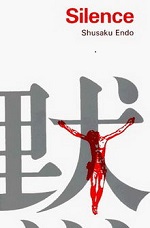 Silence Discussion Guide
The following questions may be used for discussion and further reflection:
- Share with the group one thing that struck you as you read (or viewed).
- What questions does this story raise?
- This story is often described as “atmospheric.” Why so?
- Who are the main characters?
- Who is Kichijiro and what role does he fill? Is his defense of his actions plausible? Would we be like him if under similar pressure?
- Why would a novel like Silence become an international best-seller, including in Japan? After all, it tells the story of Portuguese missionaries in 17th century Japan, and ends up making both Japan and the Catholic Church look pretty bad. Why is this story widely regarded as a masterpiece?
- Could there be cultural or national “swamps” where the gospel simply can’t take root?
- Is God’s silence in the face of persecution always a form of abandonment by God?
- If the only way a Christian can save the lives of other Christians is by renouncing Christ, would it be right to do it? What if you only think you can save their lives (persecutors sometimes lie)? If you renounce Christ to save lives, can Christ “take it”? Might Christ even invite you to renounce him to save lives? Or is any thought along those lines mere self-deception?
- In short, does Rodrigues betray Christ by trampling or does he follow Christ?
- In general, should we calculate the possible consequences of our actions as the main basis for an ethically questionable decision, or just follow God’s commands, and let God take care of the consequences?
- What moral ambiguities test Christians today? Have you ever faced a quandary? For example, with a difficult relative? With a friend who is betraying his or her spouse? On the street in front of a panhandler? How do you decide what to do?
- What are some small, undramatic ways we ourselves renounce Christ? At work. In our political choices. In our consumption of pop culture. In our family systems.
- Where in the world today do Christians face real persecution? What forms does contemporary persecution take?
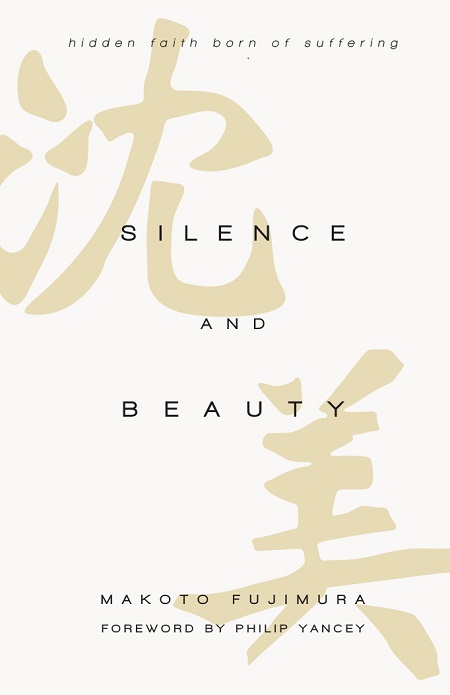 Silence and Beauty Discussion Guide
Questions for groups reading Makoto Fujimura’s book Silence and Beauty:
- What special angles of vision do the Japanese have on beauty? If you were to introduce the concept of beauty to someone, how would you proceed?
- Is beauty a purely relative concept? Is beauty only in the eye of the beholder?
- What might it mean to refer to the beauty of God?
- What’s the connection between appreciation of beauty and faith in God?
- Why are the Japanese fascinated with hiddenness, and what forms does it take for them?
- Why is trauma so deep in the Japanese psyche?
- Why are the Japanese resistant to the gospel (by contrast, for instance, with Koreans)?
- What are our own fumies? What in our own faith are we willing to trample in order to fit into a prevailingly secular culture?
- After he has become apostate, does Father Rodrigues still have a ministry? A valid one?