|
Kathleen Harmon
00:00:04
|
00:00:04
|
In the creation of the psalter, God is revealing—but I love this also, and I’ve taught it over and over again—this is true of all scripture: It’s not about us interpreting the scripture or interpreting the psalm. The psalm interprets us. That’s where the transformation comes.
|
|
|
Kristen Verhulst
00:00:32
|
00:00:32
|
From the Calvin Institute of Christian Worship, you are listening to Public Worship and the Christian Life, a podcast that amplifies people and stories that share wisdom and wonder about Christian public worship. This season for the podcast, we are dwelling in the psalms, the prayer book and songbook of the Bible. Welcome to the podcast.
|
|
|
Kristen Verhulst
00:01:03
|
00:01:03
|
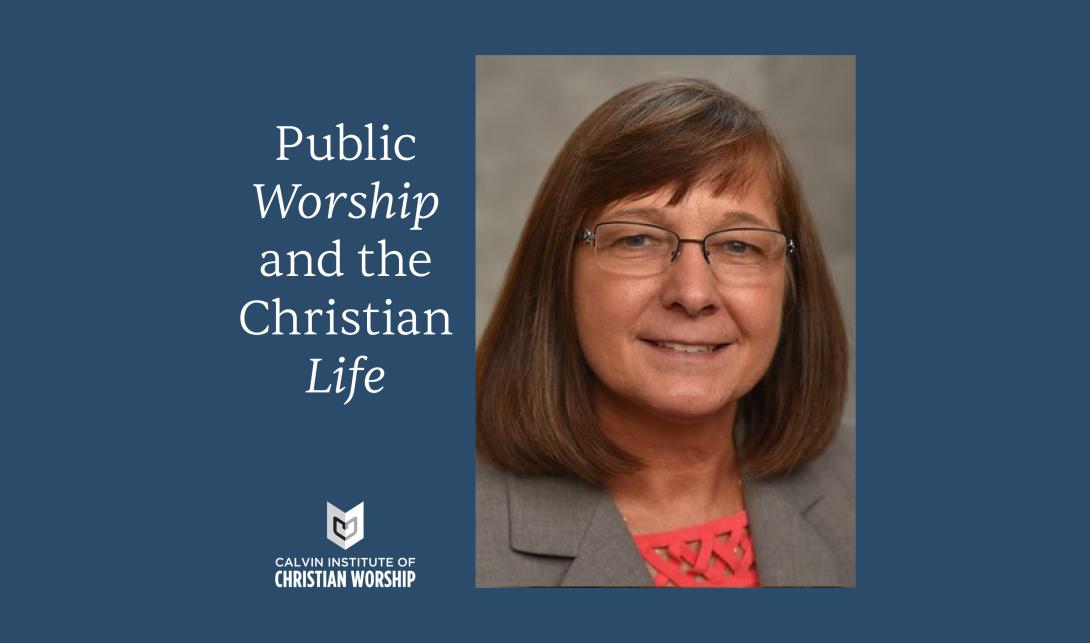
Well, thank you so much, Sister Kathleen, for joining me today on the podcast. I’m Kristen Verhulst, one of the staff members at the Calvin Institute of Christian Worship. And I am delighted to have you join us today to talk about the psalms. Sister Kathleen Harmon is part of the community of the Ohio province of the Sisters of Notre Dame de Namur, where she recently completed a leadership term. She served for many years as the music director for programs of the Institute for Liturgical Ministry in Dayton, Ohio, and she is the author of numerous publications, including the book that really sparked this conversation today, and that's called Becoming the Psalms: A Spirituality of Singing and Praying the Psalms. Sister Kathleen is an educator and musician with a graduate degree in music and a doctorate in liturgy. So welcome, Sister Kathleen.
|
|
|
Kathleen Harmon
00:02:08
|
00:02:08
|
Thank you very much. I’m delighted to be here as part of this whole process you have this year of celebrating and praying the psalms.
|
|
|
Kristen Verhulst
00:02:17
|
00:02:17
|
That’s right. So I wonder: Would you begin by sharing a story from your own life about being formed in and through the psalms?
|
|
|
Kathleen Harmon
00:02:28
|
00:02:28
|
Oh, I have so many things I would want to say about this. One is that my mother actually loved the psalms, and I have a story: When she was 92 years old and in a care facility or assisted living, one of the days I had gone down to see her and spent the night, we got up in the morning; I knew she prayed every morning, so I went out into the little sitting room and said, I'd like to join you for your prayer. And she said—it happened to be Lent. Now, she was 92 years old, and it was Lent. And she said, “This is what I’m doing for Lent. I’m going to pray all of the psalms, which means I'll probably pray four of them a day.” I was like, holy ... That’s really something. And I said, “Wow. I’ll join you with whatever you’ll do today.” So she’s sitting there in her chair, and she opened up her psalter, and she said, “I begin every morning with my favorite psalm.” And she pulled a piece of paper out, it was wrinkled, worn, obviously used a lot. I presumed it would be Psalm 23. It was not. It was Psalm 51, “Create in me a clean heart, O God.” I just wasn’t expecting that. And she began to pray it, “Create in me a clean heart O God; cleanse me.” And then she stopped and she said, “Isn’t this beautiful?” That influenced me a great deal. The psalms were real for her, and it was a real relationship with God about what was going on. And she had a real acceptance of the truth of what it meant for her to be a human being who failed and could say, “God, correct this.” So that was very powerful. The other thing was that as I entered the world of liturgical music, and that became my profession, I did many things in that and was often music director in parishes—loved it; working with choirs—loved it; composing—loved it; playing piano and organ—loved it. But the biggest thing I also did was cantor the psalms, which I loved most of all. I not only was the person leading the singing, but then I was training lots of cantors, and I had the opportunity through the National Pastoral Musicians Association in the Catholic community to do a lot of training of cantors across the United States. And it opened the door for me to say, what’s really happening when I cantor a psalm? I mention this in my book that you’ve cited already, Joseph Gelineau, who was really big with the singing of the psalms, and he kept saying, “A person who prays the psalm becomes the psalm.” And I went, What does that mean? So I really started doing a lot of work, just research and reading on the psalms and trying to understand that. It was a great breakthrough for me, because in my early years of cantoring, we were just coming out of Vatican II, so there was a renewal of the Catholic liturgy and a restoration of the singing of a response or a psalm in the Mass, which hadn’t been there for generations. And so composers were writing wonderful musical settings. I loved them. But I began to realize, these were beautiful settings, but I was more taken with the melody of what I was singing than I was with the words. And I realized I had to step back, begin to do some work on what the words were. Another really fine book was Sister Irene Nowell’s book on how the psalms function in the Sunday lectionary, in the Catholic lectionary. And it was a remarkable book. So I began to come at the psalms, I began look at the text and realized that my ministry as cantor was to give the people the text, not the music. But I couldn’t give the text, Kristen, if it didn’t come out of my soul. So I just was doing lots of research, lots of reading. I’ll give a personal experience that was probably the most powerful personal experience of coming to understand this. I can’t sing the psalm at the Sunday Mass if it’s not coming out of me. These are not just words. They’re actually the words of God. And Christ prayed these. So I’m Christ singing this. And I had to connect it to the readings. The psalm is connected for us in the Roman liturgy; it’s a bridge between the first reading and the gospel. It’s a bridge to get us to encounter Christ in the gospel. So if I’m going to sing it, I have to walk that bridge, and I have walk it before I stand up to sing. I’ve got to walk this bridge. So I would pray a lot with the readings. And when I began to train cantors on a national level, they would gather, there’d be a hundred people in a room who were here to work on being a cantor. And I’d say, “The first thing we're going to do, we’re going to look at next Sunday, you’re getting ready. And I’m not going to start with the psalm. We’re going to start with the gospel.” And they were like, What? But it was amazing. And we would do this shared lectio divina on the gospel, and they would talk about it. And then we would begin to look at the psalm and they’d go, “Oh, my God, this is what the psalm is doing!” And so it changed their understanding of their ministry. Now I said to them, “You have to be that psalm, because you have to spend time the week ahead encountering Christ in the gospel. But if there’s ever a Sunday that maybe this hasn’t happened for you and the psalm is still just words, maybe you shouldn’t cantor that Sunday.” I would say that, would teach that. And one Sunday, Kristen, this happened to me. I was scheduled to cantor. The gospel reading was Peter saying, “How many times do I have to forgive my brother and sister? Seven?” And Jesus said, “How about seventy times seven?” That was the reading. And the psalm was from Psalm 103: “God, your mercy is wider than the heavens; from east to west, your mercy is beyond anything we can conceive.” Now at that time, I was in a painful, critical situation with another sister in my community. I wanted revenge. I wanted to gossip about her and say why she was a problem. I did not want ever to speak to her again. And there I’m sitting with this gospel and this psalm. I said, “Jesus, I can’t sing these words unless I can forgive this sister.” And Kristen, I couldn’t do it. All week I kept praying. And when Sunday morning came, I still had bitterness. It was awful. But there was no other cantor in this parish I was in at the time. There were only three cantors, and the other two were not—I couldn't call someone and say, Can you do this psalm? I had to do it. So right before Mass, I was sitting quietly next to the organ. I said, “Christ, you have to take it. Christ, I give this to you. I cannot do this. You have to do it in me.” And when I stood up to sing the psalm, I had a physical experience. It was like, it felt like electricity. I began singing the words of God’s mercy. From the top of my head, I could feel this. The whole time I sang, it moved down through my body and out my feet. And I knew it was Christ. I knew it was Christ. And I knew I sang that song from my heart. And I want to tell you, a week later, when I ran into this sister, I was able to go up and say “Hello, how are you?” very sincerely. It was completely healed. So I knew then that what I’d been led to teach cantors was actually true. It was true. So even in my preparation—I couldn't do it while I was in leadership because I was no longer able to be in a parish doing this, but I would always cantor at our funerals here and spend time again with what’s the gospel about. So that’s a powerful personal experience of the grace of Christ letting me become the psalm. We can’t do that, I can’t make myself do that, but Christ will when we give ourselves over. I’ve also said to cantors, “Now the hardest thing for you in doing this will be this: You cannot be a cantor if you don’t have ego. You’re not going to stand up in front of 500 people singing something solo if you don’t have ego, so ego isn’t necessarily bad. It’s necessary to do the job well, but you have to turn that ego over to Christ and let his be the ego that takes over, and that’s the hardest thing. When you’ve done your job well, people will be affected by the words of the psalm. They won’t leave saying, ‘Wow, do you have a great voice!’ If you do the job well, you’re going to have to give that up. Because I know ... what you love after Mass is when people come up and say ‘Your voice! your voice!’
But you know what? If you’re doing your job, they’re not going to say that, because they’re forgetting about your voice and they get into God and the text, and that’s what you want.” So I can tell you a humorous thing. At one point I was asked—it was a gathering of the local chapter of the National Pastoral Music Association near the feast of Saint Cecilia. We’re having evening prayer, and they asked me to do the reflection on the reading, which was Romans, “Do you not know if we’ve died with Christ we’ve risen with Christ?” And I talked about that, and the Paschal Mystery, and I’m talking to musicians, and I talked about how do you turn it over to Christ, and then there’s less people paying attention to you, and you let that go. So when we went to the social after the event, no one said anything to me about my homily, which was unusual. I mean, OK, it’s all right. But they told me later, they said, “We couldn't. We thought your homily was really good, but we didn’t want to ... You were great, you were great!” So they got the message of that. Those are some of the experiences in my life that were really important.
|
|
|
Kristen Verhulst
00:14:08
|
00:14:08
|
You brought this right into this communal aspect I was hoping we could talk about. So I love this image of a bridge, of linking the gospel message with the psalm. And I just wonder, how does this shape the worshiping community over time? When you do this together in corporate public worship, what formation is happening over time?
|
|
|
Kathleen Harmon
00:14:34
|
00:14:34
|
Your question is such a good question, and that’s what it’s about. All worship is about formation of us as community. There’s a lot I want to say. One is, we pray the psalms individually and privately, and we should use them, and they shape us. But the praying of the psalms individually also is an avenue, an appropriate avenue, to select a psalm you need for a given time. If I’m in great suffering I pray Psalm 130, “Out of the depths, I cry to you, O God,” or I pray “The Lord is my shepherd.” Or if it’s a time of peacefulness and things are going well in my life, you pray some of the psalms of praise. But when we pray them commonly in worship, it’s not ever about me. And the thing that I love, in the Roman Catholic community, the psalm is given, and I don’t pick the song. It’s given. So how do I open myself up to what’s given? Because it’s not about me. We also have Liturgy of the Hours where we’re praying psalms. This could be a psalm that’s not at all connected to what I’m feeling right now. But we have a wonderful general instruction of the Liturgy of the Hours in the church to help people understand that when we pray them commonly in worship, it’s not about what I’m feeling. It’s about opening my heart to the entire human community. And it is to rejoice with those who are rejoicing and to weep with those are weeping. So this is a psalm of lament and pain; I pray it in union with my brothers and sisters around the world this minute who are weeping and in pain. I get beyond myself. It’s bigger than me. It’s the whole human community And that’s the function of it in the liturgy. Another function: The psalms are the inspired word of God, just like the readings are. So here’s a psalm given to me this Sunday. This is God speaking. And how does the praying of that commonly open my heart to be transformed in some way? Because it does. It does. It transforms what I think and feel. It transforms how I understand salvation and life. I’m saying a whole lot because you can never condense this stuff. The psalms are the whole story. You take the Psalter in scripture and it’s the entirety of the Bible, the whole thing. All the scripture is contained in the Psalter. The whole story. There are more laments than any other type of song. Why? Because life is full of a lot of pain. That’s why. In the creation of the Psalter, God is revealing—but I love this also, and I’ve taught it over and over again—this is true of all scripture: It’s not about us interpreting the scripture or interpreting the psalm. The psalm interprets us. That’s where the transformation comes. Let’s say it’s a psalm of vengeance. “God, I want you to shatter their teeth. I want to take a sword and cut their heads off.” I don’t like any of those psalms. I do not want to pray them. But why are they part of revealed scripture? How can we say these were inspired by God when we feel they’re terrible things to talk about? And it’s because the psalm isn’t telling us to be violent; the psalm is telling us to be honest with ourselves about the fact that we want to be violent. Be honest about it, because we deny it all the time. We deny the dark side that’s in our heart, and the psalms will not let us deny it. I think that’s the work God’s doing. I really do. That doesn’t make it easy for me to pray those psalms. I still hate them, but I’m going, “Well, actually ...” and then going back to that story where I didn’t ever want to speak to this sister in my community again, because I was out to get her.
|
|
|
Kristen Verhulst
00:19:08
|
00:19:08
|
That idea of dialogue is so important, isn’t it? Both in when we worship together and are formed and shaped through the psalms. Tell us a little bit more about what you're thinking of when you talk about a dialogue between you and I in this idea of how then the psalms are interpreting us.
|
|
|
Kathleen Harmon
00:19:29
|
00:19:29
|
Exactly. This understanding of the dialogue between you and I really comes from Walter Brueggemann and all of his work on the psalms. You should read everything he’s ever written about scripture in any area, but his understanding that from the beginning God always—you see it in the whole story of the Garden of Eden, God was always relating to human beings as he was relating to them. He would come down in the evening and walk through the garden with him and have conversation. That’s what God wanted. But we have to look at the whole sweep of scripture. You look from Genesis all the way through, and we have to keep understanding, and the psalms help us learn this: It’s a journey in understanding, it’s a journey in discovering who God is, and it’s a journey in discovering who we are. And we’re not there. We’re still on the journey. You know, it was forty years in the desert for the Israelites, but really we’re still all in forty years. We’re all in this process. So early on there isn’t a full understanding of who is God. Nobody knows. You know what I'm saying, because we’re still discovering. So scripture keeps unfolding a discovery, and we have to interpret and understand that sometimes when there are concepts about God in parts of scripture it doesn't mean God is this way; it means that’s what the people at the time could—that’s the best they can understand. I hope that makes sense, what I’m trying to say. The psalms do the same thing. So the dialogue is, God from the beginning intended us to be partners. And even Jesus says it: I always called you my friends. I’ve never said you’re my slaves. You’re my friends in this whole process of redemption. Another powerful book I read was by a Jewish theologian, André Nayer. Right now the exact title is eluding me, but it’s about the silence of God. And he does a whole lot of scriptural work. But when he talks about Sodom and Gomorrah in that story, he says, you know, there’s Abraham. And he says, now we have to go back and say, this is centuries ago. What’s the concept and understanding of God? They’re growing just like we are to try and figure out who God is. So Abraham sees, he realizes it’s the Lord God and someone coming down the road, and he gets up and goes to him and God says, “I'm on way to Sodom and Gomorrah, and I’m going to blow the place up because they’re evil, they’re unrighteousness, their treatment of one another—I’m just blowing them up.” And that’s when, of course, Abraham’s like, My nephew Lot and his family are there. So he starts walking, he walks with God down the path and he keeps saying to God—and the way Nayer tells it, he said, this is an example of beginnings of growth towards dialogue with God, and it’s not understood yet that we’re partners. Because Abraham says, “Lord, if there’s a hundred righteous people, would you not do what you’re going to say?” And Nayer says, the essence of what God answers, is he turns to Abraham and says, “Is that what you think I should do?” And then, of course, Abraham goes, “Well, how about ninety?” And God says, “Is that what do you think I should do?” And he keeps going. But he keeps going, Oh my God, I can’t believe that; he’s going to kill me, and he’s going to strike me with lightning. How can I talk to God this way? Abraham got down to ten, and then he stopped. And he turned around and he walked home. And Nayer said because the faith community that time in writing that story did not yet know that God wanted Abraham to get to zero, because it’s a dialogue; it’s a collaboration. What's happening in the world is our doing with God. But he was saying the people, the faith wasn’t at that point yet. And that’s so powerful! God is saving every second. But he needs us to do it with him. And you think of the Garden of Gethsemane, you know, when they show up and are going to drag Jesus off, and Peter cuts off somebody’s ear, and Jesus says, “Put your sword away. If I wanted a legion of angels here, I could do it.” Jesus didn’t want angels to stop it. He wanted the human beings involved in it to say, “We can't do this; it’s wrong.” That’s what he was waiting for. He knew it wouldn’t happen at that point. But that’s the dialogue between you and I. There’s so much, and when you read psalms, there are times when we’re yelling at God. And it’s totally appropriate to yell at God!
|
|
|
Kristen Verhulst
00:24:23
|
00:24:23
|
There’s a sense there that the Christian life should just be, oh, we trust God; it’s difficult, but God will take care of us. And yet I think the psalms really allow for the space to say things are not good; they’re not well.
|
|
|
Kathleen Harmon
00:24:36
|
00:24:36
|
There are many songs that are really horrifying when you read them, and they’re very hard to pray, but they’re full of truth, of the reality of ourselves; that’s how they're interpreting us also.
|
|
|
Kristen Verhulst
00:24:53
|
00:24:53
|
What encouragement, though, do you have for those communities, those individuals who really are feeling right now at this point in the world that God isn’t listening, or God is not responding in ways that we want God to respond to the needs of our world?
|
|
|
Kathleen Harmon
00:25:13
|
00:25:13
|
I pray about this a lot, and I prayed a lot these last couple of weeks since you sent me your questions. When God is silent, which happens to all of us many times in our lives, and for those suffering deeply—I mean, oh my God, think of the hostages in Gaza. What prayer have they been able to even raise to God? The thing is that God’s really not silent. Our ears are plugged. Our ears are plugged. And I have to ask myself, What’s plugging my ears? And I can’t always answer that. I don’t know. That doesn’t remove the pain of God’s silence. It is very painful. I think the silence of God is really the silence of us human beings. God wanted Abraham to get to zero. God did not want the Holocaust to happen. And he kept speaking in many ways to say, Don’t do this. But we, we’re the ones who were silent. I just finished a powerful novel based on a true story called The Librarian of Auschwitz. She was a fourteen-year-old girl. The Jewish group here in Auschwitz, they had secretly had possession of seven books. They were unrelated; they were different topics. They had seven books they had to keep hidden because the SS would have shot you on sight if you showed up with a book. And they were using these books in secret to educate the children. But this girl’s job was to keep the books hidden. And it’s a true story. Part of the story was an SS soldier there, part of the camps, his name was Rudy; that was his real name. He knew what they were doing was morally wrong. And he did everything he could as an SS officer to circumvent a lot of things. And he wanted to escape. He wanted to go AWOL. But an SS officer who went AWOL was also shot immediately, just like a prisoner leaving. If he was apprehended it’d be instant death. It took him a long time to plot how he would escape. He did. And he put in writing everything that was actually going on. He put it in writing. He got to Britain, and he turned his documents over to the British government and said, “I was there. I have escaped. Here’s what’s going on.” And the British government dismissed his documents. They said, “Well, the Nazis tell us that’s not true,” and they pushed it aside. Who was not listening? That’s the question, and that’s where the dialog of you and I, as we're part of this, who’s not listening. Who’s not listening? Now, I’m saying all that, I still, I know from my own experience when you are in that period where you feel like God isn’t there, it's a real experience, and it’s really painful. It's the dark night of the soul. And think of Mother Teresa. When her journals came out after her death, she spent many the last years of her life not even knowing if she believed God existed. And yet she still went out every day into the streets and would pick up someone who’s dying and hold them and let them not die alone.
|
|
|
Kristen Verhulst
00:28:46
|
00:28:46
|
Sister Kathleen, this has been such a rich time, and as we now close, I wonder what words of encouragement would you share with us, with the Worship Institute, as we’re dwelling in the psalms this year, but with everyone who’s listening to the podcast, what words of encouragement which you have for us to dwell in and become the psalms.
|
|
|
Kathleen Harmon
00:29:10
|
00:29:10
|
Praying them. Pray them alone, but pray them with the community. Study them also. When you’re dealing with a difficult psalm, do the study. What is the psalm really about? What’s it calling us to become? Who’s it calling us to become? One of the things that I learned that was so helpful is to look at the whole 150 psalms as a collection. Not just this psalm, this psalm, this psalm, but I mean, just take for example, it’s not an accident in the collection that Psalm 22, “My God, my God, why have you abandoned me,” which Jesus himself prays on the cross, is followed immediately by Psalm 23. It’s not accidental placement. This is intentional. So how can we see a bigger picture of the psalms? It’s not an accident that Psalm 1 is “Walk in the way of God. Don’t walk in the way of sinners. Walk in the way of God and you will be a tree planted forever.” Then you have all these psalms in between, and all these sufferings and all this stuff till you get to Psalm 150. “Hallelujah! Hallelujah!” It’s the whole story. And we’re walking in the middle part, and the middle has got a lot of pain in it. Look at the whole picture. That would be my encouragement. Look at the psalms as the whole package, five books. And here’s another thing about the package. Psalm 1, walk the way of God. Psalm 150, praise God for everything. Psalm 73, it’s one of my favorites. It's the beginning of book three. Now you have five books; book three is right in the middle. The number 73 is about right in middle of 150. And what is it? It’s this person saying the evil people are wealthy. Those who oppress the poor are succeeding. I am not. I don’t understand this. I’ve been faithful, but it’s making no difference to be faithful. And then he went into the temple and prayed. And in the temple, he went, “I get it, God. Keep me faithful to your way.” So right in the middle of the story is a renewal of the way of God. I love it. I just love it.
|
|
|
Kristen Verhulst
00:31:41
|
00:31:41
|
I love it too. Thank you so very much, Sister Kathleen. This has been a delight.
|
|
|
Kathleen Harmon
00:31:55
|
00:31:55
|
Oh, thank you for asking me. All right, it has been wonderful. And thank you for doing this whole year on the psalms.
|
|
|
Kristen Verhulst
00:31:53
|
00:31:53
|
Very good. Thank you.
|
|
|
Kathleen Harmon
00:31:55
|
00:31:55
|
Alrighty. God bless.
|