|
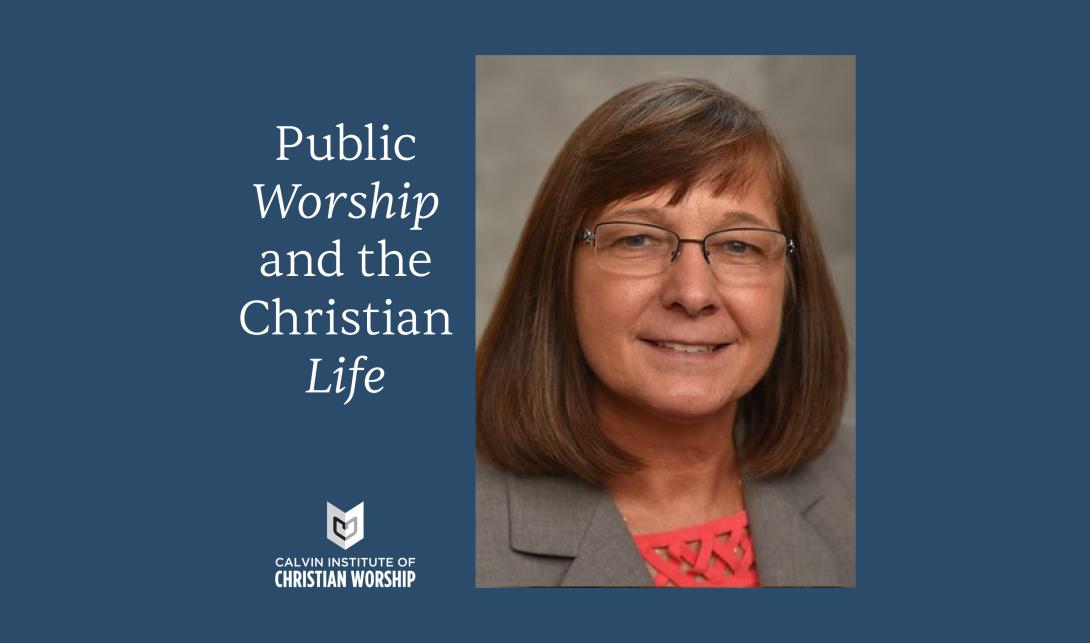
Nancy deClaissé-Walford
00:00:05
|
00:00:05
|
I think one of the huge issues is allowing us to bring our total humanity into worship, and I think the psalms give us words to be able to do that, whether it's words of heartfelt praise to God or these cries to God about all the stuff that's going on out the doors of the sanctuary.
|
|
|
Kristen Verhulst
00:00:32
|
00:00:32
|
From the Calvin Institute of Christian Worship, you are listening to Public Worship and the Christian Life, a podcast that amplifies people and stories that share wisdom and wonder about Christian public worship. This season for the podcast, we are dwelling in Psalms, the prayer book and songbook of the Bible. Welcome to the podcast.
|
|
|
Noel Snyder
00:01:02
|
00:01:02
|
Hello, and welcome. My name is Noel Snyder, and I’m a program manager at the Calvin Institute of Christian Worship, and I am pleased to welcome our guest today, Dr. Nancy deClaissé Walford. Dr. deClaissé Walford is professor emerita of Old Testament and biblical languages at McAfee School of Theology, Mercer University, and one of her main areas of specialty is the psalms. Here at the Calvin Institute of Christian Worship, we are spending this year dwelling in the psalms, so we’re delighted to have you here, Nancy, to talk with us today. Thank you for being with us. You’ve studied and written a lot about the psalms, as I just mentioned, and I wonder if we could just start with you telling us a little bit about how your interest developed. What drew you towards studying the psalms in such depth?
|
|
|
Nancy deClaissé-Walford
00:01:54
|
00:01:54
|
I attended Fuller Theological Seminary, and I did a master’s degree in Semitic languages and literature. So I studied all those bizarre languages of the ancient Near East. So I’ve done Hebrew, Greek, Aramaic, Syriac, Akkadian, Ugaritic, and then studied a bunch of small inscriptions here and there. And in that process, I developed a real interest in how written language has shaped what we have done with things. So, as societies move from oral preservation to written preservation of texts, they develop that greater possibility of manipulating texts, moving bits and pieces around, asking questions of the texts, and all of that—kind of like we do now when we’re writing papers. Thank goodness we’re not using typewriters anymore. We can manipulate and move things around. So that was my real interest, this whole idea of how did writing affect our ability to transmit text and information, and that sort of thing. So then I went to Baylor University, started there in 1991, and my doctoral supervisor was William H. Bellinger Jr., and his specialty was the book of Psalms. So when I started discussing with him my areas of interest, he said, “Well, you know what? We’ve got a new thing going on with the book of Psalms. There’s this whole new movement about asking questions about its shape and shaping.” So scholars were having a look at the book of Psalms and asking questions about the ordering of the psalms: Why are the psalms in a particular order? Why is Psalm 1, Psalm 1? Why is Psalm 150, Psalm 150? What if that heartfelt lament, Psalm 137, “By the rivers of Babylon, there we sat down and there we wept,” what if that opened the Psalter rather than “Happy is the person who does not walk in the way of sinners”? Or what if the psalter ended with Psalm 137, “By the rivers of Babylon, there we sat down,” rather than that heartfelt “Praise the Lord that closes out the psalter? So questions about that. So they, these scholars and the whole movement, started in 1986, and I arrived in ’91. So it was a fairly new movement asking questions about the text and maintaining that it’s not just a miscellaneous collection of psalms from ancient Israel, but there’s a purposeful shaping to it. So I hopped on the train, and I’ve been spending the last thirty-five years looking at the shape and shaping of the psalter. There are those who disagree, and there are those asking the questions—“Are you guys sure about what you’re doing here?” But that’s kind of where I am.
|
|
|
Noel Snyder
00:04:42
|
00:04:42
|
Well, let’s say that we’re among those who agree that the shaping of the psalter is significant. Can you tell us a little bit more about that? How does the overall shape inform our reading of individual psalms, and even, I’m thinking, in terms of what are the spiritual formation implications of the overall structure of the psalms?
|
|
|
Nancy deClaissé-Walford
00:05:05
|
00:05:05
|
Well, again, those of us who study this, take a look at the psalter and maintain that it narrates the story of ancient Israel from the time of King David all the way up through the post-exilic period and the rebuilding of the temple, reestablishment of temple worship. So that whole life span, if you will. So Book I, Psalms 1 through 41, the reign of King David. Book II, Psalms 42 through 72, David’s reign continues, but he’s now moving to the background. and when we get to the end of Book 2, Solomon is now king. Book III, Psalms 73 to 89, narrate the divided kingdoms after the kingship of Solomon, and then the demise of the northern kingdom, and then finally the destruction of Jerusalem. Book IV, 90 through 106, narrates the exile in Babylon. And then Book V, Psalms 107 through 150, are the return from exile, the rebuilding of the temple, and the reestablishment of worship, so that tumultuous time, if you will, in the life of ancient Israel. And there are little clues all the way through the book of Psalms that seem to indicate that that was part of its intentional shaping. The spiritual formation aspects—they’re immense. I think the most important is that the psalter allows us and actually invites us to bring every human emotion and situation to God. The psalter is filled with psalms of joy, sorrow, fear, oppression, hurt, amazement, yearning, and so much more. And I also point out that the majority of the psalms are not set in any particular life setting. There’s no individual persons named, there’s no individual oppressor named; it’s more generalized. And so we can all absorb and sing those psalms in our own life situations. So I think that’s an important part of it. And I think many of us were raised in a Christian environment, at least I was, that implied we could only bring happy things to God. The majority of the psalms in the psalter are laments. So we are invited to cry out to God, to tell God what’s wrong and ask God to do something on our behalf.
|
|
|
Noel Snyder
00:07:28
|
00:07:28
|
This is so fascinating to think, then, in terms of the whole psalter, the whole collection of psalms, and I really appreciate you narrating that sort of progression through the life of ancient Israel and the story of ancient Israel. I wonder if you can then help us think in terms of . . . Many of us engage the psalms individually. So, we open up our Bibles, and maybe if we’re following a reading plan, maybe there’s a psalm for the day. And so I wonder if you can also help us think in terms of just what an individual psalm is, what is this thing called a psalm that we are talking about, and how do you just describe it to ordinary Christians and why it’s there in the Bible?
|
|
|
Nancy deClaissé-Walford
00:08:21
|
00:08:21
|
We tend to call—and again, this is my upbringing—that the Bible is the word of God. I like to think of the psalter as words to God. The psalter invites us to express ourselves to God. The psalms are either songs to God or about God and invite us to participate in that whole process. As I said earlier, the psalms include a whole range of emotions and invite us to participate in those emotions. And there’s a whole variety of psalms. We have lament psalms, we have praise psalms, we have wisdom psalms, and all of that. And so that means that the psalms speak to humanity’s relationship with God in every facet of that relationship. Consider the heartfelt words of Psalm 5: “Give ear to my words, O Lord; give heed to my sighing. Listen to the sound of my cry, my King and my God, for to you I pray. O Lord, in the morning you hear my voice; in the morning I plead my case to you, and watch” (NRSVA). Maybe Psalm 9: “I will give thanks to the Lord with my whole heart; I will tell of all your wonderful deeds. I will be glad and exult in you; I will sing praise to your name, O Most High.” So here we have timeless words, words that can be uttered with heartfelt meaning in any place, any time, and by anyone, because these words are timeless. The psalms are that whole range of human emotion that allow us to speak to God and about God. I think that’s what sets it apart from the rest of the Old Testament.
|
|
|
Noel Snyder
00:10:24
|
00:10:24
|
Like you said, I love this idea that most of the psalms, except for a few, most of them are not set in any particular life setting or any particular story that’s attached to them, and so they allow us to connect in a much more immediate way, in the way that we are expressing ourselves to God.
|
|
|
Nancy deClaissé-Walford
00:10:46
|
00:10:46
|
We’re able to take them and place them within our own life situations, and they have a tremendous meaning for these individual life situations even two thousand years later.
|
|
|
Noel Snyder
00:10:59
|
00:10:59
|
Yes, which is just absolutely fascinating. What a gift that we have in the psalms. So, that’s such a beautiful picture of how ordinary people can kind of connect so immediately, because it’s such expressive language. I’m also wondering, as a scholar, you’ve probably noticed over the years some things in your study that maybe ordinary people might not understand about Psalms or maybe not pick up on, and I’m thinking as an educator, too—you spent many years as an educator. What were the principles that you would give to people that would enhance their understanding and appreciation?
|
|
|
Nancy deClaissé-Walford
00:11:40
|
00:11:40
|
I think probably the most important thing to realize is there’s a whole variety of psalms, what we call psalm types, in the book, because the psalms reflect every element of human life. And I think it’s helpful to recognize what type of psalm one is reading. The psalter includes what we call individual laments (an individual crying out to God for help), community laments (where they’re a gathered group crying out to God), individual hymns of thanksgiving (individuals praising God for deliverance from some threatening life situation), and then community hymns (praising God for God's goodness, and so forth). And the individual laments are probably the most interesting in terms of their form, how they are shaped. These psalms are heartfelt cries of an individual who’s experiencing some sort of life-threatening situation in life, or being threatening—perhaps not directly life threatening, but being threatened. Such an experience could lead the person to sink into the absolute depths of despair. But this form of the lament song keeps the singer from spiraling into such despair. God is there; God listens; God delivers—perhaps not immediately, but God will come through. So let's have a quick look at these portions of the lament psalm. The first is the psalm singer cries out to God: God, are you listening? Are you there? We call that the invocation. Then the singer tells God what is going on. And that’s what we call the lament proper. Here’s what's happening in my life. This is why I’m crying out to you, God. And then the psalm singer tells God what they want God to do. And read those lament psalms carefully. The psalms don’t mince words. “Break their teeth”—you’ll find that in Psalm 3. So the song singers are brutally honest. Remember the situation they are in. And again, I think we’re often afraid to approach God like that, but these lament songs invite us to do that very thing. Be honest with God. Tell God what’s going on and tell God, here’s what I wish you would do. Then, words of trust: Why would I even come to you, God, in the first place? Because you have taken care of me in the past, or I hear stories from people about how they have been taken care of by God. And then we close those psalms with words of praise. So there’s a structure there. And the structure is to keep the psalm singer from sort of spiraling into utter despair. There’s a form to it. And I encourage students—and this is one of the assignments I give when I teach Psalms—go write yourselves a couple of laments. See what it feels like. And if you want to get a good example of a lament song that follows this form exactly, go read Psalm 13. It’s perfect. It is absolutely perfect. The other things to keep in mind as we read and study the psalms is that the psalms are poetry. They are not prose. They’re image-filled. They’re imaginative. They’re hyperbolic. They exaggerate the language. And they’re evocative. So look at all the metaphors in the psalms and the images in the psalms, and keep in mind that you’re reading poetry. So there’s going to be exaggeration. There’s going to be lots of images there. God is described as a shield, a rock, a fortress, a shepherd—images, attempts to describe the indescribable God that we worship. So all these images of God. God’s not really a shield, but that’s an image’ a rock, but that’s an image; a fortress, but that’s an image. And we go on and on. And then the psalm singer, for instance in Psalm 6, says that their “bones are shaking with terror” and that “My eyes waste away because of grief.” Psalm 35 said these images concerning the psalmist’s enemies: “Let them be like chaff before the wind. . . . Let their way be dark and slippery.” So as you read through these songs, look for those images, those evocative words that I think really bring to life, especially in these laments, how we really feel.
|
|
|
Noel Snyder
00:16:07
|
00:16:07
|
And this image of poetry, too, this idea that we can appreciate the psalms as poetry, it makes me think that there may be even a difference in how we experience the psalms based on if we’re individually reading them, silently reading them, or experiencing them in a corporate setting. So I wonder if you could talk a little bit about . . . Do you think it changes our understanding or experience of the psalms to sing them or to pray them in a corporate worship setting, and how does that work?
|
|
|
Nancy deClaissé-Walford
00:16:42
|
00:16:42
|
Well, we seem to be very comfortable incorporating psalms of praise—that is, psalms celebrating God’s goodness to us—in corporate worship, usually those in opening litany or something like that. If you invite me to preach, there’ll be a sermon on a psalm, I promise. But we're very reluctant to do the same with psalms of lament—and remember that lament psalms are the most dominant type of psalm in the psalter because they reflect and reference the human condition. I promise to not get political here, but with all that is going on in our country and around the world, the lament psalms echo the hearts and feelings of so many folk today, and if folk bring those hearts and feelings into corporate worship, we can’t tuck them away and bring only happy thoughts into worship, or we can acknowledge them full on and honor them. So consider the words of Psalm 28: “Hear the voice of my supplication, as I cry to you for help, as I lift up my hands toward your most holy sanctuary. Do not drag me away with the wicked, with those who are workers of evil, who speak peace with their neighbours, while mischief is in their hearts. Repay them according to their work, and according to the evil of their deeds.” There’s that telling God what you want God to do. “Repay then according to work of their hands; render them their due reward.” How many worshipers come into the house of God with such sentiments that they feel they can never express in that environment? So I think one of the huge issues is allowing us to bring our total humanity into worship, and I think the psalms give us words to be able to do that, whether it’s words of heartfelt praise to God or these cries to God about all the stuff that’s going on out the doors of the sanctuary.
|
|
|
Noel Snyder
00:18:35
|
00:18:35
|
It allows people to remain connected to what’s on their hearts and to bring that in rather than feeling like they need to leave it at the door.
|
|
|
Nancy deClaissé-Walford
00:18:45
|
00:18:45
|
Exactly. And put on that facade that says, “I’m in a happy place now,” when sometimes you’re not.
|
|
|
Noel Snyder
00:18:52
|
00:18:52
|
Yes, exactly. And the psalms don’t ask us to be only in that happy place.
|
|
|
Nancy deClaissé-Walford
00:18:57
|
00:18:57
|
Exactly.
|
|
|
Noel Snyder
00:19:10
|
00:19:10
|
You’ve written several commentaries or books about the psalms, and the most recent one that you wrote was about books IV and V of the psalter, and that was written, you were asked to write it, from a broadly feminist perspective, and I wonder if you could talk to us about that experience. What did it mean to write from a broadly feminist perspective, and how did your reading of the psalms change, if it did, in the writing of that commentary?
|
|
|
Nancy deClaissé-Walford
00:19:41
|
00:19:41
|
Well, writing that commentary—and, by the way, I’m working on another one now—so writing that commentary was probably one of the most gratifying and satisfying of my career. It was just an amazing experience. I had to step out of my box, my shape and shaping box, and explore a new dimension of the psalter. So let me give you a bit of background to kind of explain how I got there. In 2010, I was invited to be part of a project by Liturgical Press to participate in the production of a new commentary series on the biblical text. That is the Wisdom Commentary Series. I was tasked with writing the commentary on books IV and V. The series is described as broadly feminist, concerned with issues—and when they say “broadly feminist,” concerned, of course, with issues of gender, but also with the intersecting issues of power, authority, ethnicity, race, class, and so forth. So a broad spectrum. And again, issues that wouldn’t necessarily be limited to the concerns of feminist scholars, but a broader perspective. Two of the features of the commentary that made it unique: First, that broadly feminist view. And second, I as author was only to write 75 percent of the text itself. [For] the remaining 25 percent. I was supposed to incorporate what they called “less heard or marginalized voices,” voices you wouldn’t normally hear in a scholarly commentary. So 75 percent,’ and then I’ve got to go looking for 25 percent. I have over the years cultivated strong ties to a number of universities in South Africa. . . . In the spring of 2018 I got a sabbatical leave and spent six weeks in South Africa recruiting South African—not Afrikaans—South African voices into the commentary. In the end I had commentaries from five first-generation African theology students, and they contributed, those five, contributed eight reflections. Two female African administrative assistants contributed reflections, and, probably one of the most fascinating, a domestic worker who had to leave university to become head of her house supporting her extended family. I met with her over coffee, and what a life she has led. I did talk to two Afrikaans, a theology librarian and a theology professor, and they contributed five reflections. So a whole variety. I have African theology students, I have African administrative assistants, this woman who is now a domestic worker, and then two perspectives from the Afrikaans, so this interesting mix in South Africa. And what I learned from these reflective voices is that reading the psalms provided them, all of them, with the language and permission to express their own feelings about the myriad types of violence that they experience in their lives, and that my Western, White, privileged reading of the psalter was a very narrow understanding of the words in that tremendous book. It broadened my horizons and forced me to look beyond, again, the shape and shaping, but also my White, Western view of what the psalter is all about. So after the publication of that commentary, I got inspired, and I’ve contributed a number of papers and articles on topics that have a direct connection with this broadly feminist understanding. And it’s been a real undertaking, a blessing to me. Some of them: violence in the psalter. I’d never thought about all that violence and how that affects our reading of it, our understanding of it and how in different cultures, reading about the violence in the psalter changes. And then I did a piece on human-on-human violence in the psalter, and that was really interesting. And then the unheard voices in Psalms 90, 91, and 92, where I looked at feminine voices or feminine iterations of God, so seeing more of the feminine side of God. So it's been really fun. I’ve really enjoyed it. Shape and shaping is still in my blood, I’m afraid, so.
|
|
|
Noel Snyder
00:24:31
|
00:24:31
|
Well, it sounds like a great way to finish out your decades of teaching and scholarship with that commentary on books IC and V. Do you want to say anything about the commentary that you’re now writing?
|
|
|
Nancy deClaissé-Walford
00:24:45
|
00:24:45
|
Aumber of years ago, I was recruited to be the Old Testament editor for the Word Biblical Commentary. And we’ve been going through doing some either revisions or total rewrites, and the Word Biblical Commentary has been around for a very long time, and so we’ve putting out new editions of the book, and my managing editor said to me, “Well, why don’t you rewrite the commentary on Psalms?” So I’m doing Psalms, books I, II, and III—books I really haven’t worked on a whole lot, so I’m kind of doing that. So the hilarious part is I’m the Old Testament editor, so I guess I'll be my own editor. Maybe I need two desks and two different hats or something. So yes, this is my next project. I’m slogging my way through it. So if you’re familiar with the Word Biblical Commentary, it’s a pretty meaty kind of text.
|
|
|
Noel Snyder
00:25:40
|
00:25:40
|
Yes. Well, remember to be kind to yourself if you miss deadlines and, you know, don’t send yourself angry emails from the editor.
|
|
|
Nancy deClaissé-Walford
00:25:47
|
00:25:47
|
I’m picturing going, “I think this is great stuff,” putting it on the editor’s desk, thinking, “What was she thinking?” . . .
|
|
|
Noel Snyder
00:25:59
|
00:25:59
|
Yeah, good, good. Well, that sounds like it’ll be another way to keep you plenty busy in these years of being a professor emerita. Well, we thank you for your scholarship and for your service and for your teaching and how that enriches the life of the Church and the life of worshipers.
|
|
|
Nancy deClaissé-Walford
00:26:21
|
00:26:21
|
OK, great. Thank you. Thanks for having me.
|
|
|
Noel Snyder
00:26:23
|
00:26:23
|
Thanks for being with us.
|