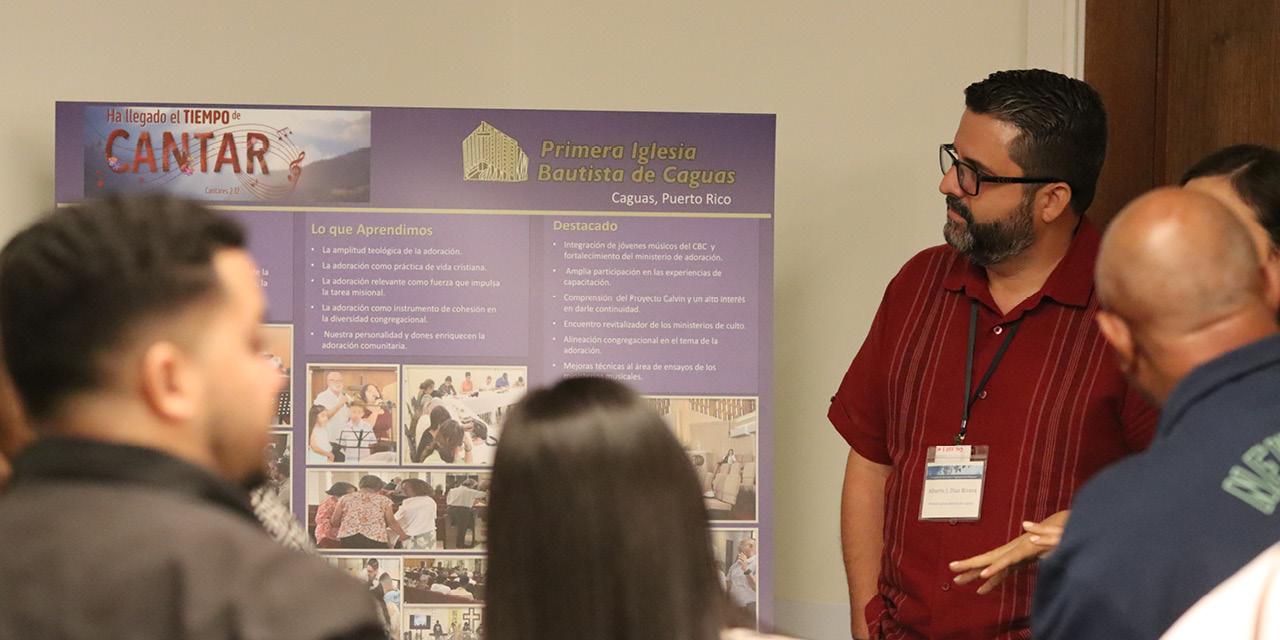
CAGUAS, Puerto Rico — The First Baptist Church of Caguas is experiencing a season of spiritual and community renewal after a long journey focused on revitalizing its worship life. Under the theme “The Time to Sing Has Come,” the congregation launched a series of initiatives blending music, theological study, biblical reflection, and intergenerational participation to rediscover worship as a holistic expression of faith.
Alberto J. Díaz Rivera, pastor of the congregation, said the project emerged from a discernment process about how to strengthen spirituality and fellowship within the church.
“Our project was based on revitalizing the worship experience through the inclusion of musicians, training, and fellowship among believers,” Díaz Rivera said.
A name rooted in Scripture
The theme comes from Song of Songs 2:10–12. Díaz Rivera explained that the passage reflects the joy and renewal that authentic worship can bring to a community of faith.
“We wanted to identify a biblical text that expressed what worship produces in the life of the church when it becomes an instrument for renewal,” he said.
Theological depth and lived practice
One of the central goals of the initiative was to explore the theological breadth of worship. “We believe worship impacts the totality of the believer’s life,” Díaz Rivera said. “It is not limited to what happens inside the church sanctuary but should shape our worldview and our participation in building God’s kingdom.”
That understanding guided the development of a set of theological statements used throughout the project. Lilybeth Bosch Ramírez, lay leader and coordinator of the educational process, said these statements became a framework for formation.
“They guided each experience toward deeper understanding,” Bosch Ramírez said. “We included training processes for all ages—from the youngest children to older adults—
and held church retreats that encouraged meaningful dialogue about the relationship between theology and daily life.”
Formation, music, and new expressions
The church also hosted formal teaching sessions and public forums. Bosch Ramírez said panels and workshops explored worship from the Baptist perspective while engaging with contemporary contexts.
“We invited speakers who approached the topic from both our historical and theological roots and current trends,” she said. “One of our young members who studied worship served as an internal resource and shared her insights with the congregation.”
Music became a defining element of the revitalization process. Linnette Vázquez González, a member of the church’s worship ministry, said the inclusion of guest musicians brought new life to services.
“It was a wonderful experience,” she said. “We wanted to introduce a more modern style of worship, and we achieved that. The congregation embraced it wholeheartedly.”
The project also fostered participation from young musicians at the Baptist Academy of Caguas. Four students and their music teacher joined the church’s worship team, playing saxophone, trumpet, drums, guitar, and percussion once a month.
“We achieved a balance between contemporary songs and our traditional choir ministry,” Bosch Ramírez said. “It allowed people from different generations, including older adults who also enjoy modern music, to participate together in worship.”
Educational and intergenerational impact
Díaz Rivera emphasized that the project extended beyond the sanctuary. “Part of the process included activities at the Baptist Academy, not only for Christian education teachers but also for students,” he said. “We organized retreats that offered spiritual experiences outside the traditional worship setting, reaching children and youth alike.”
The school, which serves 602 students from prekindergarten through twelfth grade, became a vital space to connect generations and to teach worship as a way of life rather than a single Sunday activity.
Preaching, gifts, and congregational life
For six months, the church hosted guest preachers who addressed the theme of worship from different perspectives. “It was a very intentional time,” Bosch Ramírez said. “We also offered a workshop on discerning spiritual gifts, helping each person recognize that, regardless of life stage, everyone has something to contribute to God’s kingdom.”
These efforts complemented biblical teaching and deepened the congregation’s understanding of worship as an all-encompassing response of faith.
Challenges and blessings
The process came with challenges. One involved encouraging children to participate in worship rehearsals. “We wanted them to sing and help lead the service, but scheduling was difficult due to family routines and the availability of grandparents who often bring them to church,” Bosch Ramírez said.
Even so, she noted that the effort strengthened the children’s understanding of worship and helped them feel included in the life of the church.
The surprises, however, were overwhelmingly positive. “One of the greatest joys was the congregation’s response to the integration of musicians and the contemporary style,” Díaz Rivera said. “It exceeded our expectations.”
Bosch Ramírez added that many church members offered their time and financial support to continue the effort. “That was precisely our goal—that people would want to engage actively in worship,” she said.
Vázquez González recalled that many members shared words of gratitude after services. “People would come up to me and say the music touched their hearts,” she said. “That was such a blessing.”
Identity and continuity
For Díaz Rivera, one of the project’s greatest accomplishments has been maintaining the congregation’s identity while embracing renewal.
“We have managed to keep the link between who we are and who we aspire to be,” he said. “We make space for new worship experiences without losing our essence. This allows the church to offer worship that is relevant to today’s multigenerational reality.”
The project officially concluded in June, but the congregation hopes to continue its momentum. “The church understood the purpose of this process from the beginning,”
Díaz Rivera said. “It has been a blessing to our community, and we know the lessons learned will continue to bear fruit.”