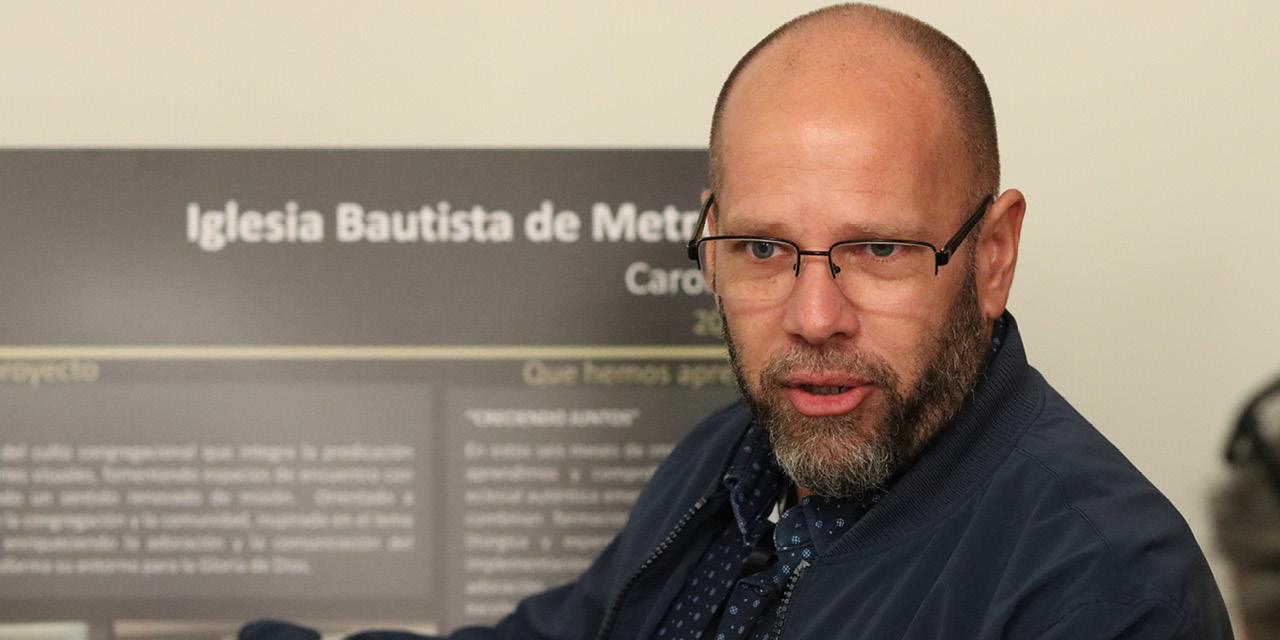
SAN JUAN, Puerto Rico — Iglesia Bautista de Metrópolis has experienced a significant transformation in recent months in its preaching and worship life thanks to a six-month revitalization program. The initiative not only strengthened the congregation’s spirituality, but created opportunities for training, nurtured new talents, and fostered a deeper sense of belonging within the faith community.
The project centered on a symbol that captured the imagination and faith of members: a Barbados cherry tree, known locally in Puerto Rico as an acerola tree.
“The purpose of this project was for each member to reflect on their own spiritual growth through the process of caring for this tree,” said Ricartel R. Rivera Roldán, one of the project leaders. “For five months we talked about planting, pruning, transplanting, (and) growing, and finally we saw the harvest. We had a closing service in June with baptisms, which is the greatest harvest a church can have.”
Symbolism of the acerola tree
Asked why the acerola tree was chosen, Rivera Roldán explained the qualities that made it the perfect metaphor.
“The acerola tree was chosen because it’s a strong tree that doesn’t die easily and produces fruit quickly,” he said. “That allowed us to see the process of growth, flowering, and harvest in just a few months parallel to our spiritual life. We learned that the flower must die for fruit to appear, just as we must die to certain areas of our lives so God can produce fruit in us.”
A transformed congregation
Pastor Luz Omayra Gutiérrez de Jesús said the project was designed to be more than just a metaphor.
“The purpose of using this illustration was to involve the church in a process of transformation and revitalization,” she said. “Illustrative preaching was combined with the arts—drama, skits and dance—and with worship that was relevant to our context. It was an immersive process where all generations participated and felt part of the church’s spiritual growth.”
The initiative also included training in preaching, hermeneutics, homiletics, media, voice projection, theater, and worship. Gloria E. Castillo Fargas noted that these workshops played a critical role.
“The workshops equipped us comprehensively, and everything was later integrated into the preaching and worship service,” Castillo Fargas said. “It was a process of teaching, practice, and rehearsal that strengthened our leaders and uncovered new talents in the congregation.”
Challenges and lessons
As with any large project, there were challenges along the way. Rivera Roldán recalled one of the early hurdles with humor.
“On the first day with the acerolas, it was windy, so some of the name tags blew off the trees,” he said. “One member thought their tree had been stolen. Others were missing fruits. Then we discovered the birds were eating the acerolas, and one of the sermons ended up being called ‘Don’t Let the Bird Take Your Fruit.’ It was a challenge, but also a fun teaching moment.”
For Gutiérrez, the greatest challenge was time.
“We had only six months to evaluate the church’s areas of opportunity and implement changes,” she said. “Thank God, the congregation responded with openness. But the challenge now is continuity. We don’t want this to be something temporary, but something lasting.”
Building community and belonging
One of the most notable results was how the project fostered unity and fellowship.
“Keeping the trees in the church for five months motivated members to arrive early to care for them and linger after worship to water them and check on them,” Rivera Roldán said. “Instead of rushing home, they stayed to share time together. That created bonds, because it’s not the same to attend a church as it is to belong to one. We want people to see each other as family.”
That vision is expressed in the church’s motto: “We come in to worship and go out to serve.”
Reaching all generations
The impact of the project was seen across all ages. At its conclusion, the church interviewed children, youth, adults, and older members about what they had learned.
“Hearing an eight-year-old say that he needed to prune away the things in his life that did not please God so he could grow was refreshing for us as pastors,” Gutiérrez said. “That child understood he belongs to the church and that he has a purpose to serve.”
The project’s influence extended beyond Metrópolis. In early July, members of the church traveled to the Dominican Republic to lead a camp for two churches, reaching about 130 children and youth.
“It was a testimony of giving freely what we had freely received,” Rivera Roldán said.
A multiplied blessing
Reflecting on the experience, Gutiérrez expressed gratitude for the growth the congregation has experienced.
“How wonderful the Lord is!” she said. “He put the dream in our hearts and, at the right moment, made it possible for us to strengthen our preaching and worship in ways we could have never imagined. In five months we achieved things we could never have done on our own.”
Castillo Fargas said what they learned will shape the church’s future.
“We now understand the importance of adapting to the present time,” she said. “We must continue growing, training, and applying new approaches to reach all generations.”
Iglesia Bautista de Metrópolis flourished through this initiative, not only symbolically with its acerola trees, but in the growth of a more united, equipped, and committed community. And while the fruits are already visible, leaders say the true harvest is only beginning.