What does God’s word have to say to us about trauma? Jesus met a lot of people in his ministry whom today we’d deem to be victims of social, spiritual, or personal trauma. But he brought healing words every time.
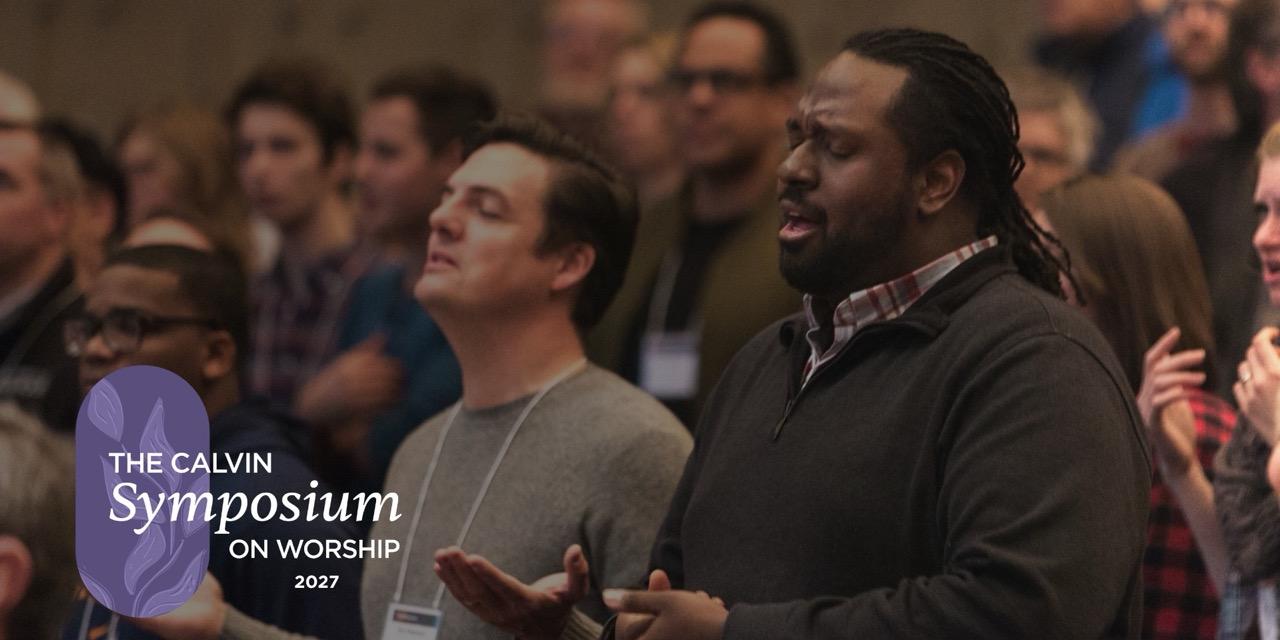
At this year’s Calvin Symposium on Worship, our four main worship services will feature some of these stories as well as music, litanies, and sermons that seek to bring gospel comfort and a sense of shalom to all those weary and heavy-laden people Jesus once invited to come to him for his gracious rest.
Service One: Mark 5:21–43
In the Gospel of Mark, the author often brings together two different stories and connects them to reveal a greater meaning. In this passage, a 12-year-old girl is sick and will soon die. But on his way to heal her, Jesus is touched by a woman living with a bleeding disorder. This woman had long been socially and religiously dead; the young girl physically died. Yet Jesus enters the trauma, grief, and suffering to bring a better reality through the power of the gospel and the Savior at its center.
Service Two: John 4:1–42
The apostle John wrote some of the Bible’s longest narratives in his Gospel. Jesus’s encounter with the Samaritan woman at the well in the village of Sychar is one such story. In his conversation with this stigmatized, lonely, and traumatized woman, Jesus reveals much about the heart of God and the good news of the gospel for those living with pain and isolation.
Service Three: Luke 13:10–17
Luke focused much of his Gospel on the marginalized of society. In this healing story we find ourselves in a place where you would expect to see restoration for people living with trauma and hurt: in a house of worship on the Sabbath. Here Jesus encounters another hurting person and restores her health only to have the religious authorities object that such healing was against the Sabbath rules. Sometimes the communities that should offer healing fail to do so, but Jesus breaks through with good news again and again.
Service Four: Matthew 11:1–6, 25–30
Matthew had a theme for his Gospel: Immanuel, God with us. Matthew 11 begins with a hard question that must have made a deep impression on Jesus, our Immanuel. Maybe it even hurt his heart a bit. John the Baptist, sent by God to prepare the way for Jesus, wondered as he languished in Herod’s prison whether he had been correct to hail Jesus as God’s promised Messiah after all. The world still held so much pain and trauma, and it did not seem to be changing fast enough for John. So John’s disciples ask Jesus, “Are you the one who is to come, or are to wait for another?” Jesus answers the question, but at the end of this same chapter, he directly addresses the weariness John is feeling, inviting all people into the rest Jesus alone can give. He is Immanuel, the always-with-us God, even to the end of the age.