Seeing Christ in the Face of the Other: Singing the Psalms for Reconciliation with Karen Campbell
In 2020, the Presbyterian Church in Ireland published the book Considering Grace, which narrates the stories of 120 people and their proximity to the troubles in Northern Ireland. Though clergy were applauded for often acting as first responders to the victims, wider questions regarding the denomination were raised. Could they have spoken up more and been a prophetic voice? In response, the Presbyterian Church in Ireland commissioned Karen Campbell to convene groups to produce a suite of songs, prayers, and liturgies from the psalms of lament to be used in congregational settings to voice lament, confess complicity, and raise deeper questions surrounding justice. This workshop will discuss the process involved and the questions raised and will include some of the songs, liturgies, and prayers that were produced.In 2020, the Presbyterian Church in Ireland published the book Considering Grace, which narrates the stories of 120 people and their proximity to the troubles in Northern Ireland. Though clergy were applauded for often acting as first responders to the victims, wider questions regarding the denomination were raised. Could they have spoken up more and been a prophetic voice?
June 29, 2026
|
87 min video
How to Preach and Hear the Psalms
A workshop which shows participants how to preach genre-conscious sermons from the book of Psalms. Attention will be given to historical, literary, and theological issues with the aim of improving hermeneutical, generical, and homiletical practice. Participants, including hearers of sermons, will expand their knowledge of the psalms as a genre, develop genre-conscious forms and structures, and cultivate new strategies for homiletical practice.
June 23, 2026
|
82 min video
Ryan Turnbull on Anglican Poetics and Worship
Studying Anglican poetics helped Anglicans in Manitoba, Canada, enter more deeply into worship and liturgical life. It also helped them connect with non-Anglicans as they explored shared human experiences through metaphor, imagination, and writing poems.
June 23, 2026
|
7 min read
Tiempo ordinario, mes de julio: En las crisis de la vida, la esperanza nos renueva
Los salmos de este mes, a la luz de la resurrección de Jesús y del triunfo de la vida sobre los poderes de la muerte, nos recuerdan realidades que no podemos soslayar. Los sufrimientos diarios pueden sobrellevarse a partir de la memoria de lo que Dios ha hecho por nosotros, como pueblo y como individuos (Salmo 77). En las grandes crisis nacionales, el Señor está con su pueblo como refugio seguro (Salmo 48). Si es cierto que los jueces humanos se venden al mejor postor, y la justicia parece ausente de nuestros pueblos, tenemos la esperanza de que Dios juzgará a quienes juzgan en la tierra (Salmo 82). Y cuando desesperamos ante la soberbia y la prepotencia de quienes gobiernan el mundo, la palabra profética nos da una firme esperanza de que tales personas serán desarraigadas de la tierra (Salmo 52). Así, cultivamos la esperanza recordando que la vida tiene la última palabra. Jesús, el Mesías, ha vencido, y con él somos más que vencedores.
June 10, 2026
|
15 min read
Psalms for Every Tribe and Tongue
Drawing inspiration from Revelation 7:9, Terry and Darlene Wildman will lead this workshop exploring how the First Nations Version: Psalms speaks into—and flows out from—the hearts of Indigenous North American cultures today through storytelling, songs, and interactive activities. Participants will experience how these ancient prayers continue to inspire worship that celebrates cultural diversity and unity in Creator’s Sacred Family.
June 4, 2026
|
79 min video
Local Songwriting as CSA: Support Your Local Psalm Grower!
Riffing on the themes of community-supported agriculture (CSA), Cardiphonia and Bellwether Arts have been partnering with homegrown liturgical artists to create local, organically produced fruits of the psalms through song, art, and prayer—community-supported artistry. Since 2015 they’ve been on a journey of seasonal engagement through which they have lovingly harvested almost two hundred songs, dozens of original artworks, and other liturgical produce. In this workshop you will hear from a variety of growers who sow and reap in West Michigan in various soils and sediments.
May 28, 2026
|
81 min video
Practicing Resilience with the Psalms
The psalms are a rich resource for our human experience of emotions, community, and connection to God. We will practice activities based on the truth of the psalms and on psychology to strengthen our capacity for navigating suffering with grace and resilience.
May 21, 2026
|
74 min video
Preaching and Teaching the Psalms: A Conversation with Pastor-Theologians
A panel discussion in which Amanda Benckhuysen, Karen Campbell, G. Sujin Pak, and moderator Kathy Smith ponder the challenges and opportunities in preaching and teaching from the psalms. Are there incomplete or incorrect assumptions about the psalms that sermons and lectures can tackle? How do we handle the imprecatory psalms when we have a Savior who told us to love and forgive the very enemies many psalms talk about? The panel will consider these and other vital questions for preachers and teachers in today’s church.
May 14, 2026
|
89 min video
Being Shaped by the Psalms: Lessons in Trust, Hope, and Love
The psalms reflect our deepest emotions as people of faith. In their expressions of thanksgiving, trust, lament, anger, joy, doubt, and praise, these ancient prayers seem to peer right into our souls and put words to our thoughts and experiences. But the psalms are more than human words to God. Embedded as they are in the scriptures, they are now also God’s word to us.
May 12, 2026
|
80 min video
Surprised by the Psalms
Anneke Kaai studied fine art and painting in the Netherlands at secular schools in the 1960s and ’70s. That experience compelled her to express her Christian faith through her art. She has painted many works based on scripture, including three series of paintings on the psalms, which she sees as a bountiful resource of imagery for the full range of human feelings in relation to God.
May 5, 2026
|
90 min video
Karen Campbell on Considering Lament: Psalms of Protest, Pain and Hope
Technically, the Troubles in Northern Ireland ended in 1998. But just as trauma didn’t end after the passage of the US Civil Rights Act or the work of South Africa’s Truth and Reconciliation Commission, pain still lingers in Northern Ireland. Karen and David Campbell composed a new set of lament songs to help Christians voice protest, pain, and hope during worship.
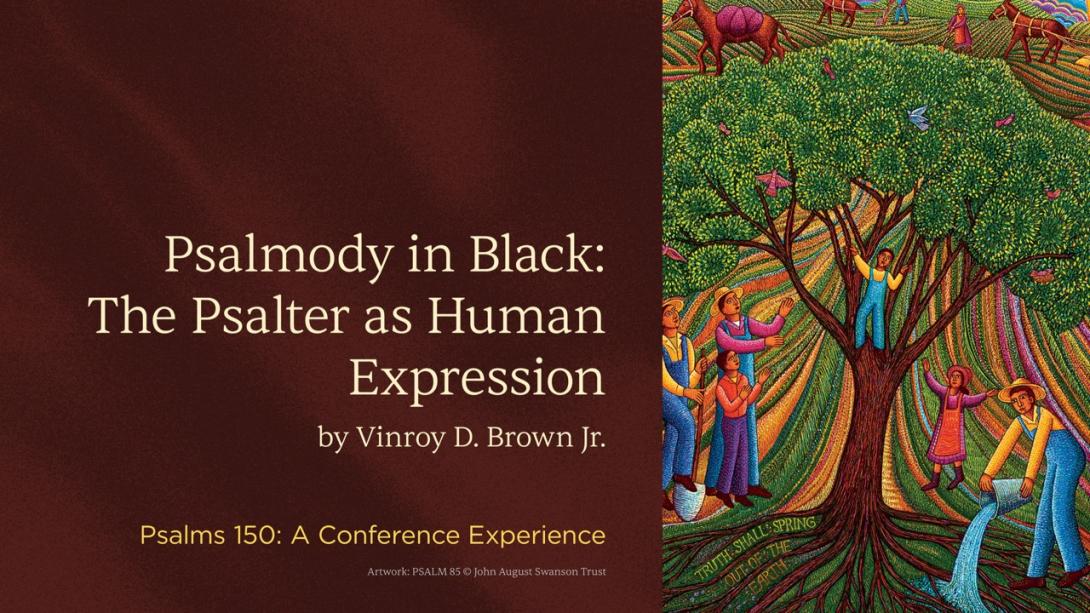
Psalmody in Black: The Psalter as Human Expression
This workshop explores the deep connection between the psalms and the breadth of human emotion through musical settings by Black composers. Interwoven with reflections on the history and function of the Psalter, this program reveals how these timeless texts continue to speak to the spiritual, emotional, and cultural experiences of our shared humanity.
May 1, 2026
|
90 min video