Apply for the Vital Worship, Vital Preaching Grants Program to support and enhance Christian worship practices. We encourage proposals on universal design, cultural engagement, preaching, baptism, the Lord’s Supper, and more. Two grant streams are available.
Join us for our Symposium on Worship and Summer Seminars. Engage in inspiring sessions, workshops, and intensive seminars to deepen your understanding and practice of Christian worship.
The Calvin Institute of Christian Worship at Calvin University advances Christian worship through resources, events, and grants. Since 1997, we have partnered with congregations and organizations to fulfill our mission.
María Eugenia Cornou invites reflection on how power distance impacts the role of the preacher, how scripture is viewed and interpreted, and the act of preaching.
In this segment, I invite you to reflect on power distance and preaching. Culture is created, shaped, transmitted, and learned through communication. The reverse is also the case—that is, that communication practices are largely created, shaped, and transmitted by culture. As a communicative event, preaching is inextricably embedded in culture. Different dimensions of culture influence preaching practices to different degrees. As a cultural value that deals with an authoritative text and authoritative speech, power distance plays a key role to understand different cultural views of preaching. Different perceptions of authority deeply influence how preachers see themselves, how they speak, how they act, as well as how people listen and people’s expectations on the preacher and the sermon, including if you are allowed to express any disagreement with your pastor’s interpretation.
Religious beliefs and different ways religious institutions are organized have a deep influence on culture and values—and vice versa. Europe is a good example of the influence of religion on power distance. Countries with a Protestant majority or which have been largely influenced by Protestantism tend to be more egalitarian than those in the Roman Catholic tradition. On the other hand, power distance may also be related to religious preferences and the way religion operates in a certain country. In an interesting study on the growth of evangelical Christianity, Rosson and Fields argue that this form of Christianity—evangelical Christianity, and Pentecostalism in particular—is growing in countries with high power distance cultures.
In addition to national cultures perspective, social class provides another frame to understand power distance, authority, and privilege in certain societies or subgroups and their influence on preaching. In their book Preaching to Every Pew, Nieman and Rogers claim that in various parts of the world today, economy is a social criterion for hierarchy. People from different social classes have different views of authority which have repercussions on the pastoral authority of the preachers and the scriptures. Pastoral authority is influenced by different cultural perceptions of authority and how small or large the distance is between regular people in the pews and the preacher.
This perceived gap has implications for trust, which is indispensable for preaching. Trust is built on meeting expectations. In their survey, Nieman and Rogers identified three areas of preaching expectations: the view of the scripture, the use of the scripture, and the sermon itself. In certain cultures, age is an important authority factor. Younger preachers may be granted authority if they bear the confidence and maturity one would find with an older person.
In low power distance cultures, women preachers are granted the same or very similar authority as male preachers, which is less likely to happen in hierarchical societies. In most cases, hierarchical societies are also patriarchal.
People from all cultures value consistency between speech and behavior. But in high power distance cultures where authority figures are considered existentially unequal, expectations are higher. Even though authority figures receive deferential treatment, in high power distance cultures, there may also be distrust of authority, which increases the expectations on the preacher's ethics in the Christian community context. Somehow the preacher becomes part of the text, and the credibility of the sermon cannot be taken seriously apart from the person of the preacher.
Education is another element related to the view of the preacher as authority. Education is a privilege, especially in hierarchical societies where opportunities and access to formal education are more limited. Even in more egalitarian societies, there has been a shifting criterion for hierarchy from the social to the economic. Education is still a factor that signals social class. The gap between the level of education of the preachers and their congregations can be solved in different ways. In high power distance cultures, the gap tends to be larger. This can result in higher respect for the preacher as the expert, leading to submission to the preacher’s ideas, requests, instructions, or even demands. This can also result in emotional distance from the preacher in groups that distrust authorities—A sort of “The pastor, the preacher is not one of us.”
How people see the scriptures and its interpretation are also influenced by power distance. In hierarchical cultures, people's attitudes toward authorities also shape their relationship with the sacred text. There is usually a preferred version or translation, and the biblical interpretation tends to be more literal. Hierarchical societies are in general more traditional; still, in some contexts, the use of a historical-critical method is seen with suspicion. . . . The twentieth-century hermeneutical shift from text-centered toward reader-centered interpretation: this paradigm shift somehow transferred the authority from the text and the interpreter, preacher, as the one who delivers the Word of God to the authority of the community. Reader-centered interpretation makes sense in more egalitarian societies, which tend to suspect any external authority, but could be problematic in high power distance contexts.
As you know well, in the twentieth century in the Western world there has been a shift in the field of homiletics too, with the emergence of new homiletics with a new emphasis on the audience and an inductive approach. This shift reflects a more egalitarian view of power. Authority is not located in the text in an objective way, but rather in the relationship between the preacher, the text, and the congregation. Preacher and audience are co-creators of this experience, which becomes less hierarchical and more relevant. This approach contrasts with traditional preaching that is still used in many countries with hierarchical cultures.
In my experience traveling and visiting countries in the majority world, I have noticed that in many pulpits still preachers use the “three points” preaching style with an inductive structure, and preaching is still expository, oriented to the transmission of ideas. But interestingly, there is a contrast in the majority world in the Pentecostal–Charismatic movement. Their preachers use the narrative storytelling style used to engage more with emotions and the audience needs. But still the authority remains in the text and the preacher. This seems to reflect the hierarchical perspective of that context. Sometimes the preacher’s authority is reinforced by other symbols, from the use of hierarchical titles in the apostolic movement or the use of symbolic language from glossolalia to praying for people with anointment or laying on the hands and so forth.
Contemporary worship is another manifestation of the twentieth-century shift toward a more egalitarian perspective. Differences in power distance perception pose many challenges for the teaching of homiletics and preaching practices in an increasingly diverse world.
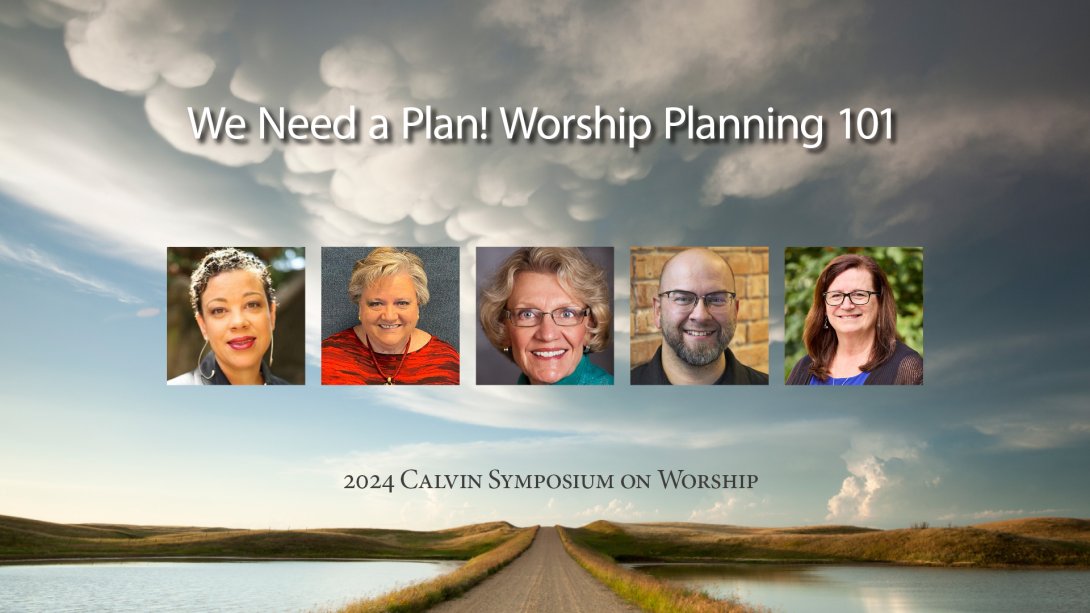
What basic models for worship planning are out there, and which patterns will work best in your context? Join a lively discussion of several worship planning models by the authors and pastors who use them. Bring your questions and suggestions as we learn together.
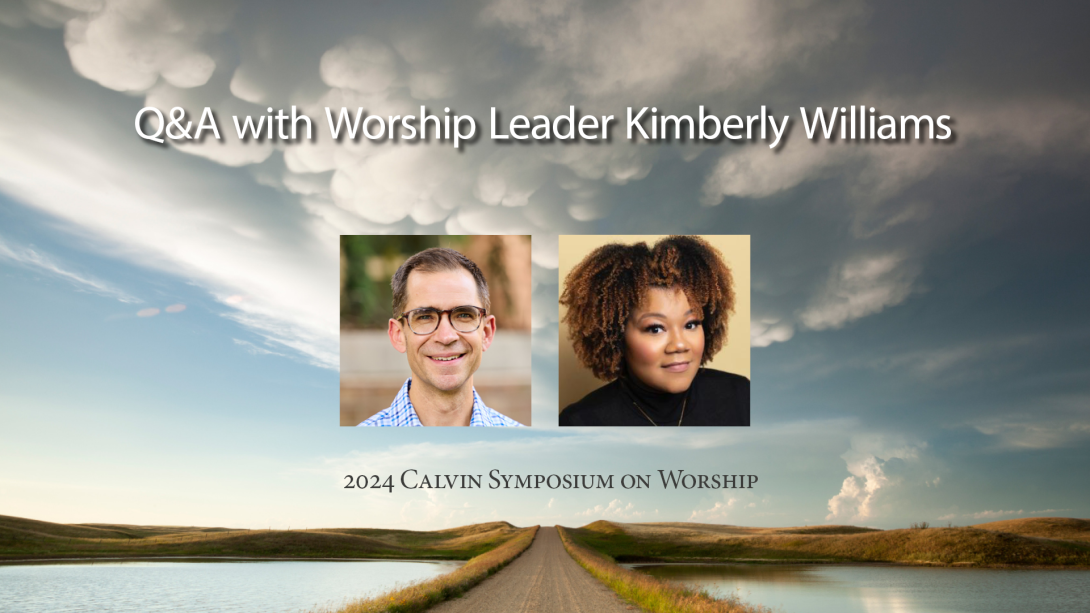
Join us after the University worship service (chapel) for a conversation with worship leader Kimberly Williams. We will explore topics related to worship leading and planning for diverse congregations, leading teams, songwriting and recording, and mentoring women in ministry.
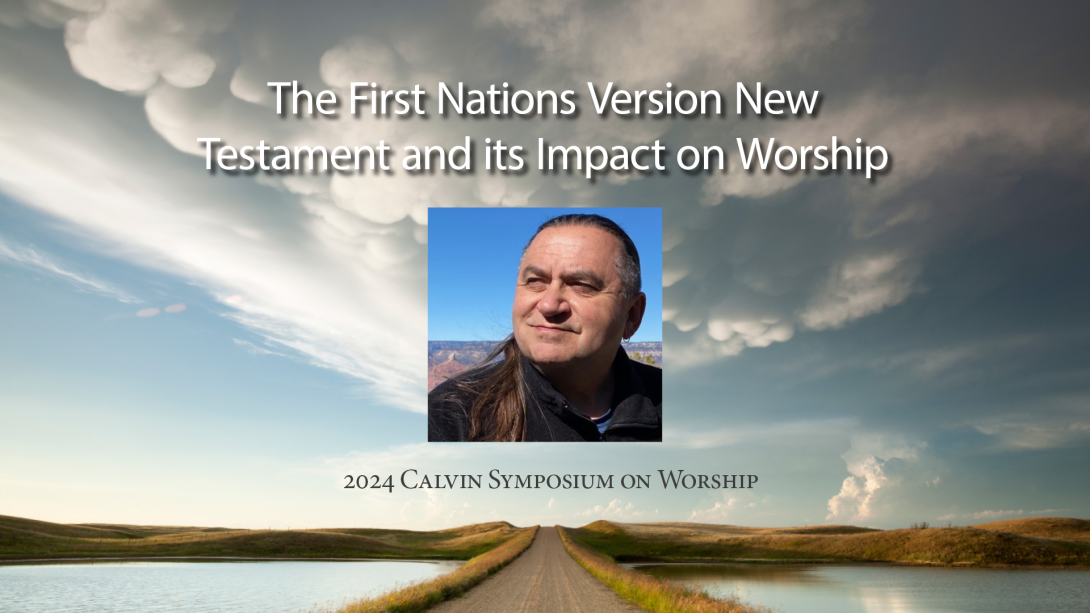
The First Nations Version New Testament and its Impact on Worship
In this session Terry Wildman will share the vision, process, and outcomes of the First Nations Version (FNV) New Testament. Why was this translation needed? Who was involved in the translation? What were some of the cultural challenges faced by the translation council? What does it say about the translations done in Native languages in the past? How did the translation council decide on more than 185 key words and terms? What are some of the unique qualities of the FNV versus other English versions? How has the FNV affected the worship expressions of some Native believers? What is the future of the FNV?
What basic models for worship planning are out there, and which patterns will work best in your context? Join a lively discussion of several worship planning models by the authors and pastors who use them. Bring your questions and suggestions as we learn together.
Join us after the University worship service (chapel) for a conversation with worship leader Kimberly Williams. We will explore topics related to worship leading and planning for diverse congregations, leading teams, songwriting and recording, and mentoring women in ministry.
The First Nations Version New Testament and its Impact on Worship
In this session Terry Wildman will share the vision, process, and outcomes of the First Nations Version (FNV) New Testament. Why was this translation needed? Who was involved in the translation? What were some of the cultural challenges faced by the translation council? What does it say about the translations done in Native languages in the past? How did the translation council decide on more than 185 key words and terms? What are some of the unique qualities of the FNV versus other English versions? How has the FNV affected the worship expressions of some Native believers? What is the future of the FNV?
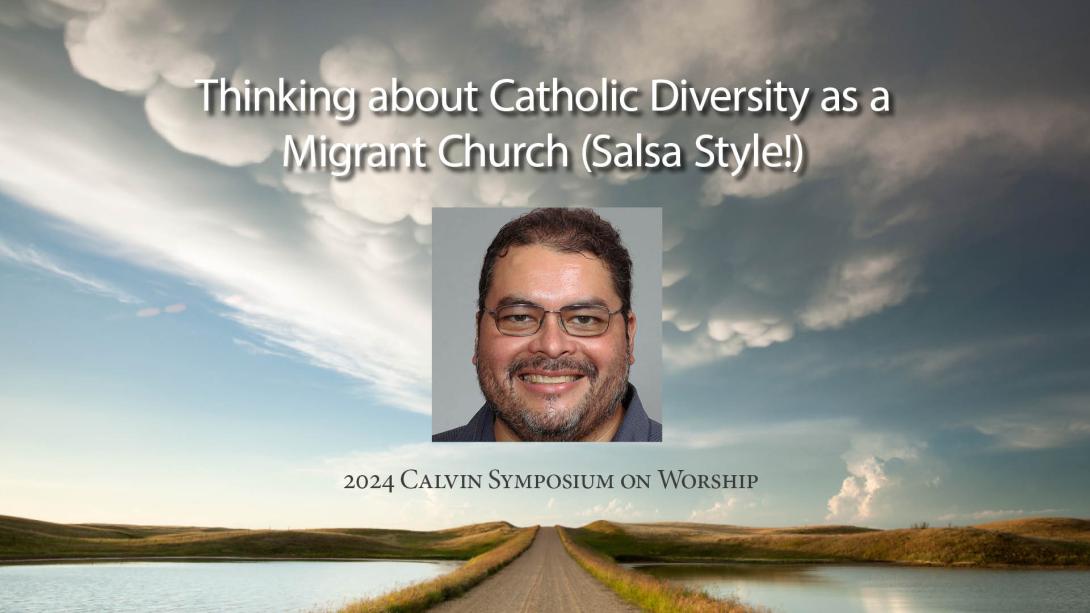
Thinking about Catholic Diversity as a Migrant Church (Salsa Style!)
How does one think about diversity as a Christian or as the church? How might working with and among—or even just thinking about—migrant neighbors contribute to our ecclesial identity? The language of catholicity allows us to imagine the unity of the church not in a monocultural way, but rather as a community inclusive of people of all languages and ethnicities. Migration and migrants today especially remind the church of its own catholic identity. How does the church's identity as a migrant church foster a healthy catholicity in the church's worship? This session will include the use of salsa music to invite participation in a more catholic way of life, asking what multicultural, cross cultural, and intercultural ways of being a church on the move might look like in worship.