Apply for the Vital Worship, Vital Preaching Grants Program to support and enhance Christian worship practices. We encourage proposals on universal design, cultural engagement, preaching, baptism, the Lord’s Supper, and more. Two grant streams are available.
Join us for our Symposium on Worship and Summer Seminars. Engage in inspiring sessions, workshops, and intensive seminars to deepen your understanding and practice of Christian worship.
Developed in partnership with the Calvin Institute of Christian Worship and the Calvin University School of Graduate and Continuing Studies, this online course equips worship planners and leaders of all types of ministries with practical tools for relating well to people from a variety of cultures. Understanding and respecting cultural differences is key to a healthy ministry.
The Calvin Institute of Christian Worship at Calvin University advances Christian worship through resources, events, and grants. Since 1997, we have partnered with congregations and organizations to fulfill our mission.
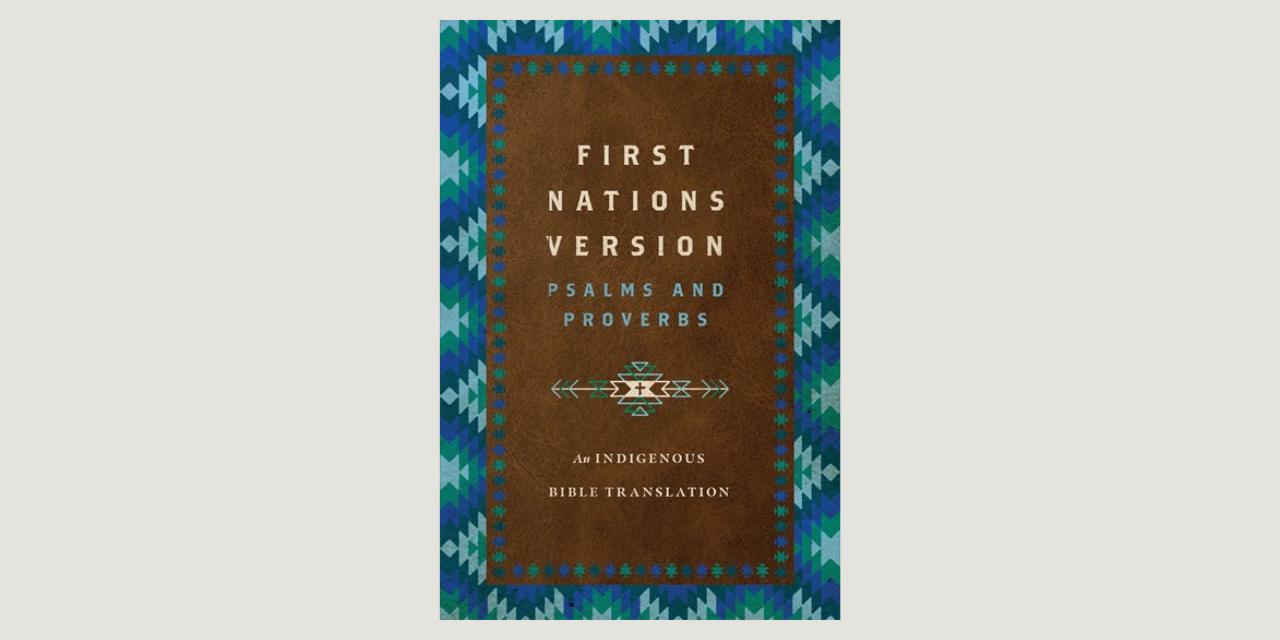
Indigenous cultures are storytelling cultures. So were the cultures of ancient Israel and its neighbors—the cultures Jesus lived among. First Nations Version (FNV) projects translate the Bible through the intertribal lens of Indigenous people in North America. The latest project, FNV Psalms and Proverbs, remains faithful to the Old Testament’s Hebrew poetry and wisdom literature while offering new ways to help readers place themselves in God’s story.
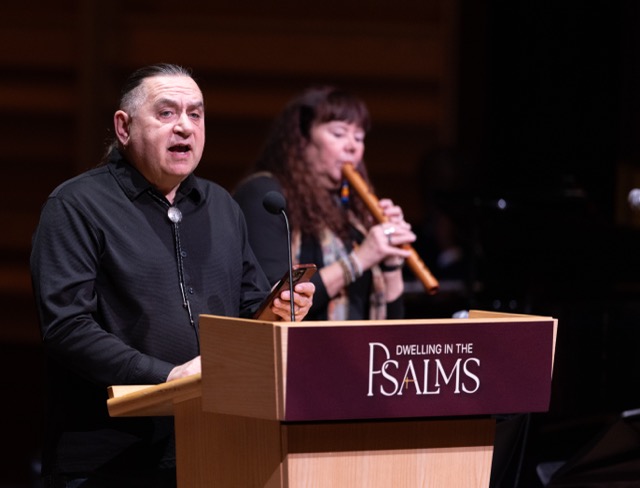
Terry and Darlene Wildman at the 2026 Psalms 150 Conference
Terry M. Wildman (Ojibwe and Yaqui ancestry) is the lead translator, general editor, and project manager of the First Nations Version of the Bible. He has been a pastor and worship leader and is now director of spiritual growth and leadership development for Native InterVarsity. He and his wife, Darlene Wildman, founded Rain Ministries and live in Maricopa, Arizona, on the traditional lands of the Pima, Piipaash, and Tohono O-odham. In this edited conversation, Wildman talks about cultural relevance of the most recent First Nations Version (FNV) translation project: Psalms and Proverbs.
How are Indigenous and Old Testament cultures similar?
In both the Bible and First Nations, storytelling, names, and their meanings matter. All creation is seen as alive and responding to Creator. In scripture, rivers clap their hands, mountains sing (Psalm 98), and trees clap for joy (Isaiah 55:12). Before entering the Village of Peace (Jerusalem), Creator Sets Free (Jesus) said if the people weren’t allowed to praise him, then “the very stones and rocks we are walking on would lift their voices and cry out” (Luke 19:40, FNV). Paul said that “all creation is still groaning in pain like a mother giving birth” (Romans 8:20, FNV).
Hebrew poetry describes the sun as rising, setting, and racing across the sky. It uses names from spiritual beings and gods of other nations to name stars and constellations like Pleiades, Orion, and the Bear and her cubs (Job 38:31–32). This older way of seeing the world—shared by many First Nations peoples—may be more than poetry. It reminds us that scripture isn’t limited to a modern scientific viewpoint.
What’s an example of how you translated a Hebrew metaphor in an Indigenous way?
Several Old Testament passages speak of “the foundations of the earth.” Hebrew scripture follows the ancient Near Eastern worldview that pictures Earth as flat and held up by mountainous pillars of rock. Many First Nations peoples have stories of a giant turtle that holds up the land. Our translation council felt it was appropriate to use a strong turtle as a metaphor for the earth’s foundations. So we translated Psalm 104:5 as “You set Mother Earth firmly on the strong turtle’s back, never to be moved from her place.
What was the same and different in your FNV New Testament and Psalms/Proverbs processes?
We followed the same process for Psalms and Proverbs as we did for the FNV New Testament. A translation council of twelve members from different tribes reviewed my initial translation work. Then consultants went over every verse after the reviews by the council. Names were important in both projects. As in the FNV New Testament, we used “broken ways” and “bad hearts” instead of “sin” in Psalms and Proverbs. For example, we translated Psalm 51:3 as “For I can see the wrongs I have done. My broken ways never stop haunting me.”
The biggest difference was translating from Koine Greek in the New Testament compared to translating from Hebrew in Psalms and Proverbs. Once we got into the psalms, we got a feel for how Hebrew is closer to an Indigenous style language. The psalms go back three thousand years. The Greek used in the New Testament is a more advanced and technical language. Hebrew is a simpler language with fewer words than Greek has, so a single Hebrew word packs in a lot of information. The United Bible Society Translators Guide handbooks are really helping us with the Old Testament. These verse-by-verse handbooks for every book of the Bible give translators idea on how to translate verses and concepts into other cultures.
What were your biggest challenges in translating Psalms and Proverbs?
The biggest challenge was translating all the names. We had many names to translate for the New Testament, such as Father of Many Nations (Abraham), Chosen One (Christ), and Stands on the Rock (Peter). We used “sacred lodge” for “temple.” But the Old Testament has so many more names than the New Testament does—2,700 unique names of people and places. We named the books Sacred Songs (Psalms) and Wise Sayings (Proverbs).
Finding a First Nations name to represent the name of God used in the Hebrew scriptures was a unique challenge for our Psalms/Proverbs translation. The Hebrew name for God is transliterated as YHWH, four consonants many Jewish people do not pronounce for traditional reasons. Instead, they say Adonai (Master) or HaShem (The Name) out of a sense of deep respect. Many Hebrew language scholars suggest pronouncing this name as “Yahweh.” Most English Bibles replace YHWH with Lord in all small capital letters. This font distinguishes Lord from “Lord,” which refers to the Hebrew Adon, which can be translated as Lord, Master, Chief, Ruler, and the like.
So why didn’t you replace YHWH with LORD?
George “Tink” Tinker (Osage), professor emeritus at Iliff School of Theology in Denver, Colorado, suggests that using “Lord” in English translations is not in line with Native American cultural norms. Tinker acknowledged in Chapter 5 of A Native American Theology (Orbis Books, 2001) that the confession “Jesus is Lord” is foundational for many European-American Christians.
We needed a unique name we had not used in the FNV New Testament since the New Testament Greek does not translate the name for YHWH. The First Nations name needed to be meaningful, honoring, intimate, and intertribal. I proposed “Grandfather,” a word that many First Nations people already used for their supreme being before the Europeans arrived. It’s used now at intertribal powwows and other First Nations events.
Grandfathers and grandmothers are highly honored in all Native cultures. “Grandfather” carries relational weight and is a name of respect, dignity, intimacy, and loving authority. It fits with the Daniel 7:9 reference to God as “Ancient of Days” or “Ancient One.” FNV translation council member Courtland Hopkins (Lakota/Navajo) said that referring to Creator as Grandfather speaks to him as a Lakota believer: “It has to do with our family structure. In many ways, the tribe was our family, and every older tribal member would be worthy of the terms Father, Mother, Auntie, and Uncle, but being a Grandfather was especially important. I believe it is necessary and proper that in the translations of the Old Testament into the FNV, we use the term Grandfather.”
Did you get pushback on using Grandfather to replace YHWH?
Some Indigenous cultures are egalitarian or matrilineal, but the Bible was written to patriarchal people. However, the Bible uses feminine and masculine metaphors to help us understand God. We had some pushback in our council for choosing Grandfather as the main name for YHWH. We thought using the term Grandmother Wisdom, especially in Proverbs, would help balance out the patriarchal approach. In a similar way that Grandfather represents a male image of God, Grandmother Wisdom could represent a female image of God.
Grandfather is not the only name that could have been chosen for YHWH, but it was deemed an appropriate cultural choice for the FNV because many of our Native peoples refer to Creator in this way. Wherever you read Grandfather in the FNV, you can know that YHWH is the Hebrew name being represented. However, for El or Elohim (often translated “God” in English Bibles) we used nongendered names such as Great Spirit, Creator, Most Holy One, Maker of Life, Giver of Breath, and more.
Where did you use Grandmother Wisdom or nongendered names for God?
In the book of Wise Sayings (Proverbs), the Hebrew scriptures personify wisdom as a woman. The FNV follows this practice by presenting wisdom as a grandmother with her sister Understanding and her nieces Good Sense and Clear Thinking. The earth is also feminine and honored as Mother Earth, for she shares the motherhood of our bodies and is the provider of all water, foods, and herbal medicines. Wise Sayings 3:19 says, “Through Grandmother Wisdom, Grandfather set Mother Earth firmly in place.” Wise Sayings 8:22–31 also presents Grandmother Wisdom as Grandfather’s partner in creating the universe.
Our council noted that English translations of Proverbs often present women negatively. In cases where the Hebrew is not gender-specific, we use non-gendered words. So where many translations of Proverbs 1:8 and 1:10 translate a Hebrew word as “son,” we say “child.”
How else did you translate Psalms and Proverbs from an Indigenous perspective?
Translation council member Christian Orlando Locklear (Lumbee) suggested replacing the Hebrew word selah with “honor beat on the drum.” The word appears 72 times in Psalms and twice in Habakkuk, but there is no consensus among Hebrew language scholars on what selah means. They say it might mean an exclamation, a pause to reflect, or a musical instruction for instrumentalists.
Our modern Native powwows or gatherings often include the drum. When a speaker makes an important point, the singers on the drum will hit the drum with a loud, hard single beat (and sometimes more) to affirm what is being said. We suggest that when reading the psalms aloud, instead of saying selah, someone will make an honor beat on the drum.
Many Indigenous people in North America learn about each other’s culture at intertribal events like powwows. This has created a common language of experience and concepts. However, some people in remote northern locations in Canada are more isolated and don’t interact as much with other First Nations cultures. That may be why the FNV doesn’t resonate with them.
What feedback have you received from non-Native Christians, biblical scholars, and translators?
We’ve gotten even more feedback from them than from our Native peoples. Biblical scholars interview me and tell me they read it for personal devotions. When they study the Bible for a living, reading it for devotions can feel dry. The FNV gives them a fresh lens.
Like many Indigenous peoples, the historic people of Israel recognized diverse humanlike depictions of Creator. Their culture was patriarchal, and this is often felt in tension with the more matriarchal cultures of our Native peoples. We bring out meanings from Hebrew words that other translators have overlooked. Our translations make an effort to emphasize that God is neither male nor female.
What’s next for the FNV team?
We are working with Brian Doerksen, a world-renowned songwriter, to write songs from the FNV psalms. We have started working on Genesis through Joshua and expect that IVP will release those translations in 2028. The plan is to finish the entire Old Testament FNV by 2035.