Monica Schaap Pierce is an ecumenical leader, public theologian, and the executive director of Christian Churches Together. CCT is an ecumenical community of relationships among denominations, individual churches, and Christian nonprofits in the United States. Pierce is the Reformed co-chair for the ninth round of Roman Catholic-Reformed dialogue. She has also taught theology in Catholic and Protestant universities and seminaries. In this edited conversation, Pierce discusses how CCT practices receptive ecumenism.
What’s a quick description of Christian Churches Together?
Since 2006, CCT has been a living bridge across divides often deemed insurmountable.It provides a singular space in the United States marked by prayer, worship, and fellowship where Christian leaders from across traditions come together. Our purpose is to love across difference, learn across traditions, and lead together in faithful witness to the reconciling love of Jesus. CCT’s five families of Christian tradition bring together thirty-four groups representing over sixty million American Christians.
We talk about participant communions, not members. Our emphasis is on understanding each other. CCT is more a community of relationships than, say, the National Council of Churches. NCC is a traditional conciliar ecumenical organization that works toward theological unity and unity of action. It represents over thirty million American Christians from thirty-seven member communions.
What surprises people about which communions and organizations are or are not involved?
People are surprised by our diversity. On our steering committee, 40 percent of people are immigrants, and half are people of color. This diversity reflects changes in denominations in the United States and the shift of Christianity to the Global South.
Unlike NCC, CCT includes the United States Conference of Catholic Bishops and evangelical and Pentecostal churches. We also include six national organizations: Bread for the World, Bridge of Hope, the Calvin Institute of Christian Worship, Habitat for Humanity International, International Justice Mission, and Sojourners. These groups bring their own evangelical mission and witness.
Who else would you like to involve in CCT?
It would be great to have the Southern Baptist Convention and nondenominational churches to more fully reflect the shape of American Christianity. This would help even more Christians encounter real people that they might have known only through stereotypes. Besides having official participant representatives at our CCT annual forums, we’ve also had people attend as official observers or ecumenical guests. So, we often have more than forty church denominations represented at our gatherings.
What practices shape your work?
Three practices that hold us together are faith sharing, receptive ecumenism, and contextual discernment. Faith sharing means sharing common commitments but also telling stories about how we live out our faith as members of different faith families. This practice of faith sharing is based on the Evangelical or Pentecostal practice of sharing your testimony. So it’s less about the content of the faith that we share and more about one’s own experience of faith in their life.
Traditional ecumenism often begins by asking what Christians can agree upon. Receptive ecumenism asks a different question: What gifts has Christ given to other Christian communities that we need to receive? Contextual discernment means discerning how to bear witness in specific places or contexts.
How does your emphasis on relationships come through in CCT events?
Our main event is our annual forum, which takes place in a different city each time. Relationships are foundational in CCT, so we prepare forum participants ahead of time. We send out a five-day devotional to help people prayerfully reflect on how to be genuinely open to Christians who are very different. The devotional takes people through a five-step journey: ready, relate, receive, repent, and respond.
At the start of each meeting, we ask, “What do you hope to receive from the Holy Spirit?” Sometimes participants don’t know till a transformational moment happens. To end each forum, we ask, “What did you receive?” This ecumenical learning, loving, and leading requires participants to have a disposition of healing and openness.
What happens at a CCT forum?
We always have a theme to explore through presentations, worship, and encounter. Our 2024 theme was to discern the Holy Spirit’s word for the churches today. We reflected on how the “third person” of the Trinity works through baptism, Eucharist, and discipleship. We chose that topic because we convened in Memphis, Tennessee, and 2024 was the thirtieth anniversary of the Spirit-filled Memphis Miracle. It was also the first anniversary of the Asbury revival. Both events included a concern for repentance and racial reconciliation.
At the annual forum, someone from each church family gives a theological presentation on that year’s topic. We try to have incarnational experiences of one another. So, instead of praying in hotel conference rooms, we worship together in local churches. We learn from the sacred symbols, architecture, and ministries of local houses of worship.
What other learning happens at a CCT forum?
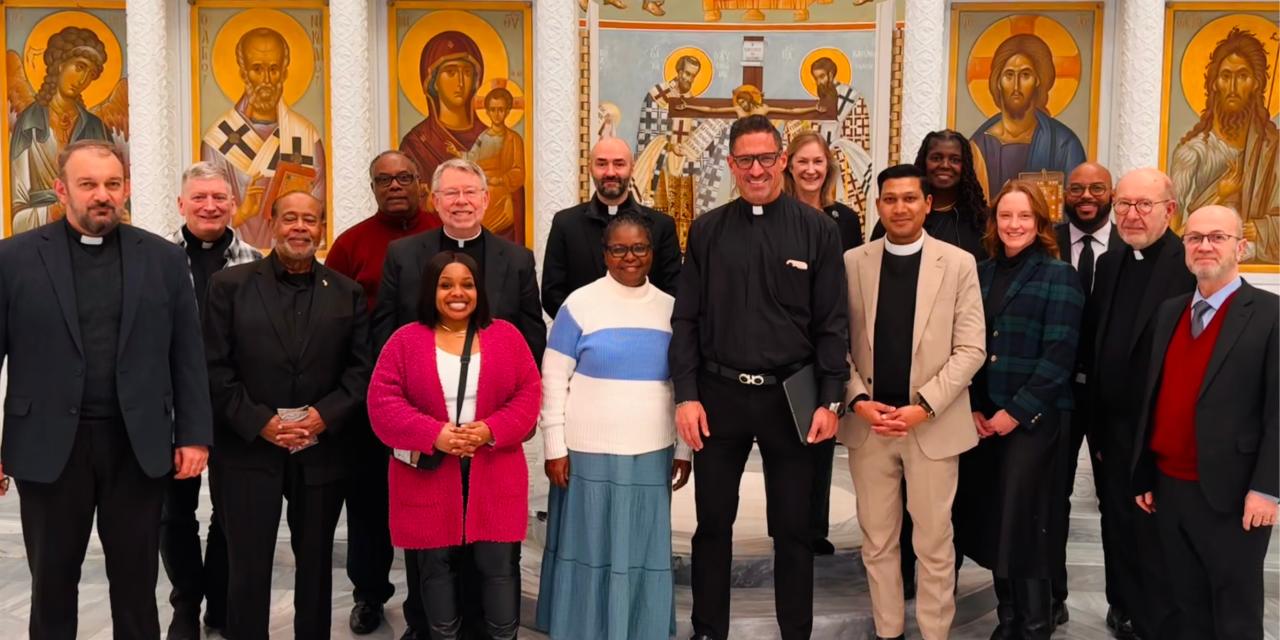
In 2024, we had training in receptive ecumenism and visited sites that reminded us of the Holy Spirit at work. So we prayed at the Mississippi River, led a wreath-laying ceremony at the Civil Rights Museum, and worshiped at sacred sites around the city, including the Church of God in Christ headquarters, a Catholic cathedral, and an Antiochian Orthodox church.
Our 2023 forum took place in Savannah, Georgia, and focused on baptism. One place we visited was the Historic Baptismal Trail in a Gullah Geechee community. Local historians shared the history of enslaved people who gathered there at night to baptize and interpret scripture beyond the bounds of churches led by their enslavers. This experience and worshiping in local churches led us to ask questions like: How have our doctrinal interpretations and practices of baptism been used as a source of healing, hurting, or dividing? How have water bodies such as the Atlantic Ocean been both a source of life and death throughout history? What is our Christian response?
How does prayer make a difference in CCT events?
Dissent and division wound the body of Christ. Our call as disciples is to heal division and live out Jesus’s John 17 prayer for us. Many of our steering committee members or participant communions have roots from other parts of the world, including the Global South, Europe, and the Middle East. Some come from places in the United States where they are persecuted for lack of legal documents or for trying to become citizens.
We talk about immigration and persecution every year. We have had prayer at the US/Mexico border and at sites of racial injustice. We planned our 2026 forum in Birmingham, Alabama, to coincide with CCT’s twentieth anniversary. We chose the theme “Giving Thanks, Renewing Hope” and site visits (including the US Civil Rights Trail) to inspire conversations on how to create a more credible, unified witness to Christ today. Praying at such sites helps us hear how the Spirit might be directing us to courageous witness and action when human dignity is threatened.
Can you share any stories of transformation?
I remember a forum where we visited an Orthodox church. First we received an introduction to icons. Then we attended a vespers service. Later a seminarian from an evangelical seminary told me she had never been in an Orthodox church. “It was like receiving a gift of mystery,” she said. “I now have a new awareness of how icons can draw us into a larger sense of worship.”
A Catholic priest told me that our 2023 baptism-focused forum changed his view of baptism. He said he now understands baptism as not just a doctrinal directive but also an embodied memory connected to survival and hope. I have seen some clergy come to a CCT forum with a lot of skepticism and become changed.
How do participants live out moments of transformation in their local contexts?
It’s easy to form relationships with churches like our own. But some CCT participants return home and start a local pastors group where they form relationships with people from different Christian traditions. Some regularly pray for neighboring churches by name in Sunday worship.
Why might some denominations or clergy resist the idea of receptive ecumenism?
The biggest hesitancy about ecumenical work is the misconception that unity means uniformity. Denominations and clergy sometimes focus so much on their responsibility to ensure denominational purity that they miss how Jesus is calling us to unity. Old Testament codes, laws, and rules helped set Israel apart as a holy nation. But when pressed about what is the greatest commandment, Jesus said, “‘Love the Lord your God with all your heart and with all your soul and with all your mind.’ . . . [and] ‘Love your neighbor as yourself’” (Matthew 22:37–40).
CCT helps us love God by receiving the gifts God has placed in various church families and by loving our neighbors by building relationships through conversation, experiences, prayer, and worship.