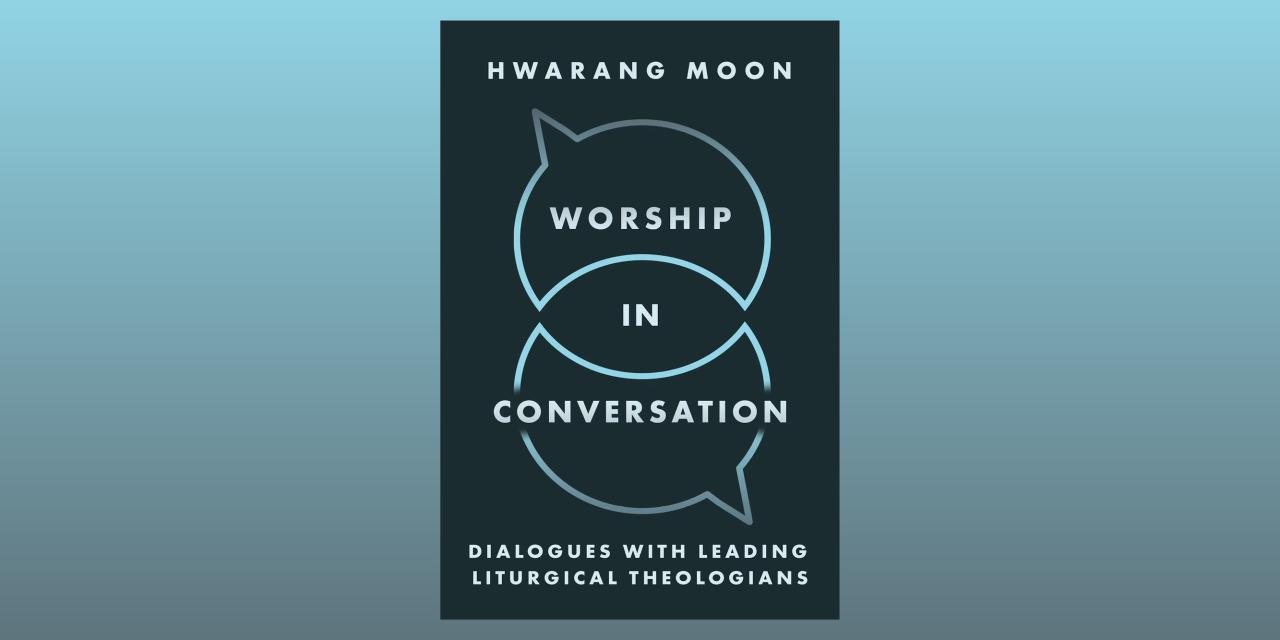
Where did the idea for this book come from?
The book began with a simple question: What if it were possible to gather leading liturgical theologians from across the Christian traditions around one table for a conversation?
What might we learn if scholars representing Anglican, Reformed, Lutheran, Methodist, Catholic, Orthodox, and other traditions reflected together on worship? Where would they agree? Where would they differ? And what wisdom might they offer to the church today?
Over the years, I have had the privilege of participating in the North American Academy of Liturgy and Societas Liturgica, where I met many of the scholars featured in this book. While I learned much from their publications and conference presentations, some of the most meaningful insights emerged in conversations over meals, in conference hallways, and around coffee tables. Those moments revealed not only their scholarship but also their love for the church, their passion for worship, and the wisdom they had gained through decades of study and ministry.
At some point, I began to wonder: What if readers could join these conversations as well? Worship in Conversation is my attempt to answer that question.
I did not want to write another introductory textbook on worship or a volume promoting a single liturgical tradition. Instead, I wanted readers to hear directly from some of the leading voices who have shaped contemporary liturgical studies. I wanted them to encounter not only these scholars’ ideas, but also the experiences, convictions, and questions that have shaped their understanding of worship.
As a result, this book is more than a collection of interviews. It is an invitation into an ongoing conversation. My hope is that readers will not simply gain new information but will also learn to appreciate the richness of the Christian worship tradition and listen more carefully to voices beyond their own ecclesial contexts.
Too often, conversations about worship begin with debates about what is correct, biblical, or preferable. While such questions certainly matter, I wanted this book to suggest a different starting point: conversation before controversy, listening before judgment, and learning before conclusion.
Ultimately, my hope is that these conversations will help readers understand their own traditions more deeply, appreciate the gifts of other traditions more fully, and, above all, worship God more faithfully.
The title Worship in Conversation is potent. What do you mean by “conversation,” and what would you like your readers to take away from that?
That’s a great question. I was very intentional about the title and the word “conversation.” When we look at the history of Christian worship, we quickly realize that no single tradition has developed in isolation. Christian worship has been shaped through centuries of dialogue across cultures, theological traditions, historical periods, and ecclesial communities.
Yet today we often find ourselves listening only to voices that sound familiar. This is true not only in theology, but also in worship. As a result, we sometimes judge before we understand, conclude before we listen, and defend before we learn.
One of the most important lessons I have learned through the study of worship is that genuine conversation often leads us more deeply into truth. Of course, the various Christian traditions do not agree on everything. There are real differences regarding sacramental theology, ecclesiology, liturgical structure, and the role of worship in the life of the church. Yet I have come to believe that these differences do not make conversation impossible. In many cases, they make it more meaningful.
The scholars featured in this book are not simply individuals with different opinions. They are leading liturgical theologians who have devoted their lives to studying, teaching, and serving the church. I wanted readers to hear their voices directly—to learn what they cherish, what concerns them, and what they believe the church most needs to recover in its worship today.
At its heart, this book is not an attempt to provide final answers. Rather, it is an invitation to join an ongoing conversation. Good conversation does more than exchange information. It has the capacity to deepen understanding, expand perspective, and even transform those who participate in it.
In many ways, worship itself can be understood as a holy conversation. In worship, God speaks to God’s people through word and sacrament, and the people respond through prayer, praise, confession, thanksgiving, and service. Worship is not merely something we observe; it is a living dialogue between God and God’s people.
That is why I chose the title Worship in Conversation. The book is about worship, but it is also about listening—listening to one another, listening to the wisdom of the broader church, and ultimately listening more attentively to the voice of God.
You seem to have listened to and learned a lot from people who come from different backgrounds and traditions. What was the most important lesson you learned from your conversations with these liturgical theologians?
That is a difficult question, but I certainly have an answer for you. If I had to answer in a single word, it would be humility.
As scholars, it is easy to become deeply attached to the strengths of our own traditions. My own formation took place within the Reformed tradition, where I learned to value the centrality of scripture, the importance of preaching, and the active participation of the congregation in worship. Those commitments continue to shape my understanding of worship today.
Yet one of the great gifts of this project was the opportunity to engage deeply with scholars from traditions different from my own. What struck me most was not simply the differences among these traditions, but their shared conviction that worship is far more than a religious activity. Each in its own way understood worship as a place where God forms the people of God, shapes Christian identity, and draws the church into participation in God’s redemptive work in the world.
Another lesson was that the finest scholars are often the most open learners. The individuals featured in this book possess deep commitments to their own traditions, yet they also demonstrate remarkable curiosity, generosity, and willingness to learn from others. Their confidence is not rooted in defensiveness, but in a mature understanding of their own theological identity.
The finest scholars are often the most open learners.
Through these conversations, I came to see the various worship traditions of the church less as competitors and more as gifts. To learn from another tradition does not require abandoning one’s own. In fact, I have found the opposite to be true. The more deeply we understand the strengths of other traditions, the more clearly we see the unique gifts and responsibilities of our own.
My hope is that readers will experience something similar. If these conversations encourage them to approach worship with greater humility, deeper curiosity, and renewed gratitude for the breadth of the Christian tradition, then this book will have accomplished one of its most important goals.
Why do you believe churches today need to learn from other Christian traditions? How would you defend the theological need for learning from different roots?
First, I think it is important to clarify what I mean by “learning.” Learning from another tradition does not mean imitating it uncritically, nor does it require abandoning one’s own theological convictions.
Throughout Christian history, churches have grown not only through internal development, but also through encounters with other voices within the body of Christ. No tradition has developed in complete isolation. The history of Christian worship is, in many ways, a history of mutual influence, adaptation, and learning.
One of the discoveries I made while writing this book was that every tradition tends to see certain aspects of worship with particular clarity. The Reformed tradition has consistently emphasized the centrality of scripture and preaching. Anglicans have preserved a rich understanding of common prayer and liturgical formation. Lutherans have reflected deeply on the relationship between gospel and sacrament. Catholic and Orthodox traditions have helped the wider church recover a sense of mystery, beauty, and participation in worship.
The question is not whether one tradition possesses all the answers. The question is whether we are willing to receive the gifts that God has entrusted to the broader church. The scholars I talked with demonstrated that theological confidence and intellectual openness are not opposites. In fact, they often belong together.
I do not believe that the church today suffers from a lack of information. We live in an age overflowing with information. What we often lack is the ability to listen well. We speak quickly, judge quickly, and sometimes assume that our own perspective is sufficient. Yet when we listen carefully to other Christian traditions, we are reminded that God is greater than our theological categories and that the church is far larger and richer than our immediate experience.
Ultimately, the goal of learning from other traditions is not innovation for its own sake. It is not about collecting liturgical practices or borrowing ideas simply because they are new. Rather, it is about seeking a deeper understanding of God and a fuller participation in the worship of the church.
What do you hope readers take away from this book?
If this book encourages readers to listen more carefully, learn more humbly, and worship more faithfully, I will consider it a success. More than anything else, I hope readers will come away with a deeper love for worship.
Today we spend a great deal of time talking about worship. We discuss liturgical styles, music, preaching, sacraments, church traditions, and cultural relevance. These conversations are important, and they should continue. Yet there is always a danger that talking about worship can become more important than worship itself.
One of the things that impressed me most while working on this book was that the scholars I interviewed genuinely loved worship. They certainly cared about theology, history, and liturgical scholarship. But beneath all of their research was a profound love for God and for the church. For them, worship was never merely an academic subject. It was the place where Christians encounter the living God, where faith is formed, and where the church learns what it means to be the body of Christ.
My hope is that readers will experience more than the acquisition of new knowledge. I hope these conversations will encourage them to see worship with fresh eyes, to appreciate more deeply the traditions that have shaped them, and to discover anew the ways God works through the gathered worship of the church.
I also hope the book will help readers develop a broader vision of the church. Christian worship is far larger than any one congregation, denomination, or tradition. Across centuries and across cultures, God’s people have gathered around word, prayer, praise, sacrament, and service. The diversity of these traditions is not a weakness of the church; it is one of its great gifts.
If readers finish this book with a renewed desire to learn, a greater willingness to listen, and a deeper commitment to worship God faithfully, I will be grateful.
Ultimately, Worship in Conversation is a book about worship. But at a deeper level, it is a book about God. And the purpose of all true worship is not simply to understand worship better, but to know God more deeply, love God more fully, and participate more faithfully in God’s life and mission in the world.