Pouring Forth Speech: The Webb Telescope and God's Glory
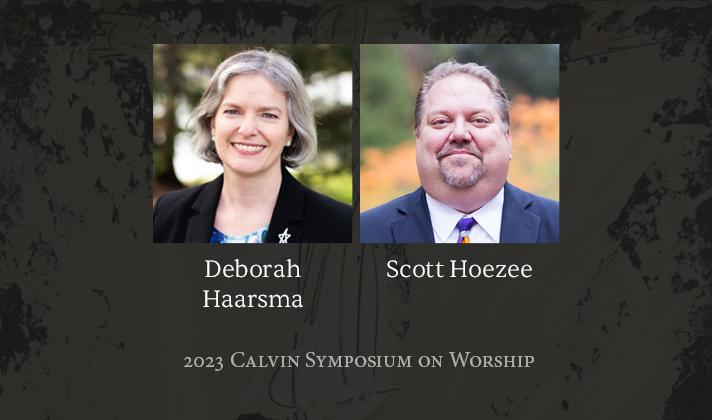
Theologian John Stek called the physical creation "the glory robe of God." John Calvin liked to observe that it is our privilege to live in the “glory theater” of God's creation and that the reason God made human beings to stand upright is so we could better lift up our eyes to see the stars above. In the last year more of the universe's glory has been revealed by the stunning images emerging from the new James Webb Space Telescope. Few people can help us appreciate these new glimpses into God's creation better than astronomer Deborah Haarsma. In this session, Dr. Haarsma and Scott Hoezee will discuss what new facets of our Creator God's work have been revealed by the Webb Telescope’s images.
July 19, 2023
|
77 min video
Artie Lindsay on Working as One Church in the Neighborhood
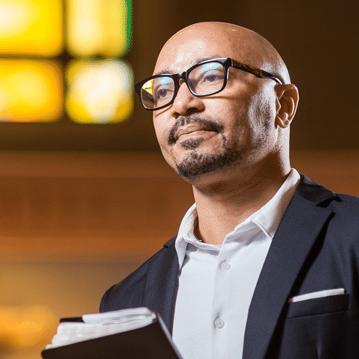
Artie Lindsay is the teaching pastor at Tabernacle Community Church, a multiracial congregation in Grand Rapids, Michigan. In this edited conversation, he talks about the joys and challenges of serving the Alger Heights neighborhood.
March 20, 2023
|
4 min read
Rebecca Snippe on Zeteosearch.org
Preachers, worship leaders, teachers, and others who study the Bible often go online to find resources for their research. Sorting through search results is often frustrating. But Zeteosearch.org—a revamped curated search engine—offers thought-provoking results.
November 14, 2022
|
4 min read
Bibliography - Children and Worship
A bibliography of resources about children and worship
August 11, 2022
|
3 min read
Jon Terry and Liuan Huska on Liturgies of Restoration
Au Sable Institute developed its Liturgies of Restoration workbook to help university students in summer field science courses connect Christian worship and creation care. Now small groups and churches are using the workbook to cultivate habits of worship, community, earthkeeping, purposeful stewardship, and hope.
January 5, 2022
|
9 min read
Kyle Meyaard-Schaap on Earthkeeping, the Church, and Generational Differences
Many young Christians despair of finding communities that view environmental sustainability and justice as biblical mandates. Here is advice for helping churches catch a vision for biblical earthkeeping.
October 8, 2021
|
8 min read
Kyle Meyaard-Schaap on the Arts as a Climate Tipping Point
Music and the arts have fueled major movements for justice. Evangelical Christians have the potential to shift climate action. That's why Christian leaders and musicians are creating worship songs and candlelight climate vigils to address climate crisis and work toward environmental sustainability.
October 8, 2021
|
8 min read
Church Responses to Infertility, Miscarriage, and Pregnancy Loss
After decades of silence, church leaders and congregations have begun accompanying people who mourn losing children before or soon after birth or letting go of dreams to form a family.
June 2, 2020
|
9 min read
Stacey Edwards-Dunn on African American Infertility and the Church’s Response
People experiencing infertility often suffer in silence. African Americans experience more infertility than other racial groups. But churches can offer healing when they open the door for conversations and include these sorrows in worship.
April 24, 2020
|
6 min read
Matthew Watson and Justin Fung on Neighborhood Spiritual Histories
Both church planters and established congregations can explore spiritual histories of their church neighborhoods. This helps them better communicate the gospel in the places where God calls them to serve.
April 3, 2020
|
9 min read
Trauma-Informed Care in Church Worship and Life
This topic showcase highlights resources to help churches use trauma-informed practices in church worship and congregational life. Faith communities are more effective when they become more aware of adverse childhood experiences, collective trauma, and other tragedy.
March 24, 2020
|
11 min read
LaTonya McIver Penny on Worship with Differently Abled People
Churches decide to include people with disabilities when they realize God sees us all as equals and all as differently abled. LaTonya McIver Penny advocates for inclusive worship, especially in African American congregations.
February 25, 2020
|
8 min read