Apply for the Vital Worship, Vital Preaching Grants Program to support and enhance Christian worship practices. We encourage proposals on universal design, cultural engagement, preaching, baptism, the Lord’s Supper, and more. Two grant streams are available.
Join us for our Symposium on Worship and Summer Seminars. Engage in inspiring sessions, workshops, and intensive seminars to deepen your understanding and practice of Christian worship.
Developed in partnership with the Calvin Institute of Christian Worship and the Calvin University School of Graduate and Continuing Studies, this online course equips worship planners and leaders of all types of ministries with practical tools for relating well to people from a variety of cultures. Understanding and respecting cultural differences is key to a healthy ministry.
The Calvin Institute of Christian Worship at Calvin University advances Christian worship through resources, events, and grants. Since 1997, we have partnered with congregations and organizations to fulfill our mission.
The English language is impaired when it comes to worship! We have one word to refer to three distinct meanings. Any entry on the term “worship” for a new dictionary on modern Christian usage would need to have at least three definitions.
1. We worship in all of life.
We are called to offer our work, our leisure, our family life, and every other aspect of life to the Lord. Our whole lives are a sacrifice of praise to God. This is the sense of the term as it is used in Romans 12:1 (“which is your spiritual worship”).
2. We gather for events, ritual practices, or liturgies called “worship services.”
That’s why this publication is called Reformed Worship. This may also be the sense in which the term worship is used in John 4: “You worship on this mountain.” This use is synonymous with the term liturgy. (Liturgy does not refer to the words on the page of a bulletin, but rather to the sum total of “what happens when people show up on Sunday morning.” And every congregation, whether they are “high church” or “low church,” has a liturgy—whether it is written out or not.)
3. We engage in specific acts of adoration and praise, which we also call worship.
This is how the word is used in Psalm 95 (“Come, let us bow down in worship.”) This narrow sense of the word comes closest to the early English word “weorthship,” which means “ascribing worth to.” When we praise people for a job well done, we are ascribing worth to them. Our instinctive response to God should be to praise, to worship, to ascribe worth. We do this often in our worship services and sometimes in other contexts (such as when we see a new baby or visit a national park).
Imagine these three meanings in (mostly) concentric circles. Worship or praise is one part of a worship service, which is but one part of the worship we render in all of life. We have one English word to speak of these three levels of meaning.
The problem comes when we start confusing which meaning of the term we are using at a given point. Consider some of the problems that this confusion generates: Sometimes we are so focused on the worship service (middle meaning) that we forget the importance of the worship that happens in all of life (broadest meaning). Traditionally, Reformed Christians have taken pride in pointing out this problem in some expressions of Christianity. The idea of worship in all of life is one of the main themes of Reformed Christianity.
But we Reformed Christians (historically) have a problem of our own. In our eagerness to point out how important worship in the broad sense is, we have sometimes minimized the importance of the worship service. Sometimes we have been reticent to build chapels on college campuses, for example, fearing that too much attention to worship services would diminish the emphasis on worship in all of life. Or we have thought that liturgy courses in seminaries really aren’t very important. Or we have called everything prior to the sermon in a worship service “the preliminaries.” These are subtle signs that this middle meaning of the term is suffering from inattention. What this fails to recognize is that these two kinds of worship (worship in the broad sense and worship in the liturgical sense) are mutually interdependent. The stronger one is, the stronger the other will be. We need liturgical events to keep our worship in all of life focused.
Recently, we have experienced a third problem in our use of the term worship. In many cases, we have so emphasized praise singing that we think that the primary or only purpose of the worship service (middle sense) is to worship (in the narrow sense). In fact, where most Reformed Christians used to think that the primary purpose of worship (middle sense) was to hear a sermon, now many think that the primary purpose is worship (in the narrow sense). And so praise teams microphones have replaced pulpits as the central piece of liturgical furniture in a lot of churches. Quite often, our praise singing crowds out other acts of worship, such as prayers of confession, lament, creeds, and testimonies. In some churches, you might even hear a leader say, “Our worship time is over, and now it’s time for teaching.” Singing psalms and hymns and songs of praise is terrific! It’s non-negotiable. Once we’ve been united with Christ, we can’t help but praise! But praise is not the only thing that we do in a worship service. It is one part of our covenantal conversation with God (see the article on pp. **).
I would prefer to have three different words to speak of these three meanings. But we’re stuck with one. All we can do is bear witness to each other about how important all three senses really are, and about how we need to keep all of them distinct yet related. We want to ensure that our life before God includes lots of all three!
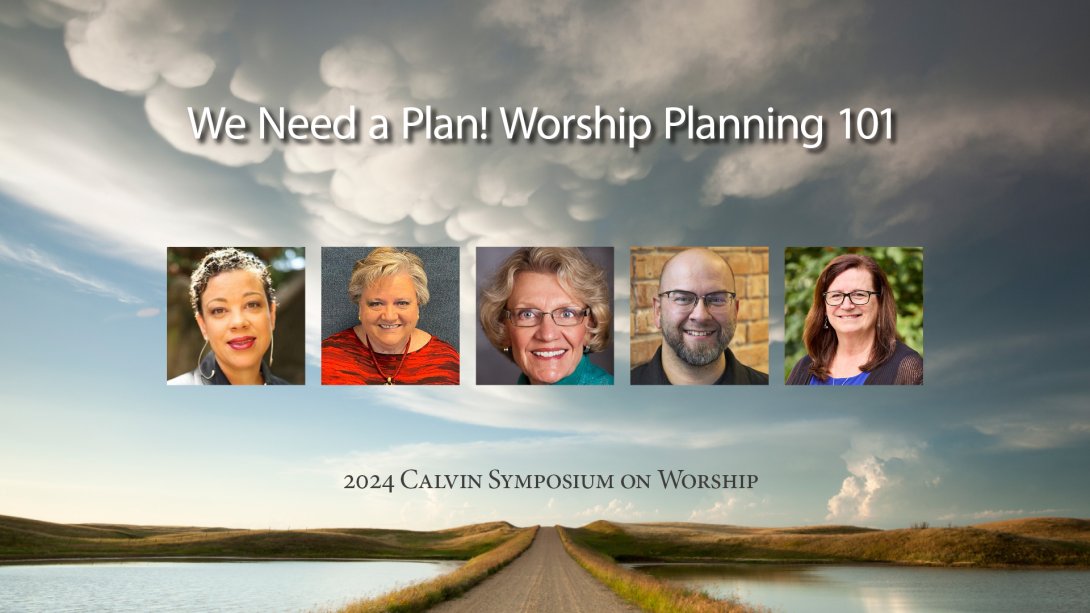
What basic models for worship planning are out there, and which patterns will work best in your context? Join a lively discussion of several worship planning models by the authors and pastors who use them. Bring your questions and suggestions as we learn together.
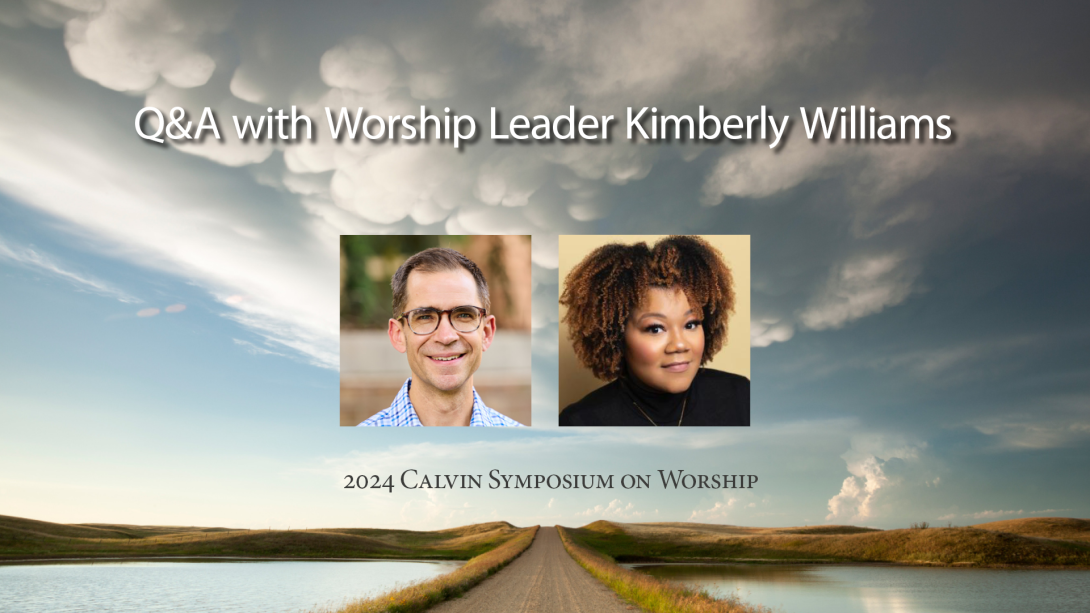
Join us after the University worship service (chapel) for a conversation with worship leader Kimberly Williams. We will explore topics related to worship leading and planning for diverse congregations, leading teams, songwriting and recording, and mentoring women in ministry.
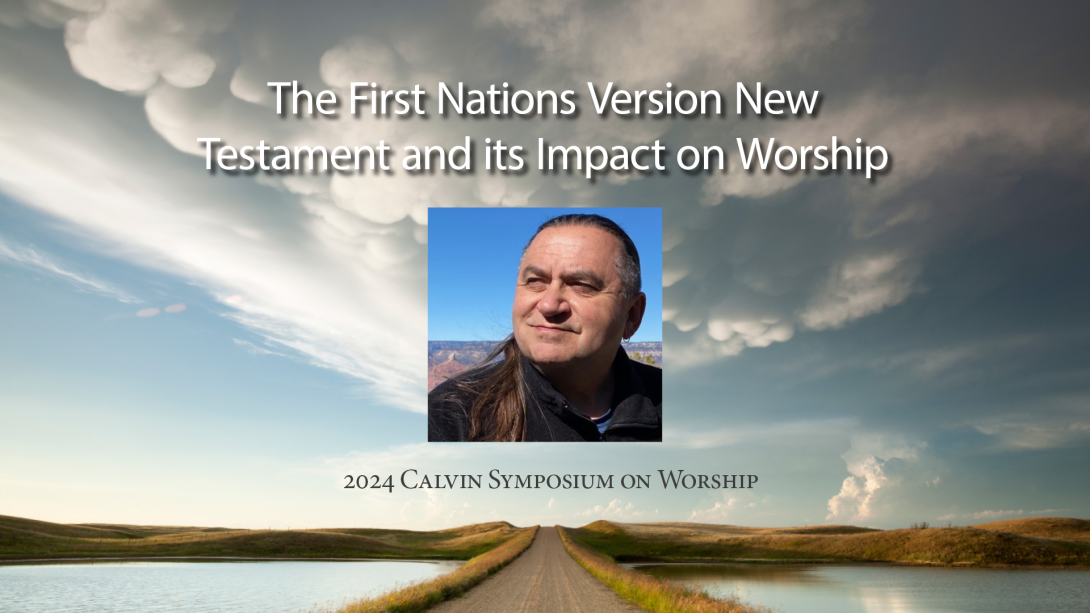
The First Nations Version New Testament and its Impact on Worship
In this session Terry Wildman will share the vision, process, and outcomes of the First Nations Version (FNV) New Testament. Why was this translation needed? Who was involved in the translation? What were some of the cultural challenges faced by the translation council? What does it say about the translations done in Native languages in the past? How did the translation council decide on more than 185 key words and terms? What are some of the unique qualities of the FNV versus other English versions? How has the FNV affected the worship expressions of some Native believers? What is the future of the FNV?
What basic models for worship planning are out there, and which patterns will work best in your context? Join a lively discussion of several worship planning models by the authors and pastors who use them. Bring your questions and suggestions as we learn together.
Join us after the University worship service (chapel) for a conversation with worship leader Kimberly Williams. We will explore topics related to worship leading and planning for diverse congregations, leading teams, songwriting and recording, and mentoring women in ministry.
The First Nations Version New Testament and its Impact on Worship
In this session Terry Wildman will share the vision, process, and outcomes of the First Nations Version (FNV) New Testament. Why was this translation needed? Who was involved in the translation? What were some of the cultural challenges faced by the translation council? What does it say about the translations done in Native languages in the past? How did the translation council decide on more than 185 key words and terms? What are some of the unique qualities of the FNV versus other English versions? How has the FNV affected the worship expressions of some Native believers? What is the future of the FNV?
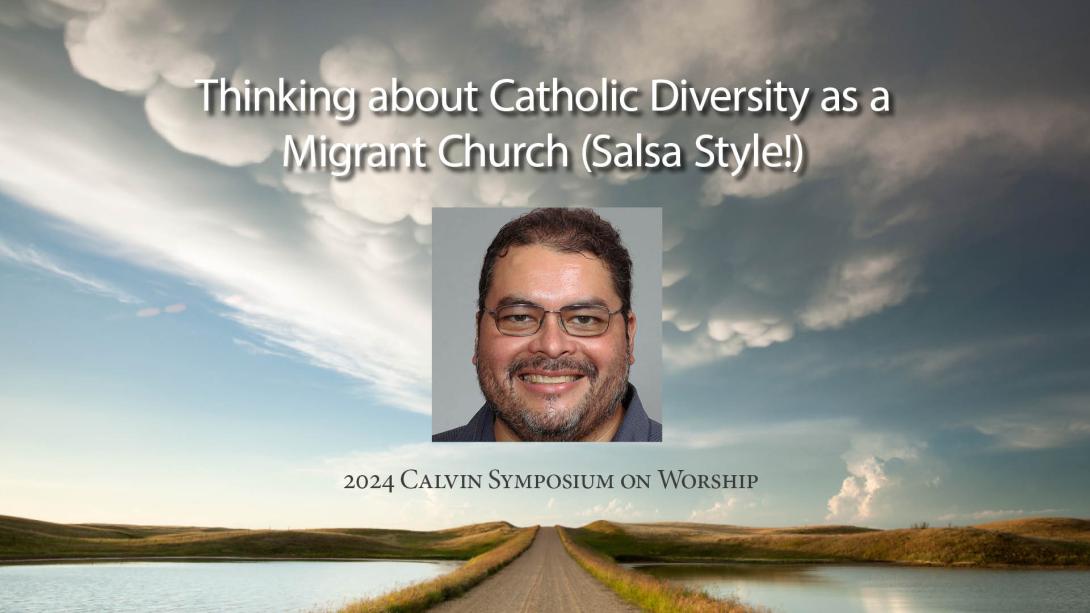
Thinking about Catholic Diversity as a Migrant Church (Salsa Style!)
How does one think about diversity as a Christian or as the church? How might working with and among—or even just thinking about—migrant neighbors contribute to our ecclesial identity? The language of catholicity allows us to imagine the unity of the church not in a monocultural way, but rather as a community inclusive of people of all languages and ethnicities. Migration and migrants today especially remind the church of its own catholic identity. How does the church's identity as a migrant church foster a healthy catholicity in the church's worship? This session will include the use of salsa music to invite participation in a more catholic way of life, asking what multicultural, cross cultural, and intercultural ways of being a church on the move might look like in worship.