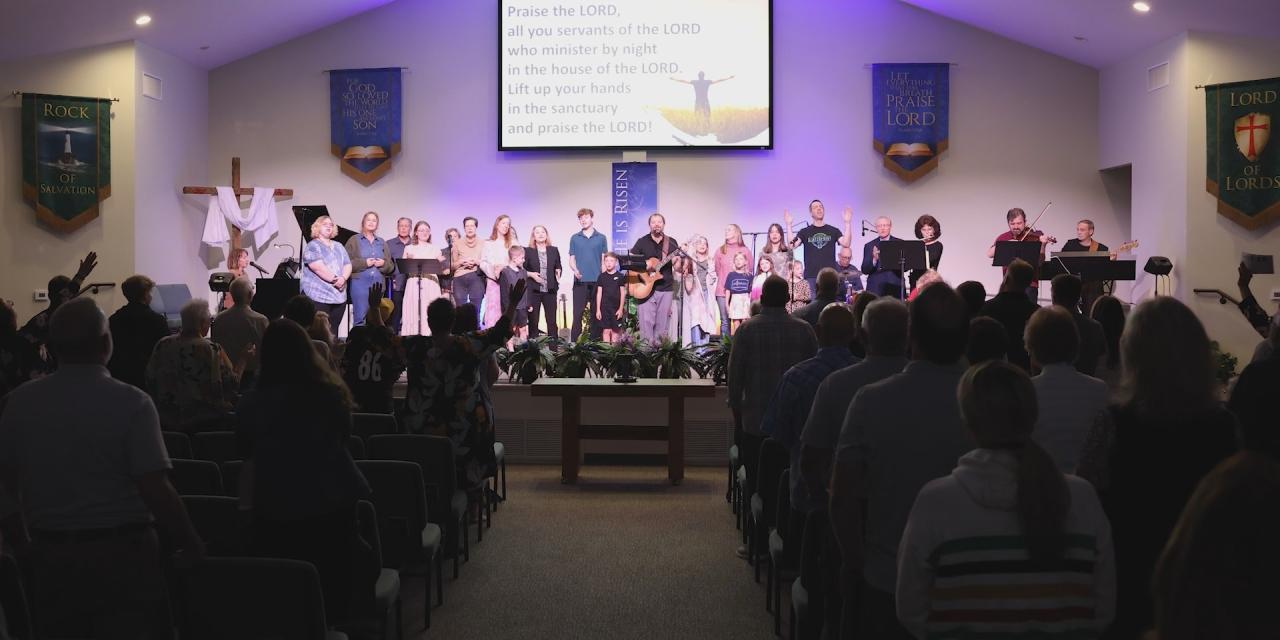
Centerpoint is intergenerational, and it’s common to see grandparents, parents, and children worshiping together. My sister, Stephanie Wilsey, is also a worship leader. We noticed that much of our community life was still shaped by age-based ministries. We had vibrant Bible studies and ministries for youth, young adults, and seniors. Spiritual formation largely happened within age-specific spaces.
Stephanie wrote prayers and suggested weekly practices to help people live out the psalms during the week. For example, Psalm 127 offers an alternative to trying to power through hard times on our own. Instead, we can open our palms and pray brief prayers of release. Before a decision, we can pray for God’s guidance, such as “Lord, guide me in what is best. I’m seeking you.” We also held five worship nights featuring three psalms each, ending with a final gathering that covered all fifteen psalms and welcomed the wider community.
Where did the music for each psalm come from?
I’ve been creating scripture songs for years. I wrote Psalm 134 (“Praise the Lord),” as a simple call-and-response song during a 2013 prayer and discipleship class in seminary. Our church has been singing that song in worship for years. But many songs I’d written had been just between me and the Lord. I wrote Psalm 121 (“I Lift Up My Eyes”) because Stephanie, our mother, and I recited that psalm together every morning before school.
I wrote more Psalms of Ascent songs during COVID-19, a season of isolation and longing. My wife gave me a banjolele, which influenced some of the more joyful settings, especially Psalm 126 (“Filled with Joy).” I have eclectic tastes, but most songs lean toward folk or blues—music that has long brought me comfort.
Why did you launch the website The Mountains Surround?
 We wanted to share the Ascending experience with those who couldn’t attend in person. So we formed a worship collective and website called The Mountains Surround, inspired by Psalm 125:2: “As the mountains surround Jerusalem, so the Lord surrounds his people.” Over six months, we recorded all fifteen original Songs of Ascent, inviting members of our worship team, adult choir, and youth choir, plus other musicians. Coordinating schedules for twenty-six musicians (mostly from our church) was challenging, but it reinforced that this was a truly congregational project.
We partnered with radio station Word FM to film short teachings and prayers for each psalm, led by me and Stephanie. Adults and children recited memory verses, embodying our shared formation. Our videographer added scenes from Centerpoint and Helping Hands, so about 150 church members sang or appeared in the videos.
How did the recording experience shape your songs and congregation?
I wrote the songs, but the musicians who recorded them deeply shaped their character. I adjusted some songs from a single guitar to a whole music group. My daughter, Ella, had a significant influence on Psalm 125 (“Now and Forevermore”). She insisted on singing it in a bluesy style, and the song took on a life of its own. It has been a joy to hear the children’s choir continue to sing it that way.
Earlier, I had written a Psalm 131 song about being peaceful and quieting ourselves. But I didn’t feel calm when it came time to record. So I wrote it as “Keep My Heart Calm.” A church member shared that the song became a personal prayer for calm in anxious moments.
Many of the Psalms of Ascent are laments.
Yes, Stephanie and I have learned a lot about lament from attending the annual Calvin Symposium on Worship. These psalms dip in and out of lament. Singing, studying, and praying these songs together gave our congregation a shared language for how to grieve, mourn, and handle anger, yet still praise God together.
In recent years, our congregation has had so many cancer diagnoses and memorial services for young and old. We grieve the hostility in our country and world. It seems hard for many people to discuss different viewpoints without becoming angry. Expressions of hatred should not be blessed. Psalm 123 (“Have Mercy”) teaches us the ancient pattern of lament: address, request, protest. Psalm 129 (“Greatly Oppressed”) invites us to bring our pain, fear, and frustration to God. Singing about lament has given more opportunity to address lament in sermons.
What changes or practices did your grant produce?
The unexpected experience of recording in a studio made the psalms more meaningful. While some members come from traditions where they freely sing out and raise their hands, others have the idea that real men don’t sing. Psalm 122 was written by David, a giant slayer and warrior king who was also a poet, musician, and man after God’s own heart. Our Psalm 122 (“Let’s Go to the House of the Lord”) shows that worship is a collective act, not just private. More men and teen boys now sing out in worship. Some lift up their hands when singing phrases like “Lift up your hands.”
One father shared that he used the written prayers during family prayer time. A mother told us she began singing the new songs to her daughters before bed. These stories showed us that the grant was shaping not only our gatherings, but also the spiritual rhythms of people’s homes.
How has your use of the psalms changed in worship?
Before the grant, our worship services often included songs inspired by the psalms, but we did not always name or emphasize their biblical source. Since the grant, we have been intentional about choosing songs that come directly from scripture, naming the references, and incorporating psalms into calls to worship and sermons. Our songs for Psalms 125, 126, and 134 are easy for congregations to sing, and the one for Psalm 122 is a great call to worship.
Because lament is not widely represented in contemporary worship music, we introduced music from artists such as Wendell Kimbrough and The Porter’s Gate. Their songs help our congregation learn to pray and sing lament faithfully.
Our final night of worship covered all fifteen Songs of Ascent through music, scripture, and prayer. Members invited family and friends from outside the church. We’ve learned that people who would never go to church or read the Bible are willing to listen to the music. People from other churches have requested the music, and we’ve posted the psalm, song, lyrics, and chord sheets for each Song of Ascent. We’ve posted all the music videos and teaching videos on www.themountainssurround.com and on our YouTube channel. All these resources are freely available.
Will you add content to your website?
Yes. I continue to write new music. My daughter and I have recorded Psalm 91 as a duet, and Psalm 73 is planned for release in 2026. The long-term vision of The Mountains Surround is to foster a worship collective where artists collaborate to glorify the Lord together. We are also beginning a project of instrumental psalms paired with nature photography by Caleb Foster, designed to help people begin their day with God’s word.