Now shift that lens toward God.
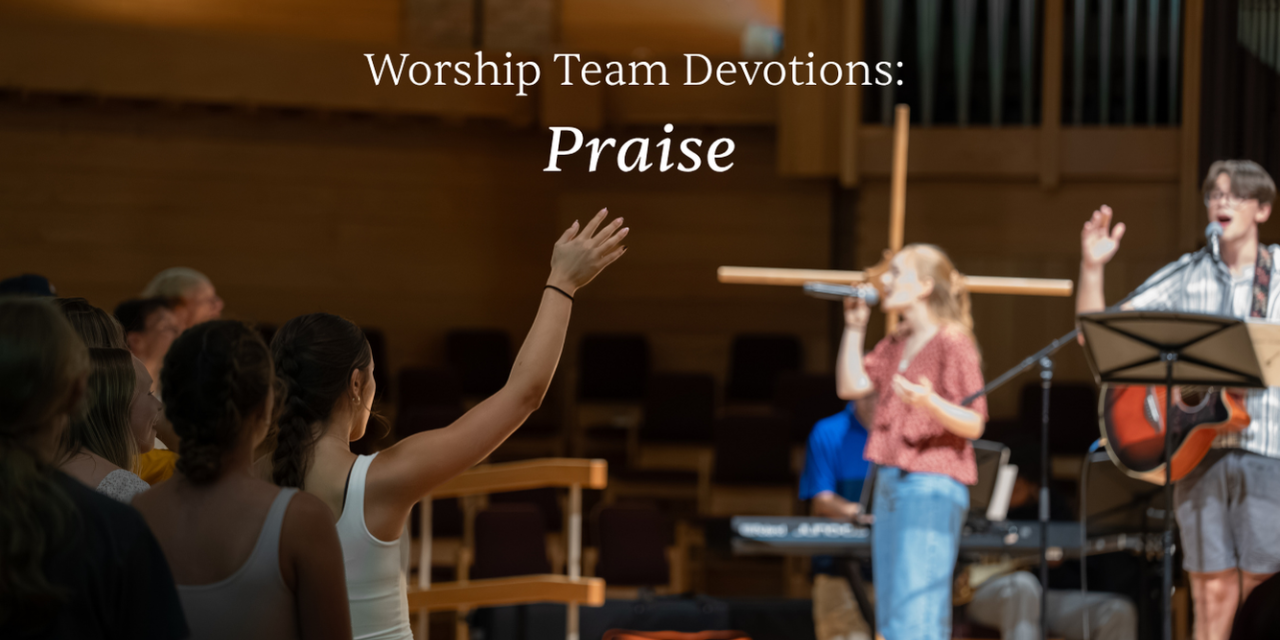
Biblical praise is our response to God’s goodness and beauty. It’s not self-centered, but it does involve us—our voices, our bodies, our hearts. Sometimes it’s loud and joyful. Sometimes it’s quiet and reverent. But it’s always a response.
Psalm 150 is a full-throttle invitation to praise:
“Praise him with trumpet sound; . . . with tambourine and dance; . . . with loud clashing cymbals!” It’s a call to let our whole selves respond to God’s greatness.
Read Psalm 150 aloud. Let your praise rise—not because you must, but because you’ve seen something good, something beautiful, and you just can’t help yourself.
Read Psalm 150 together.
Psalm 150 (The Message)
Hallelujah!
Praise God in his holy house of worship,
praise him under the open skies;
Praise him for his acts of power,
praise him for his magnificent greatness;
Praise with a blast on the trumpet,
praise by strumming soft strings;
Praise him with castanets and dance,
praise him with banjo and flute;
Praise him with cymbals and a big bass drum,
praise him with fiddles and mandolin.
Let every living, breathing creature praise God!
Hallelujah!
Discussion questions
- Take a look at the prepositions used in this psalm—words like in, under, for, with, and by. These small words carry big meaning, pointing us toward how praise is expressed. Based on what you read in the psalm:
- What places or settings are we called to praise in?
- What reasons does the psalm give for praising God?
- What methods or expressions of praise are described?
- In your everyday life, where does praise for God show up most often?
- What aspects of God’s character or actions most often stir your praise?
- Do you tend to praise God through music, prayer, movement, quiet reflection, or some other way?
Take a moment to read Psalm 150 again, letting its words sink in. Then close in prayer together. As you pray, speak out loud the qualities of God—goodness, power, creativity, love—that stir your heart to praise. Commit to making praise part of your rhythm, both in gathered worship and in the everyday moments. Whether through movement or stillness, loud celebration or quiet awe, let your whole life reflect the goodness of God.
This devotional is part of a series of devotionals created for worship teams. You can find the whole series here.