Apply for the Vital Worship, Vital Preaching Grants Program to support and enhance Christian worship practices. We encourage proposals on universal design, cultural engagement, preaching, baptism, the Lord’s Supper, and more. Two grant streams are available.
Join us for our Symposium on Worship and Summer Seminars. Engage in inspiring sessions, workshops, and intensive seminars to deepen your understanding and practice of Christian worship.
Developed in partnership with the Calvin Institute of Christian Worship and the Calvin University School of Graduate and Continuing Studies, this online course equips worship planners and leaders of all types of ministries with practical tools for relating well to people from a variety of cultures. Understanding and respecting cultural differences is key to a healthy ministry.
The Calvin Institute of Christian Worship at Calvin University advances Christian worship through resources, events, and grants. Since 1997, we have partnered with congregations and organizations to fulfill our mission.
Rural populations are declining in many parts of the US and Canada. This change has pushed many denominations and congregations to find new ways to provide preachers and pastors for rural churches.
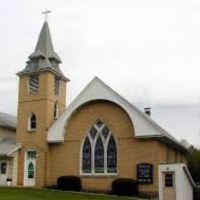
Most land in the US and Canada is classified as rural. But only a small share of the countries’ people live there—about 15 to 18 percent in Canada and 20 to 24 percent in the US. You might picture a rural church as a small building with a tall steeple in the middle of farmland. But most rural residents are not farmers.
Many rural congregations have declining membership and tight budgets. Many cannot afford a full-time, seminary-trained pastor. And, just as rural communities differ, there’s no single way to lead or pastor a rural church. The following descriptions are edited from the written or spoken responses of four pastors and one lay leader. They discuss their rural contexts, rural pastoring models, congregational engagement, preaching and worship planning, and recommended resources.
Ben Hoffman, lay leader model
Ben Hoffman is an authorized lay worship leader for the Allegheny Synod of the Evangelical Lutheran Church in America (ELCA) and a business analyst for information technology at Penn State University. He and his family of six farm 180 acres in the unincorporated community of Karthaus, Pennsylvania.
Rural context
Hoffman says that his part of northern Appalachia is mostly very small communities with a few larger communities sprinkled in. The top employers are Penn State (an hour’s drive from Karthaus), local schools, and healthcare facilities. There’s little agriculture, a few small-scale manufacturers, and a few coal mines. Two local correctional facilities recently closed.
“The population is older because there’s been a lot of younger brain drain in the last twenty-five years,” Hoffman says. “My wife and I wanted to stay here, so we commuted to Penn State for eleven years but now work from home. Our area has a bit of a rural hopelessness feel, but not as bad as in West Virginia or eastern Kentucky. Our quaint rural towns have some unexpected homelessness and drug problems.
“Our area is 90 to 95 percent White, other than a few little pockets of people of color. The local Lutheran congregations are more conservative than the ELCA as a whole and are a bit more educated than the surrounding population. When I served the Clearfield church after its pastor retired, I had some physicians and a lawyer in the congregation,” he says.
Lay leader model
The ELCA’s Allegheny Synod oversees ninety-seven churches across seven counties. Many are in transition between pastors. About 60 percent of ELCA congregations average fewer than fifty people in worship, and 45 percent of all ELCA congregations can’t afford a full-time pastor. The synod cooperated with Faith+Lead of Luther Seminary (St. Paul, Minnesota) to create free online training for people to become unordained authorized lay worship leaders (ALWL). Many ALWLs have retired from other jobs, while some, like Hoffman, still have another job. Other ELCA synods follow a synod-authorized minister (SAM) model for unordained lay leaders without seminary degrees.
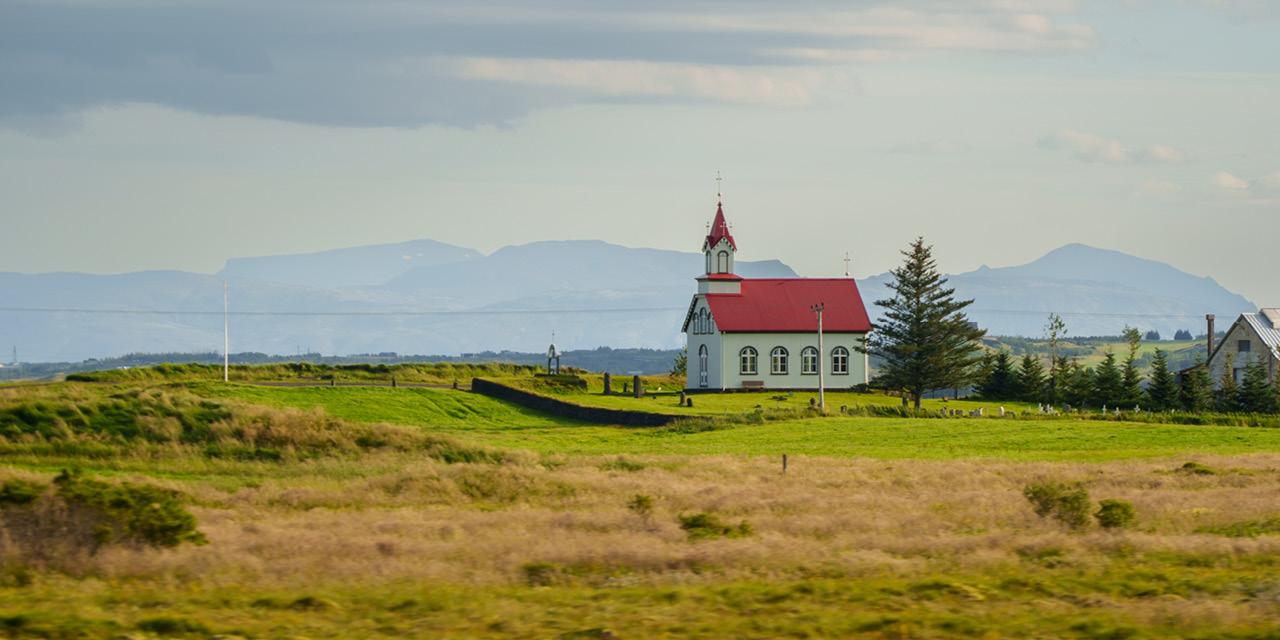
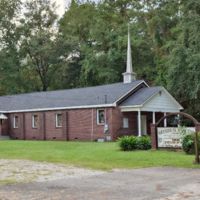
Shepherd of the Hills, Karthaus, Penn.
“The ALWL model is evolving in our synod, which is being proactive in seeing the future as lay-led,” Hoffman says. “I served twice a month as pulpit supply for a year at St. John Lutheran Church in Clearfield, the county seat of Clearfield County. There I worked with the congregation to plan services that flowed well for Christmas Eve and Easter. Some lay leaders end up serving the same congregation regularly. In my first fifteen months, I served as an ALWL in eight ELCA congregations and as a guest speaker in two non-ELCA churches.
“Now I usually sign up for ALWL duties once or twice a month. Sometimes I preach at one church and then cross a river and drive to a church with a later service that same Sunday. Since all our churches follow the Revised Common Lectionary, I can preach the same sermon in both churches.
“If churches have fellowship before or after worship, I attend, because I really want to talk with them. We ALWLs may be their only interface with the wider church. When you serve more regularly, you get to know them and can address issues, such as when a church secretary decided to cut corporate confession, forgiveness, and absolution from the liturgy,” Hoffman says.
The Allegheny Synod pays ALWLs an honorarium and mileage. ALWL responsibilities have grown, so Hoffman is advocating for them to be put on either the synod payroll or a congregation’s payroll if they serve it regularly. “Taxes aren’t withheld from 1099 forms so can result in an expected tax burden at the end of the year,” he explains. He’s also leading an initiative in Clearfield County for churches to join to call a full-time pastor to be put in rotation with lay leaders.
Congregational engagement
Most churches Hoffman serves have between twenty and forty worshipers on a Sunday, though there can be as many as 110 to 130 in larger churches on Christmas and Easter. Some churches are in areas with no broadband internet. Hoffman has preached in two that haven’t had a pastor for decades and feel adrift.
“Many congregations are aging, with declining membership and finances. They are fifteen to thirty miles away from the next church and feel alone,” Hoffman says. “I preach about being a gospel witness to help folks rise out of hopelessness. I’ve been president of my local church council, am on the local cemetery board, and just finished a term as township supervisor. This helps me see lots of opportunities to serve. Each church has its own unique context for doing something well in the community. For example, one small church now hosts Alcoholics Anonymous meetings. In another, a woman makes T-shirts with zippers for chemotherapy, and another church has a quilting ministry.”
Preaching and worship planning: Sermons in this area typically last seven to fifteen minutes. Any longer, Hoffman says, and people give “the look.” Churches are responsible for putting the service together. “They send an email bulletin earlier in the week, so I know the hymns and know which part of the liturgy I’m in charge of,” Hoffman says. “I read the lectionary lessons on Monday, listen to podcasts and other resources during the week, and write the sermon on Friday or Saturday.
“I can distribute communion with elements that have been preconsecrated by an ordained person—sometimes six months earlier. We lay leaders use different language for communion than ordained ministers do. Although ELCA advised in the 1980s that communion should be weekly, many congregations celebrate it only on first Sundays and feast days,” Hoffman says.
Recommended resources
Lay leaders can continue their education through Faith+Lead and, in the Allegheny region, Go Tell It in the Mountains. For sermon preparation, Hoffman uses Working Preacher, Tend: A Bible Podcast, and Sundays and Seasons, which has tips for leading funerals. Hoffman appreciates Zeteo helping him find preaching and worshiping resources, but he wishes there was curation to help him discern whether resources are right for his Lutheran context.
Lungren’s three congregations are in the eastern foothills of Wyoming’s Bighorn Mountains, an area known for cattle and sheep ranches, row crop farming, and natural minerals and resources (oil, gas, and coal). “The rural culture here is in the air we breathe,” he says. “Whether you live in or outside town, you’re outdoors a lot. Our area retains the ‘ranchiness’ of Wyoming, even though people from outside have moved in. Lungren owns horses and loves helping on his parents’ cattle ranch.
His largest congregation is St. John the Baptist in Buffalo, a town of 4,500 that “is more Catholic compared to many other towns,” he says. “Like the town, we have all ages, from babies and kids to older people.” In the mid-1960s, 30 percent of St. John parishioners were young sheepherders who spoke only Basque, their native tongue. Lungren also oversees two mission churches—St. Hubert in Kaycee and St. Mary in Clearmont.
“A Catholic priest in a big city might have a parish of five hundred people from three city blocks. I am the pastor of three hundred families in 4,500 square miles of territory. This gives me less people to shepherd than a city priest has. In a rural area you are spread thin geographically, yet you are able to really get to know your people,” Lungren says.
Shared pastor model
“I inherited a well-oiled machine with a full-time parish administrative assistant and a full-time maintenance person. That’s unique in a parish of this size,” Lungren says says. St. John averages 335 people spread over three Masses: 5 p.m. on Saturday and 9 a.m. and 5 p.m. on Sunday. Lungren celebrates an 8 a.m. Mass at St. John each weekday except Friday
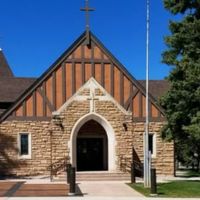
St. John the Baptist
St. Hubert is fifty-seven miles southeast of St. John. “St. Hubert is out in the boondocks, twelve miles east of Kaycee, population 247,” Lungren says. “We get a surprising amount of young ranch families and average twenty-four people in worship. I celebrate a 2 p.m. Sunday Mass there twice a month. St. Mary is twenty-nine miles northeast of Buffalo in Clearmont, population 125. Our top attendance at St. Mary has been twelve people, mostly older folks. We have a 1 p.m. Sunday Mass there twice a month. On off weekends, some St. Hubert and St. Mary folks will drive in to Buffalo. So my Sunday loop is either 114 or fifty-eight miles—less than my previous charge. There I had a two-hundred-mile loop to reach three congregations. It’s fun to get out of town and celebrate the sacraments.”
Congregational engagement
“Our three churches work in unison,” Lungren says. “The two little ones have their own bank accounts. Both recently had parishioner-driven remodels. The big church in Buffalo provided a lot of funding, and our parish maintenance person lent a hand.
“One pastor can’t do it all, so we follow a model of co-responsibility. Delegation is huge. It starts with empowering people to think creatively about how to provide faith formation for their children. For example, St. Hubert meets in a remodeled schoolhouse. It didn’t have a regular Wednesday-night faith formation class, so we gathered material and taught parents how to lead lessons.
“As a Catholic priest, you represent something that people get. I walk around with a cowboy hat because it adds relatability. I catch more ‘fish’ with a cowboy hat than with Sunday sermons. The community knows me,” he says. Lungren blesses animals and is part of the local ministerial association. The ministers were concerned about the erosion of Wednesday family nights at their churches. They asked Lungren to talk with the public school superintendent about ending Wednesday school activities by 6 p.m. “The superintendent was supportive,” he says.
Lungren says that the parish addresses many charitable needs out of St. John’s church office and assists with community food pantries in Buffalo and Clearmont.
Preaching and worship planning
“When I came in 2024,” Lungren says, “our St. John Sunday morning Mass was standing room only, so I added the 5 p.m. Sunday Mass. It has brought in about thirty-five new people. At that Mass, we use incense and do some responses in Latin. It addresses a desire for more contemplative worship. We have four people right now in preparation to join the Catholic Church through the Order of Christian Initiation for Adults.
“It’s so fun being a Catholic because you have a network. At St. John, we have Jay Garland, who is ordained as a permanent deacon. He is retired, able to help quite a bit, and chooses not to receive a stipend. Deacon Jay helps me celebrate Mass. If I’m gone, he can do what’s called a communion service [without consecration of the bread and wine].”
Extraordinary ministers of Holy Communion—lay men and women who’ve been commissioned by the bishop—help distribute the elements at Mass and take them to the homebound. Volunteer lectors and altar servers assist at worship.
Recommended resources
Lungren recommends Catholic Extension Society, which helps build up financial resources in poor and mission territories. Catholic Rural Life has curricula for Bible studies and is geared for lay leadership. Lungren contributes sermons to Catholic Rural Life. “Formed.org has great media resources on the sacraments, faith formation, and evangelizing,” he adds. “You can show a half-hour video and then guide a discussion. Also, the fraternity among brother priests in our diocese is so helpful.”
Leon R. Maxwell, bivocational pastor model
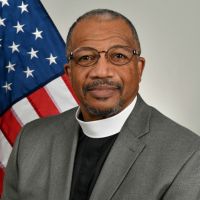
Leon R. Maxwell, a former US Marine, is one of six chaplains at the Ralph H. Johnson VA Medical Center in downtown Charleston, South Carolina. He is an ordained minister in the African Methodist Episcopal (AME) Church, a historically Black denomination. Maxwell pastors Greater St. Mark AME in Parker’s Ferry, a small unincorporated community of 323 people. With four nearby unincorporated communities, the area’s population is about 1,500.
Rural context
For Maxwell, a key distinction between urban and rural areas is that rural areas have fewer amenities. Local schools near Greater St. Mark AME have high poverty and lower school performance. Most churches can’t afford a full-time pastor. The area is predominantly Black, and his congregation reflects that.
“When schools closed during COVID,” Maxwell says, “families had to use a parked school bus to access the internet. When I became pastor in November 2023, the area still had no internet. Now, with a nearby higher-income development being built, our church has internet, more amenities are coming, and property values are rising.”
Bivocational pastor model
“About 75 percent of AME pastors in South Carolina are bivocational so as not to financially burden our congregations,” Maxwell says. “I get paid full time as a chaplain, and my congregation pays me a stipend. They must also raise money for upkeep and annual AME dues.”
Across many denominations, more pastors and church planters are bivocational. Rather than comparing their jobs outside the church to the apostle Paul’s tentmaking—purely a financial necessity—bivocational pastors often say that their two roles work synergistically. In the US, about 35 percent of Black Protestant pastors and 30 percent of Hispanic Protestant pastors are bivocational.
Greater St. Mark AME
As a chaplain, Maxwell serves veterans and their families by officiating funerals, blessing marriages, and helping people grow in faith. As a pastor, he works at least twenty-five hours a week. He wakes at 4 a.m. on weekdays for study and sermon preparation and writes his sermon on Saturdays. His wife, Shaun Denise Jackson–Maxwell, plays keyboard and sings in the gospel choir. Maxwell drives forty-four miles round trip from his Charleston home for Sunday services, two weeknight meetings, and occasional Saturday events. His previous churches were even farther from home.
“I come home from work, eat with my family, and work in the yard to connect with nature. I don’t party.,” he says. “God called me to be a bivocational pastor, so I don’t see it as a burden. Since I began pastoring in 1999, God has fulfilled every promise.”
Congregational engagement
Greater St. Mark averages fifty worshipers on Sundays. “We focus on loving God and loving our neighbors,” Maxwell says. “Being the church is about more than sitting in pews. The Holy Spirit calls us to be participants, not spectators, in worship and community life.”
Young and old learn from each other. Seniors share county history with youth. A teen helps adults livestream and post online services so church members who move away can stay connected.
Attendance is growing as Maxwell encourages members to take ownership. The congregation leads most ministries, including choirs, church school, Christian education, and the women’s missionary society. They are free to manage their ministry’s own needs and expenses.
Church leadership is shared. Stewards focus on spiritual and financial matters, trustees handle building and cemetery care, and class leaders (like small group leaders) attend to members’ needs. “Class leaders meet regularly to check the pulse of the congregation. They gather with their classes on Lay Day to sit together in worship and enjoy fellowship afterwards,” Maxwell explains.
Maxwell believes his role includes teaching people about opportunities, often drawing on history and social justice in Bible study. “We want to become known as not dealing with just racial issues but with human issues that affect the whole person,” he says. “I’ve learned that spiritual and civic leaders can work together for the betterment of all. In a past church, I became friends with the mayor.”
Greater St. Mark members attend school board and county meetings. This led to the county school superintendent attending Youth Sunday, where a teen impressed the superintendent by explaining how the church helps young people set life goals. Members support local schools and the annual parade, and they partner with area churches to distribute food and serve the homebound. Some members helped lead a tour of a nearby historic rice plantation in the Gullah Geechee Cultural Heritage Corridor.
“As my credibility grows in the congregation,” Maxwell says, “I hope we get more active with the South Carolina Christian Action Council on issues such as death penalty alternatives.”
Preaching and worship planning
A church team sends out a worship bulletin for the first Sunday of each month. It lists all the worship songs and events for the month. “Every Sunday, I do a pastoral observation on a way to stay informed, serve, or vote,” Maxwell says. “I don’t tell them who to vote for, but ask them to discern which candidates focus on helping the poor and needy.
“On AME Founder’s Day, we remember how freed African slaves formed the AME after learning to read the Bible for themselves and seeing that God is the God of all people. We recognize Juneteenth. We cry out together about what’s happening in our world today and find parallels in the Bible for how God remains near to us despite our troubles.”
“I’ve enrolled in a few individual courses and ministry helps,” Peters says, “but it’s never seemed that the timing was right to go to seminary. Not many people in our churches have received much education since high school.”
Rural context
Peters’s area of Central Alberta, between the Rocky Mountains foothills and flat prairie, has been gaining residents. The village of Clive has around nine hundred residents. It is a fifteen-minute drive from Lacombe, population 14,588, and thirty-five minutes from Red Deer, population 112,917.
“Most church members come from nearby farming and acreage communities,” Peters says. “Churches in our area are similar in demographics but differ in governance and practice. Compared to urban churches, they tend to have less formal structure and are generally small—usually under a hundred people.
“Some people would be surprised to find that rural people are often as involved in sporting and social events and recreational activities as city people are. They might think that rural people are more innocent. But I find that a lot of alcohol and drug use and sexual sin happen in the country as well. Extreme secularism has become part of rural life.
“Still, sometimes there’s a greater openness to the things of the Lord,” Peters adds “Thirty years ago, when we moved to rural Alberta to serve our previous church, I found that most people, even if they had nothing to do with God or church, were still very welcoming. Farmers deal with so many things beyond their control. Some joked about wanting to stand close to me, because God would hear my prayer and have favor on them.”
Full-time pastor model
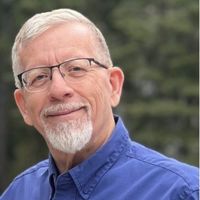
Peters describes his and his wife’s call “as a bit of a story.” As a teen, he loved hearing missionaries speak. After the couple had two children, they felt a call for Ed to attend Bible school. They thought about being missionaries in another country. But then Peters came across a statistic that, at least before the 1970s, some 75 percent of active missionaries around the world had come out of rural North American churches.
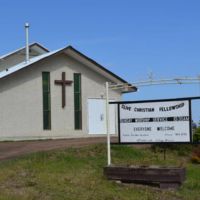
Clive Christian Fellowship
“Ruth and I realized that instead of going out as foreign missionaries ourselves, we could serve as a pastor couple in rural North America and multiply our impact,” Peters says. “By sending out other people, our missions reach could grow exponentially. Through the Village Missions of Canada churches we’ve served, more than fifteen couples or singles have become full-time missionaries. Many others have gone on short-term missions. Our son and daughter-in-law, Brenden and Helena Peters, are also Village missionaries. We’re grateful God has blessed this vision.”
Village Missions in the US and Canada helps pay the salaries of rural pastors at more than two hundred churches so that pastors can work full time to revive congregations. “The Village Missions philosophy of ministry is to preach the word and love the people,” Peters says. “We try to build real relationships by reaching every home. When trouble comes, they know someone they trust—even if they don’t usually go to church.”
Congregational engagement
Clive Christian Fellowship has about fifty people in worship, depending on weather and road conditions. Its members are older than the median age in Clive. Peters says that his former church averaged a hundred people, so he and Ruth expected to feel semi-retired when they moved to Clive. “Instead, we are busier than ever,” he says.
Peters is an advisor to the church board, which meets monthly. Lay leaders “take care of loose ends, Sunday school, decorating, cleaning, yard and building maintenance, and fellowship activities, and help lead worship and music. Because the congregation is aging, they don’t have as much ambition to reach out in new ways,” Peters notes.
Meanwhile, the Peterses visit church members. They connect with the community by attending community events, visiting the village office to talk with staff and the mayor, and simply taking walks to chat with anyone they can. He aims to become—as he was in his former church—the community pastor called to minister at wedding and funerals.
“Ruth and I see ourselves as ‘watchmen on the wall’ to alert and warn the people in our fellowship of pending dangers and pitfalls,” Peters says. “We are expected to model godly living and a healthy marriage to a watching community. I keep consistent office hours and widely share my cell phone number, so I am available for people going through various kinds of crisis.”
They measure spiritual growth by baptisms, hearts to serve, and people willing to speak in worship of what God is doing in their lives. “Recently a smoker who seemed to be quite callous in his lifestyle asked in Sunday worship for prayer to overcome his smoking addiction,” Peters says. “That is proof of God at work.”
Preaching and worship planning: Peters plans worship services and makes sure there are people ready to lead parts of worship. He prepares a PowerPoint and sermon notes so people “can track with the sermon.”
As in many rural churches, people come from different traditions. “In our small church, we have people from the United Church of Canada, Baptist Churches of Western Canada, Anglican, Roman Catholic, traditional Mennonite, and other settings,” Peters explains. “There’s greater tolerance for different styles and structures than in cities or larger churches. It’s understood that we should focus on what we have in common—Christ and the message of salvation—not our traditional distinctives.”
Ed leads a men’s Bible study and prayer meeting, Ruth leads a women’s Bible study, and another woman leads a Zoom study with people not able to meet in person.
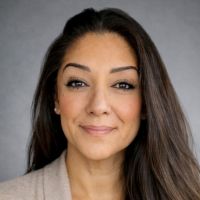
Sarah Sheaffer is a licensed local pastor who serves part time at Greensky Hill Indian United Methodist Church (UMC) outside Charlevoix, Michigan. She scaled back her successful catering business to become Greensky Hill’s solo pastor in January 2024.
Greensky Hill Indian UMC was founded in 1844 by Chippewa/Ojibwe chief Peter Greensky (Shagasokicki), a convert to Christianity. The congregation still meets in the tiny log building finished in the 1850s. One of Sheaffer’s great-uncles was often a rotating pastor there. The church has had Native and non-Native pastors and now has non-Native and Native members, including descendants of the original group.
Rural context
“I define rural by an area’s population, size, and culture,” Sheaffer says. “Our lives here move at a slower rhythm shaped by seasons and relationships. We know our neighbors. Your insurance agent and child’s teacher may live on the same block or road as you.”
With a population of 2,400, Charlevoix is the largest town in its county. This economy of this area of Michigan’s northern Lower Peninsula depends on tourism, hospitality, health care, education, and retail. Charlevoix borders Lake Michigan, and the county has many inland lakes and streams for outdoor recreation. The county has a mix of wealthy resorts and pockets of poverty.
Part-time pastor model
Sheaffer says her life experiences shaped her call to ministry. She grew up in Assembly of God and Pentecostal churches, taught Sunday school at 14, and sang in a gospel band with her sister. “My husband is Irish and grew up Catholic, so we found middle ground in the UMC,” she says. “At first we looked for a larger church with more youth programming. Then we discovered that our children got more from connecting with elders at Greensky Hill Indian UMC.”
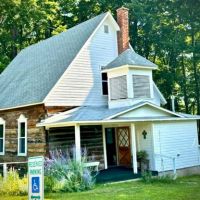
Greensky Hill Indian UMC
After the Sheaffers began attending in 2010, Sarah volunteered to teach Sunday school. She sometimes gave the children’s message in worship and helped create online worship during the pandemic.
“Our former pastor, Jonathan May, asked me to become a volunteer family pastor, and I got great responses. When he began thinking about retirement, he helped me explore my call. I took twenty courses from a UMC licensing school and was appointed by our bishop as a licensed local pastor (LLP) in January 2024,” Sheaffer says.
LLPs are appointed to serve a particular church. They are not ordained but may lead worship, do pastoral care, and administer the sacraments, marriages, and funerals. As with many denominations, most UMC congregations are small, with average attendance under a hundred. Most UMC churches with fifty or fewer attendees are served by part-time pastors.
Sheaffer works twenty-five to thirty hours a week—more if there’s a funeral or baptism. “I do pastoral care, write sermons, and build relationships,” she says. “Everywhere I go, I find potential for new partnerships. It happens through the Charlevoix Ministerial Association, Indigenous activities, and environmental work.”
Congregational engagement
Greensky Hill’s Facebook page states: “We remain a sanctuary of love in a setting of natural beauty. We preserve a unique Native American heritage. We invite people to experience community as brothers and sisters in Christ and empower people to serve all in need.”
Sheaffer adds, “People come here and find a sense of community and belonging. Our goal is to be radically welcoming. We’ve had regular attenders who were self-proclaimed nonbelievers. They came for the community, not realizing that the Holy Spirit is working in their lives. When we are able to be vulnerable and spiritually open, we can connect with Creator and creation.
“Some folks claim us as their church because of our land and history. Others have gotten involved with our creation care projects. We have solar panels, a Native healing garden, an accessible community garden, and two cemeteries,” Sheaffer says. Members organize garden and cemetery workdays, craft days, and outdoor hymn sings. Greensky Hill hand drummers have performed at a local farmer’s market. One man leads periodic Wednesday Bible studies.
“All this community invitation and interaction make people curious enough to check out our church for themselves,” Sheaffer says. “In the grocery store, I’ve overhead people not from our church talking about good things at our church.
“Attendance was about twenty-five to thirty when I became pastor but is steadily rising. One Sunday we had fifty-six people, and it wasn’t even for Christmas or Easter. We also have at least fifteen regular online attendees. Online worship helps connect people who’ve moved away or are elderly or shut in. Some weeks, my posted sermons draw as many as 250 views on our Facebook page or church website,” Sheaffer says.
Preaching and worship planning
Sunday worship always expresses Indigenous heritage. “We pray to the four directions and often read a scripture lesson from the First Nations Version (FNV) New Testament or FNV Psalms and Proverbs. We sing and speak songs and prayers in English and Ojibwe, a Northern Michigan dialect of Anishinaabemowin. We say the Lord’s Prayer in Ojibwe,” Sheaffer explains.
She plans worship with Sharon Osterhouse, the volunteer music and worship pastor. Members love learning in many ways, such as through visual and hands-on experiences. A historic council tree grove stands near the church. When a storm felled one of those maple trees, a church member who has since “walked on” made a sanctuary cross from it.
“One May Sunday,” Sheaffer says, “Sharon created prayer stations for worship that engaged all the senses. We prayed through lament, poured water over prayers printed on fabric, and made a collage of hope. We burned written prayers outdoors to honor the Anishinaabe tradition of smoke carrying prayers to heaven. A bell rang every eight minutes to move between stations—this was our Sunday service.”
Recommended resources
Sheaffer recommends UMC Discipleship lectionary resources and Working Preacher’s Sermon Brainwave podcast. Both help her and the worship pastor plan at least three to four weeks ahead. “I’m also extending my ministerial knowledge by taking the Native American Course of Study from Methodist Theological School in Ohio,” she says. “We do most classes by Zoom and meet each year for an intensive week in person.”