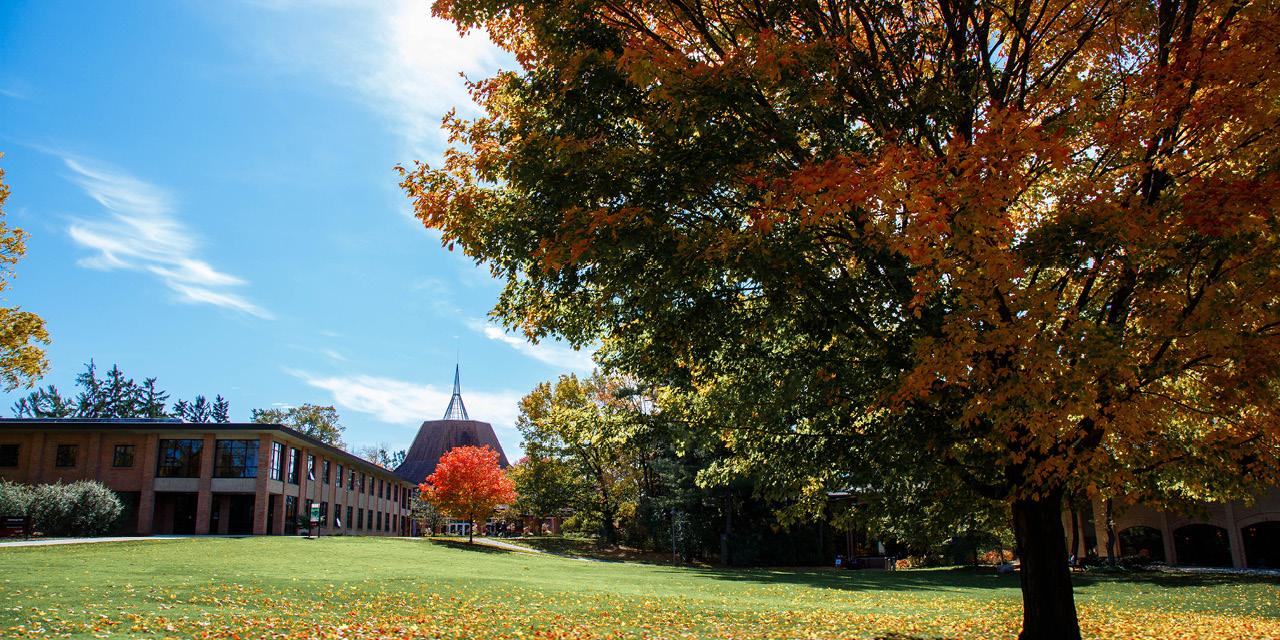
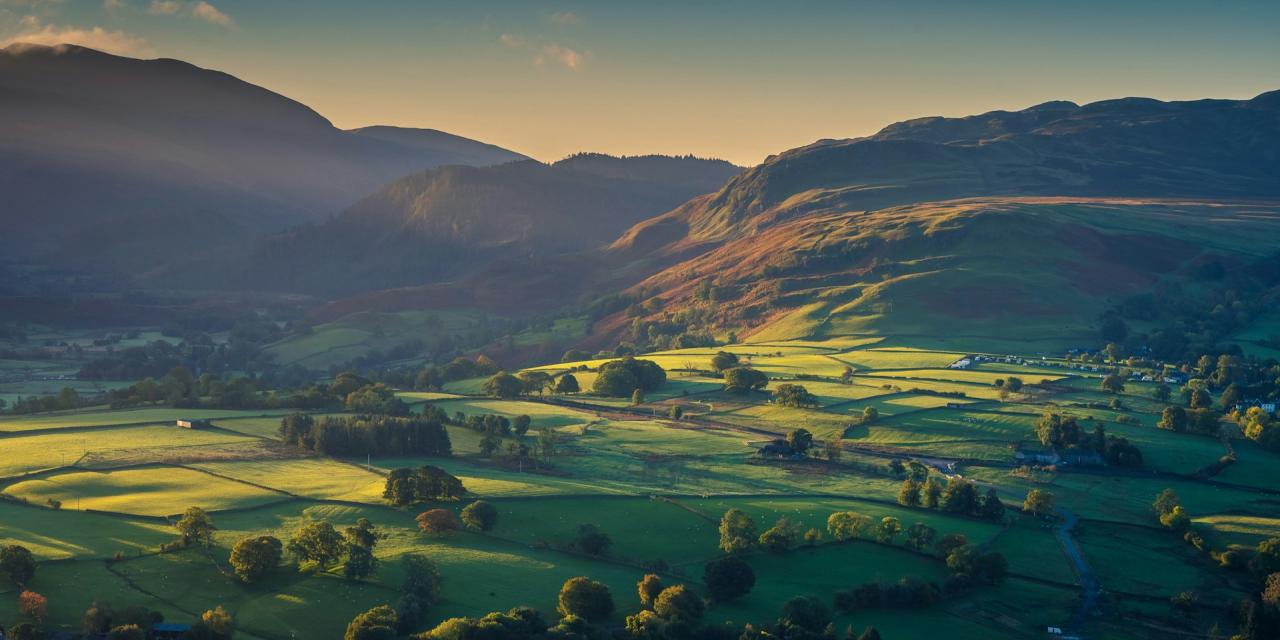
Creation is wonderful, created by God to be fully good! Right now my Midwestern US garden is filled with native wildflowers in full bloom, my children are learning where to find monarch caterpillars and how to (very carefully) pet bumblebees, and the Milky Way shines brightly in places where the night sky is dark.
Creation is complicated, and we have complicated relationships with it. I live on a farm, but the sky is never dark enough for me to see the Milky Way. I live among lush acres of corn and soybean fields—which also means acres of herbicide and pesticide applications and irrigation. As our family makes decisions about the best use of our land, we constantly have to find a balance between historical tradition, changing realities, and an uncertain future.
Creation in Christ
Given those realities—the triune God’s gift of creation, its beauty, its destructive force and destruction—many Christians have wanted to find a way to name these things in worship. Led by the Eastern Orthodox Church, an ecumenical group of Christians worldwide has introduced the Season of Creation. For those who follow the Revised Common Lectionary, a new day was added to the liturgical calendar, “Creation in Christ Sunday,” also known as the “Feast of Creation in Christ.”
Excerpt from feastofcreation.com
“The ‘Feast of Creation in Christ’ was officially adopted by the Revised Common Lectionary, for celebrations to begin in September 2026. …
The ‘Feast of Creation’—also known as ‘Feast of Creation in Christ,’ ‘Creation Day,’ or ‘Creation Sunday’—is celebrated by many churches on September 1 or the subsequent Sunday.
Grounded in an ancient liturgical tradition of the Eastern Orthodox Church, this is a day to praise the Triune God as Creator and commemorate the great mystery that everything was created through Christ.
And, as a result, it also inspires us to care for the gift of the created world—which is why it is also celebrated as a World Day of Prayer for Creation.’”
See lectionary readings and details here.
Creation in Christ Sunday (September 1 or the Sunday following) is not just a celebration of the world’s beauty or a time to lament climate change. It is rooted in the work of Christ, who was present at and part of the act of creation, who is the Savior of the whole created world, and with whom we anticipate the new creation. As Christ taught us, we thank God for all good things around us, we pray for mercy for our groaning world, and we acknowledge our own complex role in creation and try to do a better job of caring for the world around us.
A service on Creation in Christ Sunday, or another day focused on the creation, might include some of the following elements.
Call to worship/invocation
Open by reading Psalm 148 responsively or the following invocation:
In the beginning, the Word was with God, and the Word was God.
In the beginning, God created the world and saw that it was good.
Christ, our Redeemer and Sustainer, speak to us through your word and through your world. Work in us today, and help us to create the future you envision for your children. Amen.
Congregational song suggestions for the opening of worship
Scripture readings from the Revised Common Lectionary
Readings for Year A:
- Genesis 1:1–2:3 or Genesis 2:4–25 (use whichever version of the creation story will speak to your congregation most clearly)
- Psalm 148
- John 1:1–5
- Acts 17:22a, 24–28
See lectionary readings and details for all years here.
Sermon starter
The scripture passages for this day all affirm God the creator and Christ as the Word that was with God in the beginning. To truly relate to God the creator, we need to grapple with our role as both stewards and inhabitants of creation. A sermon might start by reflecting on the preacher’s own complex relationships with creation, as I did in the introduction to this article:
- How do you interact with the natural world, both intentionally and inadvertently?
- What have those interactions taught you about God’s will for creation?
- How does John 1’s image of Christ as the Word, fundamentally embedded in creation from the very beginning, help you understand those interactions differently?
It may be important to remind your congregation that creation is not just the grandeur of distant mountains but also the apple that we buy from the grocery store—and that we humans are just as much a part of creation as the endangered species. If all of creation is meant to worship God, and if we see the face of Christ in every member of our congregation, how then should we live?
Including children
Retell the creation story using artwork or photos
Depending on the age of the children in your congregation, you might simply retell the story of creation using artwork or a picture book based on Genesis 1 and 2. End by affirming that the children are still part of God’s wonderful creation, as are all the things around them. You could even solicit artwork from children or the congregation at large that illustrates the days of creation, or ask for photo submissions and use them in the service.
An object lesson
If your children would enjoy an object lesson, you could start with a small, closed cardboard box that contains three very different natural things, such as a flower, a large rock, and an apple. Reveal the items and discuss what they have in common—they are all created by God! Compare the items briefly: Which one is the most beautiful? Most useful? Which do you think God likes best? (This is a trick question, of course!)
Then hold up the cardboard box and ask if it is also part of God’s creation. Well, people made it out of trees, and people and trees are both part of creation! While this could result in a longer discussion of the role of humans as both part of creation and stewards of it, you could also simply use the box (and various other nearby objects) to affirm that God created humans in God’s image and that the children, as well as everything around them, are part of this same wonderful, complex world.
Child-friendly songs
You might end by singing either Ken Medema’s “The Tree Song” (“I Saw a Tree by the Riverside”) or “Like a Rock” by Keri Wehlander.
“Tree Song” at fifty
In celebration of the fiftieth anniversary of his “Tree Song,” Ken Medema wrote an SATB arrangement that debuted at the 2026 conference of The Hymn Society of the United States and Canada. It is available at kenmedema.com.
Congregational song suggestions
“Touch the Earth Lightly” – Shirley Erena Murray
“The Garden Needs Our Tending Now” – Mary Louise Bringle
“Beauty for Brokenness” – Graham Kendrick
“Rain Down” – Jaime Cortez
A benediction
In the beginning was the Word,
and the Word was with God,
and the Word was God. [hold up a Bible]
May God’s Wind work in you and through you
so you can learn about God
through all of creation, [gesture broadly]
and may that Word help you do God’s will
and work to make all things good.
Go in peace.