Kathryn “Katie” Roelofs is an author, retreat leader, interim pastor, worship leader, consultant, and speaker at the Calvin Symposium on Worship. Her ministry has focused on worship, spiritual growth, and helping churches connect with God in ways that shape both Sunday gatherings and everyday work. She was the project director for Fuller Theological Seminary’s Worship for Workers initiative.
How would you describe Leading Worship for Workers?
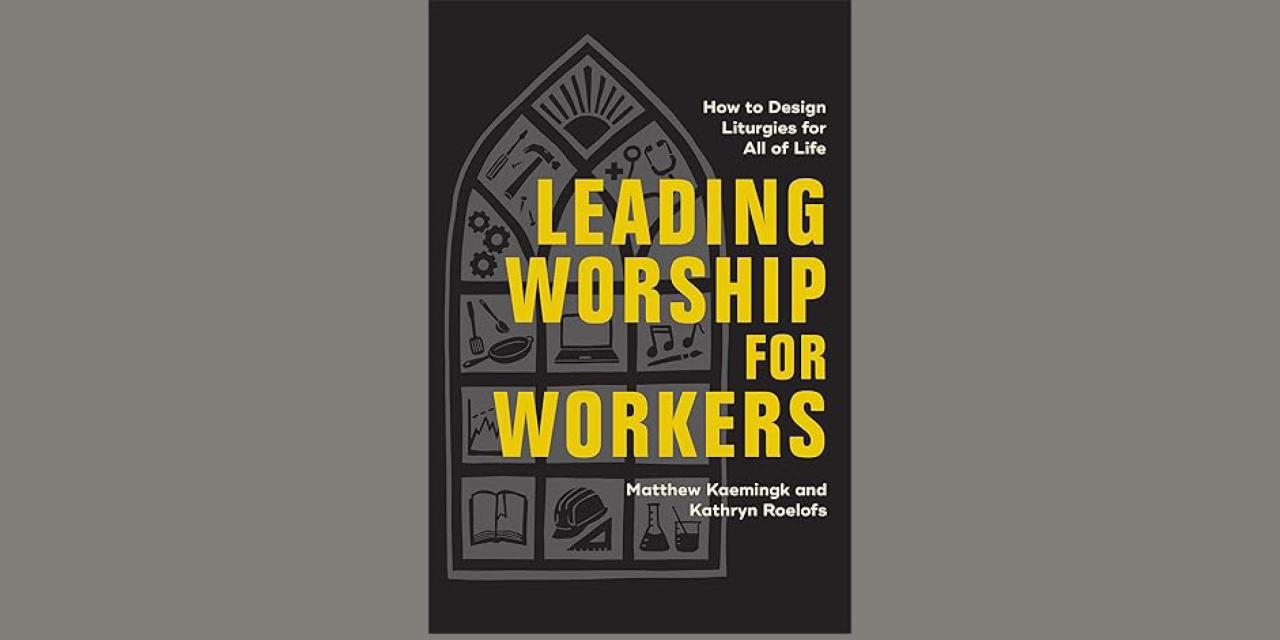
It’s a handbook to help churches engage workers and people with other vocations, such as students, parents, and retirees. We briefly lay out the theology of work and explain how to audit your congregation’s worship practices and main vocations. Our book’s heart and soul invites pastors and worship leaders to experience worship through a worker’s eyes. Chapters on every part of worship offer simple ways to adjust what you already do or to add something new. There’s a section on how to bless and commission specific callings and careers in your church and a section on creative ideas for going deeper.
You can dip in and out of chapters, but the best way is to gather a group to discuss the book together. There’s a discussion guide and a space to write down your own ideas and questions. Every worship context is unique, and this book will help you identify your church’s strengths, weaknesses, and opportunities.
Why did you write it, and whom is it for?
I’ve led many retreats about work and worship with my coauthor, Matthew Kaemingk, and Cory Willson, a professor at Calvin Theological Seminary. Matt and Cory wrote Work and Worship: Reconnecting Our Labor and Liturgy (Baker Academic, 2020). It’s a deep, thoughtful book about worship that connects to workers’ lives. Since then, people have been asking for a practical guide that puts that first book into action.
Our main audience is pastors, worship leaders, and ministry leaders. We also wrote it for churchgoers who want Sunday worship to feel more connected to their everyday lives. Before finishing our manuscript, we shared it widely with professors, pastors, worship leaders, and laypeople. Going through their feedback took longer than writing the book itself, but their input made it much better.
What might prevent churches from including work and workers in worship?
Three reasons are skepticism, unawareness, and fatigue. Some churches believe in strong sacred/secular divides. They don’t think language around work is allowed or holy enough in worship. It’s true that Christ alone is the beginning and end of worship. Yet God calls every person to live their entire life as worship. This book helps workers direct all their lives and labor to the mission and glory of Christ.
Second, pastors and worship leaders are often unaware of why it’s important to have more honest and authentic worship that speaks to the daily realities of workers. We’ve been formed to think it’s best not to talk about work in worship. But when worship doesn’t mention certain things, people get the idea that God doesn’t care about those people or topics. So, if our vocational lives haven’t been connected with worship, it can feel awkward to commission or bless a category of workers. Before planning an entire service, it may be best to focus on small ways that show God cares about workers.
And what about the fatigue factor?
People are tired. Church leaders often don’t have the energy to do yet another thing. However, they long to craft prayers and worship that speak to their people’s lives and worlds. Matt and I have no desire to change your styles of worship. Our goal is to help your unique style connect in a deeper way with workers. This can be as simple as a few sentences to frame a song or other worship element.
Your book has so many good ideas. What is the low-hanging fruit?
Matt and I suggest looking at gathering and scattering—the first and last words of the service. The words of gathering should form a bridge between our work, our worship, and our God. We all carry our week with us into worship, and God asks us to be honest about that, not to leave it at the door. For example, the opening words can be: “As God gathers us for worship, I invite you to a few moments of silence as you reflect on your last week of work, parenting, or daily living. [Silence.] The God who has been present with you through the whole of your week welcomes you to worship. Here you lay before God your burdens and your triumphs, that you might once again know the abiding presence of our gracious God.”
We all carry our week with us into worship, and God asks us to be honest about that, not to leave it at the door.
Or you might adapt Psalm 100, a praise psalm, to your context: [Name several vocations…students, carpenters, etc.] Shout for joy to the Lord, all the earth. [Name several more vocations] Worship the Lord with gladness.”
The final words of worship help worshipers make a critical connection between what they have just done and where they’ll be tomorrow at the same time. A good sending includes a blessing, a charge, and often a song. Your pastor might say, “God sends us out this week into our daily work as those who are called to bring forth the kingdom and live as members of the new creation. This gives meaning to our lives and hope for our callings. Go now with the promise of God’s presence that will fill you with wonder, love, and praise.” And then you can all sing the fourth verse of “Love Divine, All Loves Excelling.” Or you could follow your words of sending with a sending song from WorshipforWorkers.com. Porter’s Gate will release its Sending Songs album in 2026.
Any other low-hanging fruit?
The offering has gotten so much interest, even from people outside faith-work-and-worship circles. When everyone shifted to online giving for COVID, it was convenient, but it didn’t convey the ancient Christian idea that worship is the work of our hands. In the early church, many people literally brought in what they’d grown or made to lay on the altar. These offerings were used for communion and shared with the pastor and the poor.
We know of churches that use weekly offering cards, where people write their praise/thanks, laments, petitions, or commitments to God. They place them in the offering plate as an act of worship. Some churches invite people to bring artifacts of their work to the altar—a hammer, a stethoscope, a baby bottle, or a student’s completed test or artwork. Other churches use the offering time for people to share their musical gifts or spoken offerings: “God, in my work as a professor, I advised new students and received a grant this week. Receive the offerings of my hands and use it to your glory,” or “God, today I offer you the work of my hands. You helped me grow these tomatoes and peppers. In gratitude, I offer this work to you and my neighbors.”
What about when thoughts about work or responsibilities intrude on worshipers’ thoughts?
While there’s nothing a preacher can do to stop these workplace intrusions, they can be powerfully reframed. Rather than seeing them as sinful distractions or evidence of spiritual immaturity, pastors can invite their people to reorient these moments as prompts to prayer and contemplation. “The word of God is living and active and sharper than any two-edged sword” (Hebrews 4:12). This word is meant to connect to our lives. Maybe the Holy Spirit is bringing to mind what the worried worker should have done when entering the worship space: “Daughter, offer your concerns and lay them down before me. Don’t hold back.”
Is it better to plan a commissioning/blessing service or to drop in smaller references to work and worship?
Planning an entire service, perhaps around Labor Day, can be meaningful and memorable. But Matt and I think a slow-drip approach will be more formative over time. The slow approach has more impact because it plants seeds that start to change people from the inside.
You could do one worker-related element each week. Your corporate prayer of confession could include: “We confess our participation in broken and sinful systems like our places of work, our communities, and our homes.” Many praise songs are generic, but you could reframe one by first inviting people to consider a particular joy or success in their calling. Ask them to remember it while singing the praise song. Before the prayers of the people, the prayer leader could frame the intercessory time: “As we lift up a few global concerns to God in prayer, let us remember that God is already at work through his people. In millions of small ways, each one of us serves as God’s hands and feet, binding up that which is broken in the world.”
How can pastors learn more about the workers in their congregations?
We offer many ways of doing a worker audit. You might start by going through a printed list of church members and noting how they earn money, where they serve, or what they study. Students, stay-at-home parents, the retired, and the unemployed all count as workers. Made to Flourish offers free and paid versions of its online Scatter survey. Knowing what your members do during the week helps you identify the unique gifts, passions, and hidden talents they bring to the people of God.
Our book also offers ideas for how pastors can visit people at work, host categories of workers to learn their joys and struggles, coach workers to share a work testimony in worship, bless callings and careers in worship, and align vocational blessings with the local calendar or a sermon series.