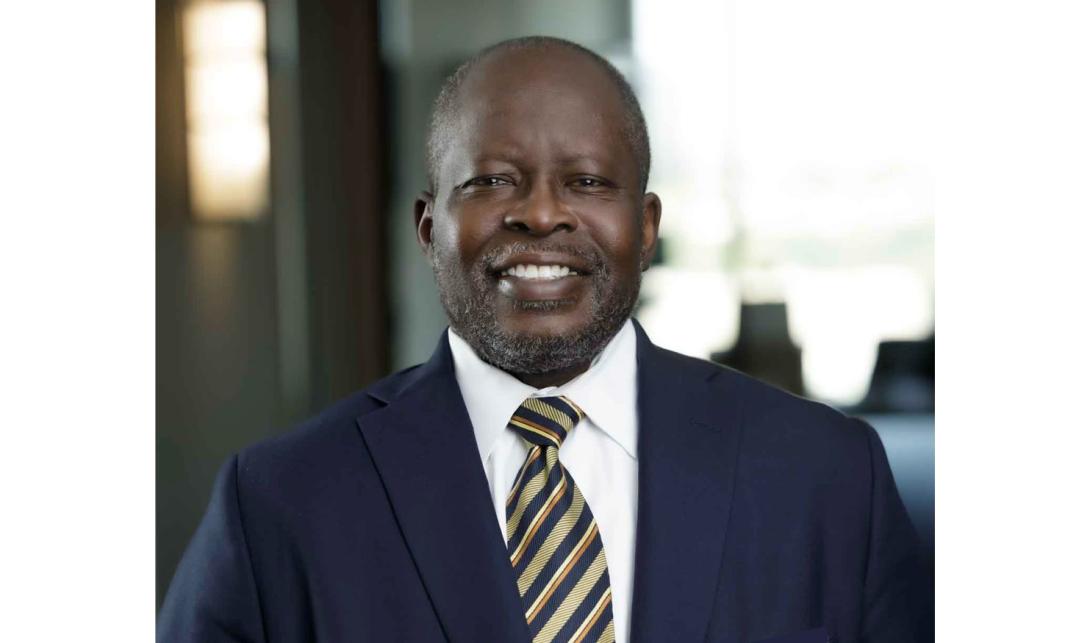
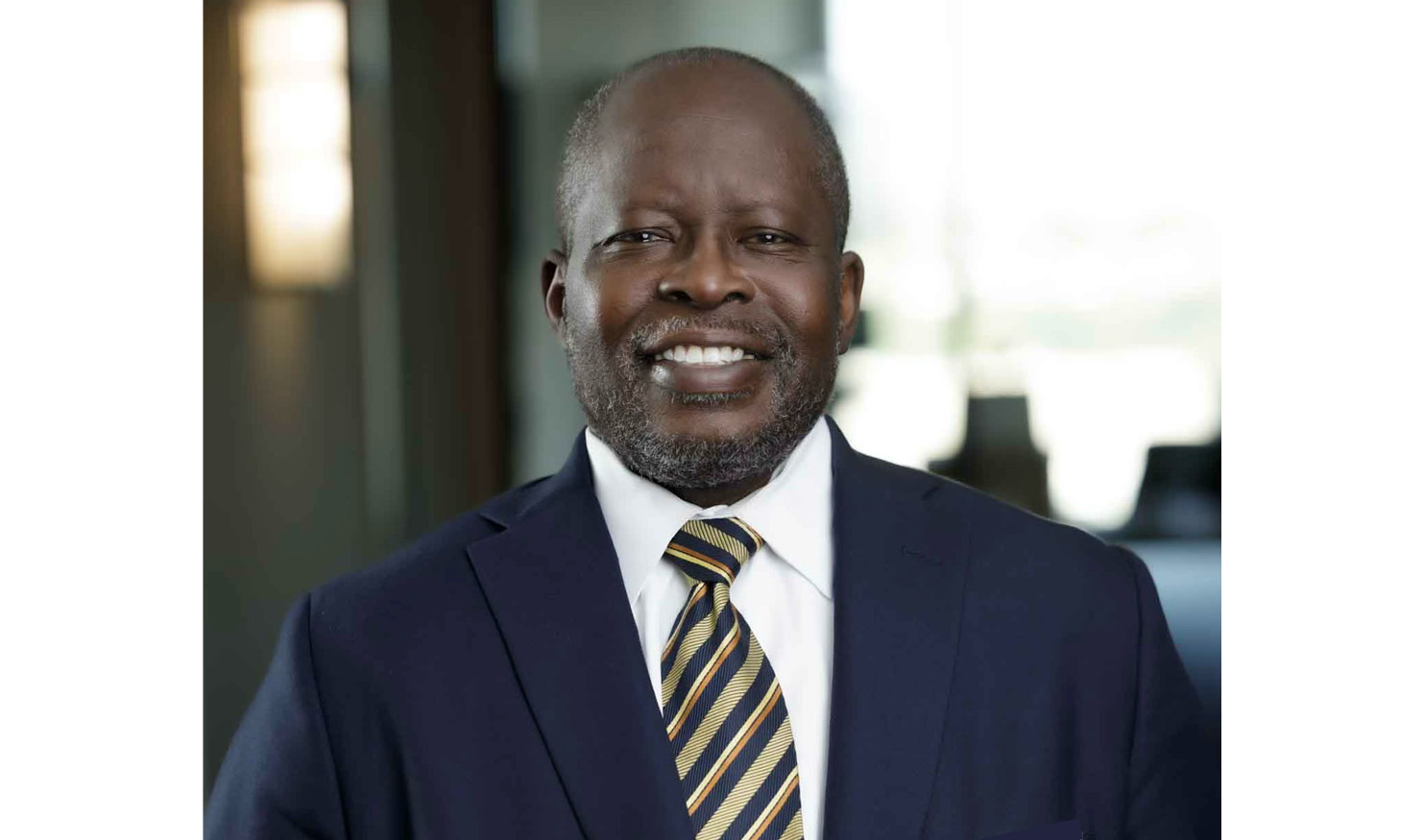
The Rev. Dr. David Gregory Latimore is the executive director of the Calvin Institute of Christian Worship, beginning his leadership role in 2026. His responsibilities include oversight of the Institute’s practical and scholarly programs, including the Calvin Symposium on Worship and the Vital Worship, Vital Preaching Grants program.
Dr. Latimore is a theologian, preacher, educator, pastor, organizational leader, and scholar of African American religion whose work stands at the intersection of the academy, the church, and public life. Across more than three decades of leadership in theological education, congregational ministry, economic development, investment management, and civic engagement, he has cultivated an interdisciplinary vocation devoted to strengthening institutions, forming leaders, and advancing the flourishing of churches and communities.
He previously served as director of the Betsey Stockton Center for Black Church Studies atPrinceton Theological Seminary. In this role, he has led efforts to connect the Seminary’s academic resources with the theological, prophetic, and social justice traditions of the Black church. His leadership has included designing and teaching history-rich and ministry-focused learning experiences; mentoring graduate students and emerging leaders; convening scholars, clergy, and denominational partners; and developing innovative programs responsive to the challenges facing African American congregations and communities.
Under his leadership, the Center has expanded its work through public lectures, digital courses, certificate programs, denominational partnerships, and international initiatives. Among these efforts are the Black Theology and Leadership Institute, which brings together pastors, scholars, and ministry leaders for intensive theological reflection and leadership formation, and the African Theology and Leadership Institute in Monrovia, Liberia, which connects Princeton Theological Seminary with Liberian pastors, theological institutions, denominational leaders, and Seminary alumni. Through these initiatives, Dr. Latimore has sought to create spaces where rigorous scholarship, pastoral wisdom, historical reflection, and public witness can inform one another.
His academic teaching spans homiletics, church history, Christian theology, Black church studies, and church leadership and administration. He has taught courses including Introduction to Preaching, History of the Black Church, Christianity and Slavery, Economic Justice and the Hebrew Bible, Christology, Introduction to Systematic Theology, and Church Leadership and Administration. In addition to his work at Princeton Theological Seminary, he has taught at Dominican University, McCormick Theological Seminary, Emmanuel College, Lewis University, the University of Chicago, Moody Bible Institute, and Pillar Seminary.
Dr. Latimore brings more than two decades of pastoral leadership to his academic work. He served as the sixth senior pastor of Fifteenth Avenue Baptist Church in Nashville, Tennessee, a historic African American congregation with a strong tradition of theological depth, community engagement, and social justice witness. Other pastoral service includes Mt. Zion Baptist Church in Joliet, Illinois; Mt. Carmel Baptist Church in Gainesville, Florida; and Southern Union Baptist Church in St. Louis, Missouri. Throughout his ministry, Dr. Latimore has worked to unite the spiritual, administrative, social, and economic dimensions of congregational life. His pastoral leadership has consistently emphasized liberative preaching, institutional health, leadership development, economic justice, and the church’s responsibility to engage the communities it serves.
Before entering full-time theological education and pastoral ministry, Dr. Latimore built a distinguished career in investment management, strategic consulting, economic development, and organizational leadership. He served as president and chief executive officer of the Initiative for a Competitive Inner City, a nationally recognized research and consulting organization dedicated to entrepreneurship, job creation, and economic development in under-resourced urban communities. Dr. Latimore also held senior leadership positions with ICMA Retirement Corporation (now MissionSquare Retirement), Hartford Life, The Vanguard Group, Mercantile Bancorporation, and the Emerging Manager Trust Group. His responsibilities included institutional sales and marketing, strategic planning, investment analysis, client relations, product development, and the supervision of multidisciplinary teams. Earlier in his career, he worked as an associate consultant with Bain & Company. His public sector experience includes serving as the executive assistant to Freeman Bosley Jr., the first African American mayor of St. Louis, Missouri. This combination of theological, pastoral, corporate, and civic experience gives Dr. Latimore an unusually broad perspective on the relationship between institutional leadership, economic systems, congregational life, and the public responsibilities of the church.
Dr. Latimore’s scholarship examines the ways economic ideologies shape ecclesial identity, worship, leadership, and public witness. His work asks how churches are formed, often unconsciously, by economic systems and cultural assumptions that can compete with the gospel’s vision of human dignity, communal responsibility, justice, and flourishing. His forthcoming book projects extend this scholarship in complementary directions. One project reframes Black church history through successive economic regimes, examining how changing political and economic systems have shaped African American ecclesial life, theological imagination, leadership practices, and institutional priorities. A second project develops a constructive liberative homiletic through an engagement with John 11 and the African American religious experience, exploring how preaching can integrate rigorous biblical interpretation, political-economic analysis, and the formation of communities capable of resisting death-dealing structures.
Dr. Latimore’s published scholarship includes “The Neoliberal Homiletic,” “Search for the Soul of Black Preaching,” “The Homiletical Mediation of Liberation,” and “The Rise of the Neoliberal Black Church.” His forthcoming contributions include work on ecojustice and Black church preaching and a study of the power and presence of the Holy Spirit in the African American pulpit. He has also written reviews of major works in African American religion, Black church studies, mission history, policing, and democratic belonging.
Dr. Latimore has also maintained a sustained commitment to civic and community service. He serves on the Duke Divinity School National Alumni Council, the Board of MMBB Financial Services, and the advisory board of the National Museum of American Religion. He is also affiliated with Universities Studying Slavery and has previously served on hospital, community development, child learning, and economic development boards. He founded and served as president of the Joliet African American Clergy Coalition, served as chaplain at the River Valley Juvenile Detention Center, chaired the Joliet Black Chamber of Commerce, and participated in the mayoral transition team. His broader community service has included work in urban economic development, faith-based organizing, youth ministry, public education, and institutional leadership.
Dr. Latimore earned bachelor’s degree in economics from Harvard University, a MDiv degree from Duke Divinity School, a DMin degree in homiletics from McCormick Theological Seminary, and a PhD in theology from the University of Chicago Divinity School. At McCormick, he received the John Randall Hunt Prize in recognition of his outstanding doctoral thesis and academic record.
He is a member of the American Academy of Religion, the Academy of Homiletics, the Society for the Study of Black Religion, the Fellowship of Protestant Ethics, and Kappa Alpha Psi Fraternity, Inc.
Across his varied vocations, Dr. Latimore has remained committed to a central conviction: Theological scholarship must serve the church, pastoral ministry must attend to the institutional and material realities shaping human life, and Christian leadership must cultivate communities capable of faithful worship, courageous witness, and shared flourishing.
Dr. Latimore has been married to Tammie Brown Latimore for more than thirty-two years, and they are the parents of five adult children.